
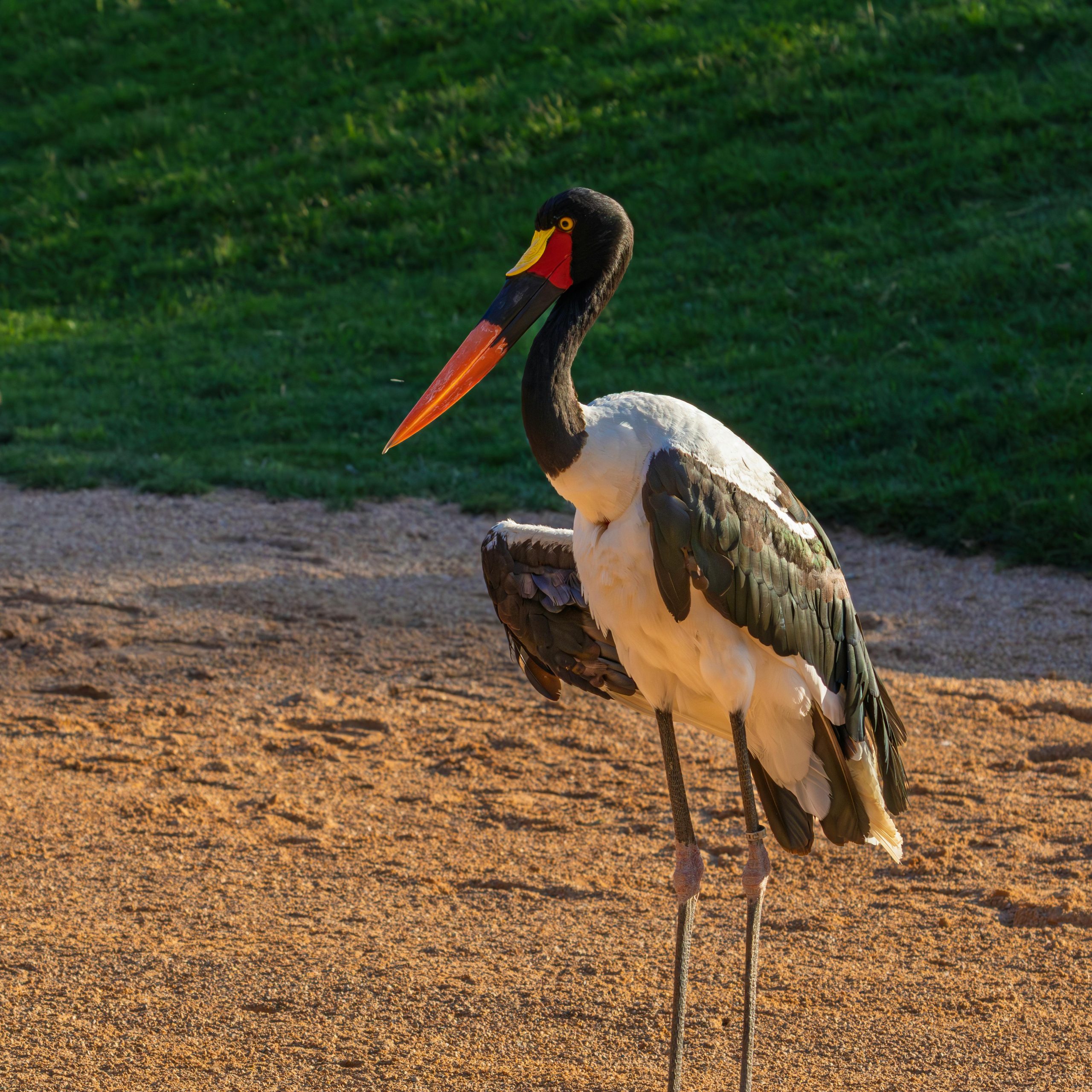
Saddle Billed Stork
Saddle Billed Stork
The Majestic Saddle-Billed Stork: Nature’s Towering Jewel of the Wetlands
Introduction
Among the most striking and elegant avian species gracing the wetlands of sub-Saharan Africa, the Saddle-billed Stork (Ephippiorhynchus senegalensis) stands out as a towering symbol of grace, color, and ecological importance. With its vivid bill, impressive height, and solitary demeanor, this bird captivates ornithologists, photographers, and nature lovers alike. In this comprehensive guide, we will delve into the biology, habitat, behavior, and conservation status of this extraordinary stork, while exploring its role in the ecosystem and its cultural significance.
Physical Characteristics
The Saddle-billed Stork is one of the tallest storks in the world, with adults reaching up to 1.5 meters (5 feet) in height and a wingspan of up to 2.7 meters (9 feet). Its most distinctive feature is its long, red and black bill with a yellow “saddle” at the base, which gives the bird its name.
Key Features:
- Bill: Long, straight, and vividly colored in red and black with a yellow frontal shield.
- Plumage: Contrasting black and white feathers; black on the wings and back, white on the belly and neck.
- Eyes: Males have dark brown eyes, while females have bright yellow eyes—a rare case of sexual dimorphism in eye color.
- Legs: Long and slender, adapted for wading through wetlands.
This striking appearance not only aids in identification but also plays a role in courtship displays and territorial behavior.
Habitat and Geographic Distribution
The Saddle-billed Stork is native to the wetlands, marshes, and riverbanks of sub-Saharan Africa. It thrives in areas with abundant freshwater sources and minimal human disturbance.
Common Habitats:
- Floodplains
- Swamps
- Inland deltas
- Lakeshores
- Slow-moving rivers
Geographic Range:
- Countries: Botswana, Zambia, Kenya, Uganda, Tanzania, South Africa, and parts of West Africa.
- Protected Areas: Frequently found in national parks such as the Okavango Delta, Kruger National Park, and Serengeti National Park.
Their preference for undisturbed wetlands makes them sensitive indicators of ecosystem health.
Feeding Habits and Diet
As a carnivorous wader, the Saddle-billed Stork feeds primarily on aquatic prey. Its long bill allows it to probe into water and mud in search of food.
Typical Diet Includes:
- Fish (tilapia, catfish)
- Frogs and amphibians
- Crustaceans
- Small reptiles
- Insects and larvae
Hunting Technique:
- Stalking: Moves slowly and deliberately through shallow water.
- Spearing: Uses its sharp bill to impale or grasp prey.
- Swallowing: Prey is swallowed whole, often head-first to avoid injury.
Their role as top wetland predators helps maintain the balance of aquatic ecosystems.
Breeding and Nesting Behavior
The breeding season varies by region and is often synchronized with the rainy season to ensure food availability for chicks.
Courtship and Mating:
- Pairs perform aerial displays and bill-clattering rituals.
- Mating pairs are monogamous and form long-term bonds.
Nesting:
- Nests are built in tall trees, often near water.
- Constructed from sticks and lined with softer materials.
- Both parents participate in incubation and chick-rearing.
Reproduction:
- Clutch Size: 1–3 eggs
- Incubation Period: ~30–35 days
- Fledging: Chicks fledge at around 100–115 days
Parental care is intensive, with both adults feeding the chicks regurgitated food.
Ecological Role and Significance
The Saddle-billed Stork plays a crucial role in wetland ecosystems. As a top predator, it helps regulate populations of fish and amphibians, preventing overpopulation and maintaining biodiversity.
Ecological Contributions:
- Indicator Species: Their presence reflects the health of wetland habitats.
- Pest Control: By consuming insects and small vertebrates, they help control pest populations.
- Seed Dispersal: Occasionally consume fruits, aiding in seed dispersal.
Their ecological importance underscores the need for wetland conservation.
Conservation Status and Threats
According to the IUCN Red List, the Saddle-billed Stork is currently listed as Least Concern, but its population is declining in some areas due to habitat loss and human interference.
Major Threats:
- Wetland Drainage: For agriculture and urban development.
- Pollution: Pesticides and industrial waste contaminate water sources.
- Disturbance: Human activity near nesting sites can lead to nest abandonment.
- Climate Change: Alters rainfall patterns, affecting breeding and feeding.
Conservation Efforts:
- Protection of wetland habitats through national parks and reserves.
- Environmental education programs.
- Monitoring and research initiatives.
- International treaties like RAMSAR for wetland conservation.
Cultural and Symbolic Importance
In many African cultures, the Saddle-billed Stork is revered as a symbol of purity, longevity, and divine connection. Its towering stature and solitary nature have inspired myths and folklore.
Cultural Representations:
- Totem Animal: Among some tribes, it is considered a spiritual guide.
- Art and Literature: Featured in traditional paintings and proverbs.
- Ecotourism Icon: A favorite among birdwatchers and safari-goers.
Its symbolic value adds another layer of importance to its conservation.
Interesting Facts About the Saddle-Billed Stork
- It is the tallest stork species in Africa.
- Unlike many storks, it does not vocalize; instead, it communicates through bill-clattering.
- It can live up to 20 years in the wild.
- The saddle on its bill is actually a fleshy, keratinous growth.
- It is often mistaken for the Jabiru stork, but they are different species.
FAQs
1. What is the scientific name of the Saddle-billed Stork?
The scientific name is Ephippiorhynchus senegalensis, derived from Greek and Latin roots meaning “saddle-billed stork of Senegal.”
2. Where can I see a Saddle-billed Stork in the wild?
They are commonly found in protected areas like the Okavango Delta, Kruger National Park, and Chobe National Park.
3. How does the Saddle-billed Stork differ from other storks?
It is distinguished by its colorful bill, eye color dimorphism, and solitary behavior, unlike other storks that often live in colonies.
4. Are Saddle-billed Storks endangered?
No, they are listed as Least Concern by the IUCN, but their populations are vulnerable to habitat destruction and pollution.
5. What do Saddle-billed Storks eat?
Their diet includes fish, frogs, crustaceans, and small reptiles, which they catch using their long, sharp bill.
Conclusion
The Saddle-billed Stork is more than just a visually stunning bird—it is a vital component of Africa’s wetland ecosystems and a symbol of natural elegance. Its unique features, ecological role, and cultural significance make it a species worth protecting and admiring. As we continue to face global environmental challenges, the preservation of such majestic creatures becomes not just a scientific goal, but a moral imperative.
By supporting wetland conservation, promoting ecotourism, and spreading awareness, we can ensure that future generations will continue to marvel at the sight of this magnificent stork gliding over Africa’s shimmering waters.