
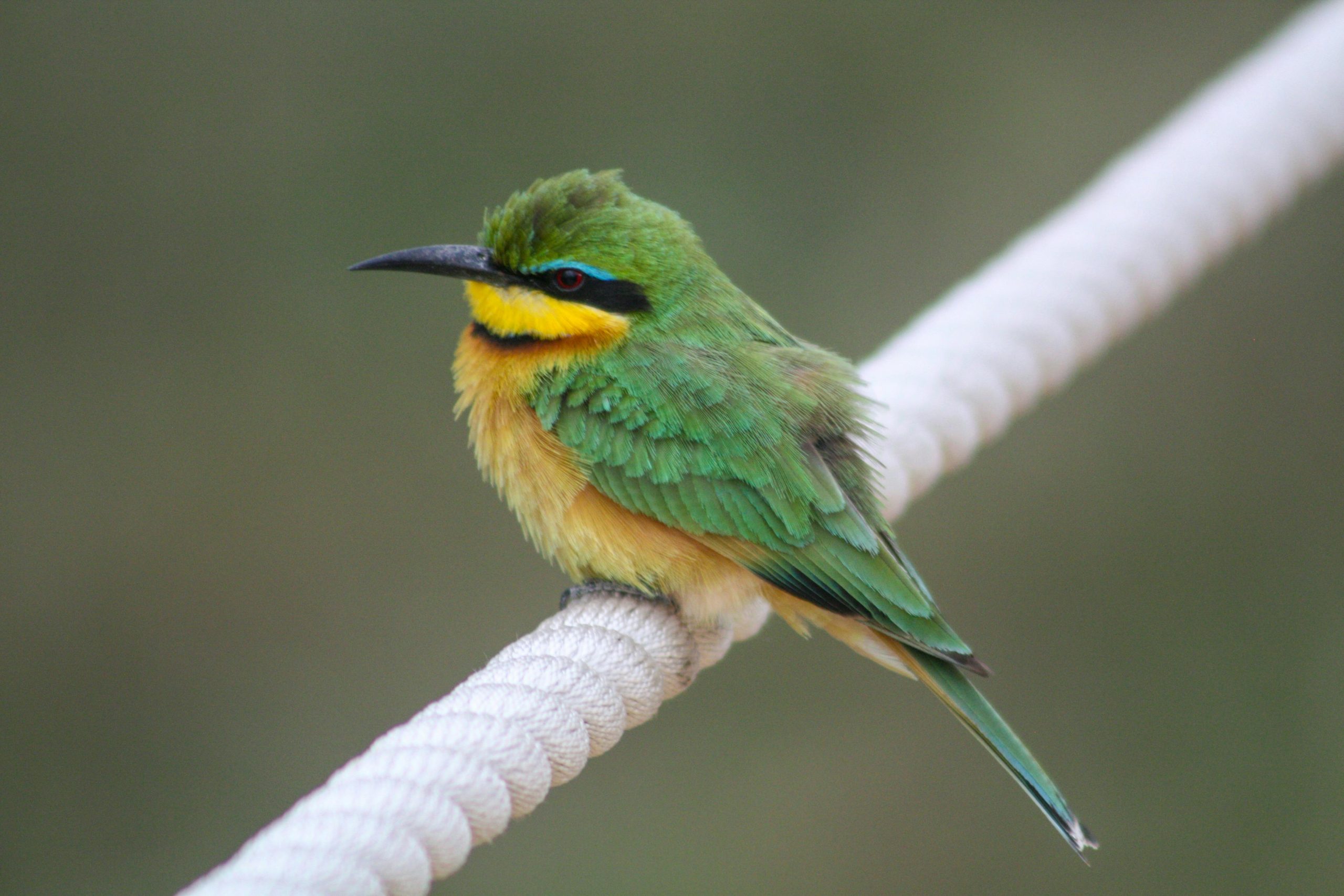
Little Bee-eater
Little Bee-eater
The Little Bee-eater: Nature’s Vivid Jewel of the Skies
The Little Bee-eater (Merops pusillus) is a dazzling, small-sized bird that graces the African skies with its vibrant plumage and aerial acrobatics. Despite its modest size, this avian marvel plays a significant role in the ecological balance of its habitat. With its striking colors, agile flight, and insectivorous diet, the Little Bee-eater is not only a visual delight but also a vital player in controlling insect populations. This comprehensive guide explores every facet of this bird’s life—from its habitat and behavior to its role in ecosystems and its symbolism in various cultures.
Introduction to the Little Bee-eater
The Little Bee-eater is a species of bird in the family Meropidae, known for their vivid coloration and aerial prowess. Unlike its larger cousins, the Little Bee-eater is more widespread and adaptable, often seen perched on low branches or wires, scanning the air for flying insects.
This bird is not just another pretty face in the avian world. It is an efficient predator, a cooperative breeder, and a symbol of vibrancy and agility in the wild. Found across sub-Saharan Africa, the Little Bee-eater thrives in open woodlands, grasslands, and even semi-arid regions.
Physical Characteristics
The Little Bee-eater is a small, slender bird, typically measuring about 15–17 cm in length. Despite its diminutive size, it boasts an impressive array of colors:
- Upperparts: Bright green with a golden sheen
- Throat: Vivid yellow, bordered by a thin black line
- Underparts: Pale green to buff
- Eyes: Striking red, encircled by a black mask
- Tail: Slightly elongated with central feathers extending beyond the rest
Key Identification Features
- Long, slightly curved black bill
- Agile, darting flight pattern
- Often seen in pairs or small groups
- Perches low to the ground, often returning to the same perch after a flight
Habitat and Distribution
The Little Bee-eater is widely distributed across sub-Saharan Africa, from Senegal and Ethiopia to South Africa. It favors:
- Open savannas
- Forest edges
- Riverbanks
- Agricultural lands
- Light woodlands
Unlike many birds, it adapts well to human-altered landscapes, often nesting near villages and farms.
Geographic Range
- West Africa: Ghana, Nigeria, Senegal
- East Africa: Kenya, Uganda, Tanzania
- Southern Africa: Botswana, Zimbabwe, South Africa
This adaptability has made it one of the most common bee-eater species in Africa.
Feeding Habits and Diet
As the name suggests, the Little Bee-eater primarily feeds on flying insects, especially bees and wasps. However, its diet is more diverse than its name implies.
Primary Diet Components
- Honeybees
- Wasps
- Dragonflies
- Butterflies
- Beetles
- Termites
Hunting Techniques
- Sallying: Launching from a perch to snatch insects mid-air
- Aerial Pursuit: Agile flight to chase fast-moving prey
- Prey Handling: Removes stingers by repeatedly hitting the insect against a hard surface
This bird is a master of the skies, capable of catching and processing dangerous prey with remarkable efficiency.
Breeding and Nesting Behavior
The Little Bee-eater practices cooperative breeding, a rare trait among birds. This means that non-breeding individuals assist in raising the young.
Breeding Season
- Varies by region, often tied to the rainy season
- Typically involves one or two broods per year
Nesting Habits
- Excavates a tunnel in sandy banks or flat ground
- Tunnel length: 50–100 cm
- Lays 4–6 white eggs
- Both parents (and helpers) incubate and feed the chicks
This communal approach enhances chick survival and strengthens group bonds.
Social Behavior and Communication
Little Bee-eaters are highly social birds, often seen in small flocks or family groups. Their interactions are rich and complex.
Common Behaviors
- Mutual preening
- Group roosting
- Cooperative feeding
- Territorial displays
Vocalizations
- Soft, melodious “seep-seep” calls
- Alarm calls when predators are near
- Contact calls to maintain group cohesion
These vocalizations are essential for maintaining social structure and coordinating group activities.
Ecological Role and Importance
The Little Bee-eater plays a crucial role in maintaining the balance of insect populations. By preying on bees, wasps, and other flying insects, it helps:
- Control pest populations
- Maintain pollinator balance
- Serve as prey for larger birds and mammals
Ecosystem Services
- Pollination Support: Indirectly supports pollination by regulating bee populations
- Food Web Integration: Acts as both predator and prey
- Indicator Species: Presence indicates healthy insect populations and suitable habitat
Threats and Conservation Status
Despite its wide range, the Little Bee-eater faces several threats, mostly due to human activities.
Major Threats
- Habitat loss due to agriculture and urbanization
- Pesticide use reducing insect prey
- Climate change affecting breeding cycles
Conservation Status
According to the IUCN Red List, the Little Bee-eater is currently listed as Least Concern, thanks to its adaptability and wide distribution. However, localized declines have been observed in areas with intensive pesticide use.
Cultural Significance and Symbolism
In various African cultures, the Little Bee-eater is associated with:
- Joy and beauty: Due to its vibrant colors
- Agility and intelligence: For its hunting prowess
- Community and cooperation: Reflecting its social nature
Some tribes believe that seeing a Little Bee-eater before a journey is a sign of good luck and safe travels.
How to Spot and Photograph Little Bee-eaters
Spotting a Little Bee-eater requires patience and a keen eye. Their vibrant plumage and active behavior make them a favorite among birdwatchers and photographers.
Best Locations
- National parks in Kenya and Tanzania
- Okavango Delta in Botswana
- Kruger National Park in South Africa
Tips for Birdwatchers
- Look for low perches near open areas
- Watch for quick, darting flights
- Listen for soft, repetitive calls
Photography Tips
- Use a telephoto lens (300mm+)
- Shoot during golden hours for best lighting
- Capture in-flight shots to showcase agility
FAQs About the Little Bee-eater
1. Do Little Bee-eaters really eat bees?
Yes, they do. However, they skillfully remove the stinger by hitting the bee against a hard surface before consumption. Learn more about their feeding behavior.
2. Are Little Bee-eaters endangered?
No, they are currently listed as Least Concern by the IUCN, though local populations may be affected by habitat destruction and pesticides.
3. Where can I see Little Bee-eaters in the wild?
They are widespread across sub-Saharan Africa. Visit birding hotspots like the Serengeti, Okavango Delta, or Kruger National Park for the best chances.
4. Do they migrate?
Little Bee-eaters are mostly resident birds, but some populations may exhibit local movements in response to seasonal changes.
5. What makes them different from other bee-eaters?
They are smaller, more adaptable, and often seen in smaller groups. Their cooperative breeding behavior also sets them apart. More on bee-eater species.
Conclusion
The Little Bee-eater is a testament to nature’s artistry and ecological balance. With its vivid colors, aerial agility, and intricate social behaviors, it captivates both scientists and nature lovers alike. As we continue to explore and appreciate the natural world, understanding and protecting species like the Little Bee-eater becomes not just a scientific endeavor but a moral imperative.
Whether you’re a seasoned birdwatcher or a casual observer, the next time you spot a flash of green and gold darting through the African skies, take a moment to appreciate the extraordinary life of the Little Bee-eater—a small bird with a big story.