
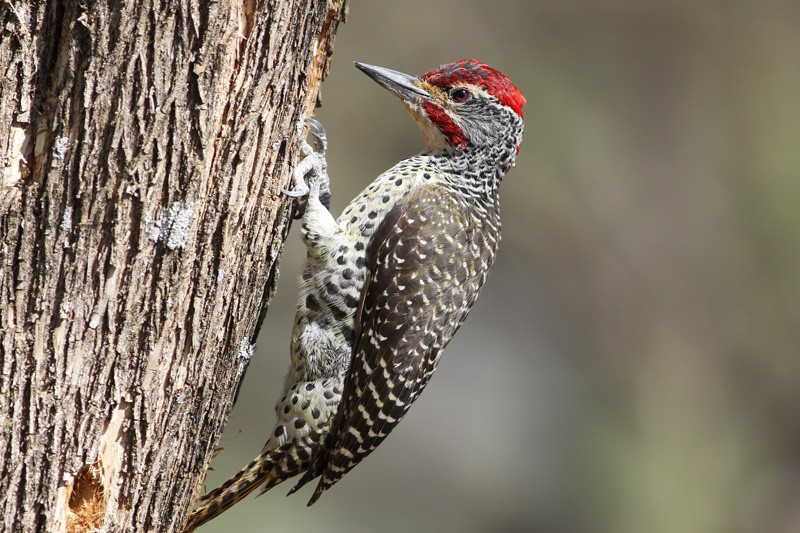
Nubian Woodpecker
Nubian Woodpecker
The Nubian Woodpecker: A Hidden Gem of African Avifauna
The African wilderness is a symphony of color, sound, and life, and among its most fascinating performers is the elusive and striking Nubian Woodpecker. Often overshadowed by its more flamboyant avian cousins, this bird is a marvel of evolution, ecological balance, and subtle beauty. In this comprehensive guide, we’ll delve deep into the world of the Nubian Woodpecker, exploring its habitat, behavior, ecological importance.
What Is the Nubian Woodpecker?
The Nubian Woodpecker (Campethera nubica) is a medium-sized bird species belonging to the family Picidae. It is native to the savannas and dry forests of eastern and northeastern Africa. Known for its distinctive plumage and rhythmic drumming, this bird plays a vital role in its ecosystem.
Key Characteristics
- Scientific Name: Campethera nubica
- Family: Picidae
- Size: Approximately 20–23 cm in length
- Plumage: Males have a red crown, while females feature a black-spotted white crown
- Call: A series of sharp, high-pitched notes and drumming sounds
For more detailed information on the taxonomy of woodpeckers, visit the Wikipedia page.
Habitat and Distribution
The Nubian Woodpecker thrives in a variety of dry, open habitats across eastern Africa. Its range includes countries such as:
- Ethiopia
- Sudan
- Kenya
- Uganda
- Tanzania
Preferred Environments
- Dry savannas
- Acacia woodlands
- Scrublands
- Rural gardens and plantations
These birds are often spotted clinging to tree trunks or hopping along branches in search of insects. Their adaptability to semi-arid environments makes them a resilient species in the face of changing climates.
Explore more about African bird habitats on BirdLife International.
Behavior and Diet
The Nubian Woodpecker is an insectivore, primarily feeding on ants, termites, beetles, and larvae. It uses its strong beak to drill into wood and bark, extracting prey with a long, sticky tongue — a hallmark of the woodpecker family.
Foraging Techniques
- Pecking and drilling into tree bark
- Probing into ant nests and termite mounds
- Gleaning insects from foliage
Social Behavior
- Typically seen alone or in pairs
- Occasionally joins mixed-species foraging flocks
- Exhibits territorial drumming and vocalizations
Learn more about woodpecker feeding behavior from the Audubon Society.
Breeding and Nesting
Breeding seasons vary by region but generally align with the rainy season when food is abundant. Nubian Woodpeckers are cavity nesters, excavating holes in dead or decaying trees.
Nesting Facts
- Monogamous pairs
- Both sexes excavate the nest
- Clutch size: 2–4 eggs
- Incubation: ~13–15 days
- Fledging: ~20–25 days after hatching
The Cornell Lab of Ornithology provides excellent resources on avian breeding behaviors.
Conservation Status
According to the IUCN Red List, the Nubian Woodpecker is currently listed as a species of Least Concern. However, habitat degradation poses a long-term threat.
Threats to Survival
- Deforestation
- Agricultural expansion
- Climate change
- Urbanization
Conservation Measures
- Protected areas in key regions
- Community-based conservation efforts
- Sustainable land-use practices
For more on African bird conservation, visit the African Bird Club.
Ecological Importance
Woodpeckers, including the Nubian species, are essential for maintaining forest health. By controlling insect populations and creating nesting cavities, they support a range of other species.
Ecosystem Services
- Pest control
- Nesting site creation for secondary cavity nesters
- Indicator species for forest health
Cultural Significance
In some African cultures, woodpeckers are seen as symbols of persistence and communication due to their constant drumming. Their presence in folklore and oral traditions highlights their importance beyond biology.
Observing the Nubian Woodpecker
Birdwatchers and ecotourists can spot the Nubian Woodpecker in several African reserves and parks.
Best Places to See Them
- Lake Baringo (Kenya)
- Murchison Falls National Park (Uganda)
- Awash National Park (Ethiopia)
- Tarangire National Park (Tanzania)
Birdwatching Tips
- Bring binoculars and a field guide
- Visit during early morning or late afternoon
- Listen for distinctive drumming and calls
Check out eBird for recent sightings and birding hotspots.
How to Help Protect the Nubian Woodpecker
You don’t need to be in Africa to make a difference. Here’s how you can contribute to the conservation of this remarkable species.
Get Involved
- Support organizations like BirdLife International
- Donate to reforestation projects
- Educate others about African biodiversity
- Practice sustainable tourism
Fascinating Facts About the Nubian Woodpecker
- Unlike many woodpeckers, it often feeds on the ground
- It has zygodactyl feet — two toes facing forward, two backward — for gripping bark
- Its tongue can extend up to 4 inches, wrapping around its skull when retracted
- The male and female have different crown colors, aiding in identification
- It’s one of the few woodpeckers adapted to semi-arid environments
Related Species
The Nubian Woodpecker belongs to the genus Campethera, which includes several other African woodpeckers:
These species share similar habitats and behaviors but differ in range and appearance.
Summary
The Nubian Woodpecker is a vital yet underappreciated member of Africa’s avian community. With its distinctive appearance, ecological role, and adaptability, it deserves more attention from bird enthusiasts and conservationists alike. Whether you’re a seasoned ornithologist or a curious traveler, understanding this bird enriches your appreciation of Africa’s natural heritage.
Frequently Asked Questions (FAQ)
1. Where can I find the Nubian Woodpecker?
The Nubian Woodpecker is found in eastern and northeastern Africa, especially in countries like Kenya, Ethiopia, Uganda, and Tanzania.
2. What does the Nubian Woodpecker eat?
It primarily feeds on insects such as ants, termites, and beetles, using its beak to drill into wood or soil.
3. How can I identify a Nubian Woodpecker?
Look for a bird with spotted greenish plumage, a red crown (male) or spotted white crown (female), and a sharp, rhythmic drumming sound.
4. Is the Nubian Woodpecker endangered?
No, it is currently listed as Least Concern by the IUCN, but habitat loss could pose future threats.
5. How does the Nubian Woodpecker contribute to its ecosystem?
It helps control insect populations and creates nesting cavities that are later used by other birds and small mammals.
Final Thoughts
The Nubian Woodpecker is more than just a bird — it’s a keystone species, a cultural symbol, and a testament to the resilience of life in Africa’s dry landscapes. By learning about and supporting its conservation, we take a step toward preserving the intricate web of life that sustains our planet.
For more in-depth articles on African wildlife, visit National Geographic or BBC Earth.