
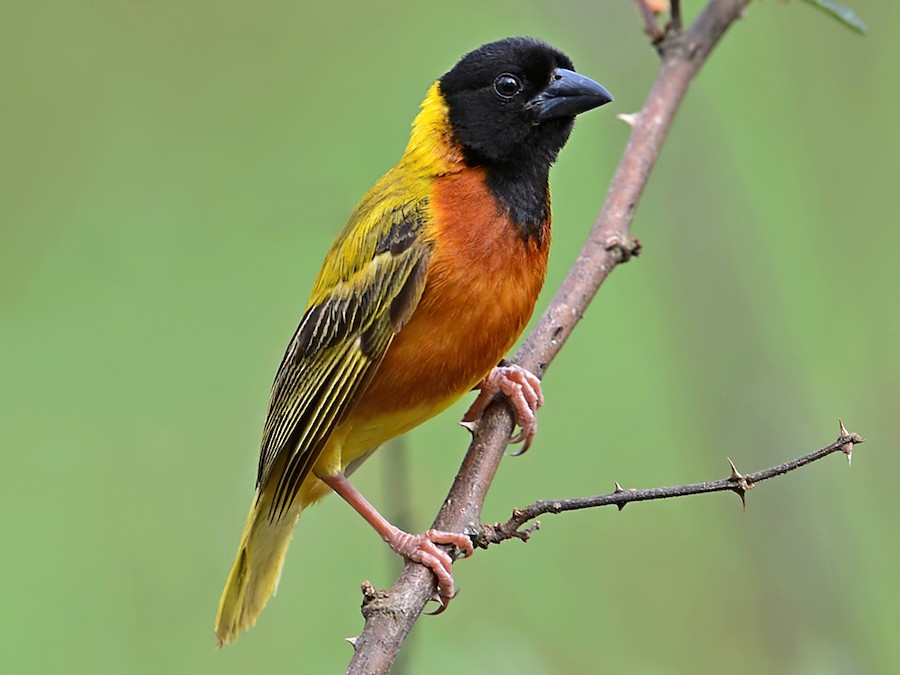
Black-necked Weaver
Black-necked Weaver
The Black-necked Weaver: A Vivid Portrait of Africa’s Master Architect. Birding Safari
Introduction
Among the vibrant tapestry of African avifauna, the Black-necked Weaver (Ploceus nigricollis) stands out not only for its striking plumage but also for its remarkable nest-building prowess. This bird, often overlooked in favor of more flamboyant species, is a marvel of evolutionary adaptation, social behavior, and ecological significance. In this comprehensive guide, we delve deep into the life, habitat, behavior, and conservation of the Black-necked Weaver.
Overview of the Black-necked Weaver
The Black-necked Weaver is a passerine bird belonging to the family Ploceidae, which includes over 100 species of weavers known for their intricate nests. Native to sub-Saharan Africa, this species is especially prominent in countries like Nigeria, Uganda, Ghana, and Kenya.
Key Characteristics
- Scientific Name: Ploceus nigricollis
- Family: Ploceidae
- Order: Passeriformes
- Conservation Status: Least Concern (IUCN)
- Habitat: Tropical and subtropical forests, savannas, and wetlands
- Diet: Omnivorous – insects, seeds, fruits
Physical Description
Plumage and Sexual Dimorphism
The Black-necked Weaver exhibits a vivid yellow body contrasted by a black throat and upper chest, which gives the bird its name. The wings and tail are olive-green, blending seamlessly into the foliage of its habitat. Males are typically more brightly colored than females, especially during the breeding season when their plumage becomes more saturated to attract mates.
- Male: Bright yellow with a distinct black neck and face
- Female: Duller yellow, with less pronounced black markings
- Juveniles: Pale yellow with no black markings
Size and Wingspan
- Length: Approximately 15–17 cm
- Wingspan: Around 20–25 cm
- Weight: 25–35 grams
Distribution and Habitat
Geographic Range
The Black-necked Weaver is widely distributed across sub-Saharan Africa. Its range includes:
- West Africa: Nigeria, Ghana, Ivory Coast
- Central Africa: Cameroon, Democratic Republic of Congo
- East Africa: Kenya, Uganda, Tanzania
Preferred Habitats
This species thrives in a variety of environments, including:
- Tropical Rainforests
- Woodlands and Forest Edges
- Swampy Wetlands
- Agricultural Fields and Gardens
The bird’s adaptability to both wild and semi-urban environments makes it a common sight in many parts of Africa.
Behavior and Social Structure
Nesting and Breeding
One of the most fascinating aspects of the Black-necked Weaver is its nest-building behavior. Males construct elaborate, spherical nests using grasses, reeds, and palm fibers. These nests are suspended from tree branches, often over water, to deter predators.
Nesting Facts:
- Construction Time: 3–5 days
- Materials Used: Grass blades, palm fronds, twigs
- Nest Shape: Oval or spherical with a side entrance
- Function: Attracts females; multiple nests may be built to increase mating chances
Mating and Reproduction
The Black-necked Weaver is polygynous, with males often mating with multiple females. Courtship involves a display of plumage and vocalizations, followed by the presentation of the nest.
- Breeding Season: Varies by region, often during the rainy season
- Clutch Size: 2–4 eggs
- Incubation Period: 12–14 days
- Fledging Time: 17–20 days
Vocalizations
The species is known for its rich and varied calls, which include:
- Chirps and Whistles: Used for communication within flocks
- Buzzing Sounds: Employed during courtship
- Alarm Calls: High-pitched notes to warn of predators
Diet and Foraging
The Black-necked Weaver is an omnivore, feeding on a diverse array of food sources. Its diet changes with the seasons and availability of resources.
Common Food Items:
- Insects: Caterpillars, beetles, ants
- Seeds: Grass seeds, millet, sorghum
- Fruits: Berries, figs, bananas
- Nectar: Occasionally from flowering plants
Foraging Behavior
- Solo or in Pairs: During breeding season
- Flocks: Outside of breeding season, often mixed with other weaver species
- Feeding Sites: Ground, shrubs, tree canopies
Predators and Threats
Despite its adaptability, the Black-necked Weaver faces several natural and anthropogenic threats.
Natural Predators
- Birds of Prey: Hawks, eagles
- Snakes: Tree-climbing species like boomslangs
- Mammals: Monkeys and genets
Human-Induced Threats
- Habitat Destruction: Deforestation and agricultural expansion
- Pesticides: Affect insect populations and poison birds
- Climate Change: Alters breeding cycles and food availability
Conservation Status
According to the IUCN Red List, the Black-necked Weaver is currently listed as Least Concern. However, continuous monitoring is essential due to increasing environmental pressures.
Conservation Measures
- Protected Areas: National parks and reserves
- Community Engagement: Promoting eco-tourism and birdwatching
- Research Programs: Ongoing studies on breeding and migration
The Black-necked Weaver in Culture and Symbolism
In many African cultures, the weaverbird is a symbol of creativity, diligence, and community. Its intricate nest is often used as a metaphor for craftsmanship and architectural brilliance.
How to Spot a Black-necked Weaver
For birdwatchers and eco-tourists, spotting a Black-necked Weaver can be a rewarding experience. Here are some tips:
Best Times and Locations
- Early Morning: Peak activity during foraging and nest-building
- Breeding Season: Increased visibility due to mating displays
- Wetlands and Forest Edges: High probability of sightings
Equipment Suggestions
- Binoculars: 8×42 or 10×50 for optimal viewing
- Field Guide: Specific to African birds
- Camera: With telephoto lens for capturing nest-building behavior
Ecological Importance
The Black-necked Weaver plays a vital role in its ecosystem:
- Insect Control: Helps regulate pest populations
- Seed Dispersal: Aids in forest regeneration
- Indicator Species: Reflects the health of its environment
Fascinating Facts About the Black-necked Weaver
- 🧵 Their nests can have over 500 individual stitches of grass!
- 🐣 Only the female incubates the eggs, while the male continues building more nests.
- 🎶 Each male has a unique song used to attract mates.
- 🌍 They can adapt to urban gardens, making them a bridge between wild and human habitats.
- 🧠 Studies show they can learn from observing other weavers’ nest-building techniques.
Frequently Asked Questions (FAQ)
1. What makes the Black-necked Weaver unique among weaverbirds?
The Black-necked Weaver is distinguished by its vivid yellow plumage and black throat, as well as its highly symmetrical and durable nests. Its ability to adapt to various habitats also sets it apart.
2. Where can I see a Black-necked Weaver in the wild?
You can spot them in protected areas like Kakum National Park in Ghana, Kibale Forest in Uganda, and Aberdare National Park in Kenya.
3. Do Black-necked Weavers migrate?
They are generally resident birds but may exhibit local movements in response to seasonal changes in food availability and breeding conditions.
4. How do they build their nests?
Males weave nests using grasses and palm fibers, creating a hanging, enclosed structure with a side entrance. The process involves intricate knotting and looping techniques.
5. Are Black-necked Weavers endangered?
Currently, they are not endangered. However, habitat loss and environmental changes could pose future risks, making conservation efforts essential.
Conclusion
The Black-necked Weaver is more than just a colorful bird; it is a symbol of ingenuity, resilience, and ecological harmony. From its dazzling plumage to its architectural marvels, this species captivates both scientists and casual observers. As we continue to explore and appreciate the biodiversity of our planet, the Black-necked Weaver reminds us of the intricate connections that bind all life forms.
Whether you’re a seasoned ornithologist or a curious traveler, taking the time to observe and understand this remarkable bird is a journey worth embarking on.