
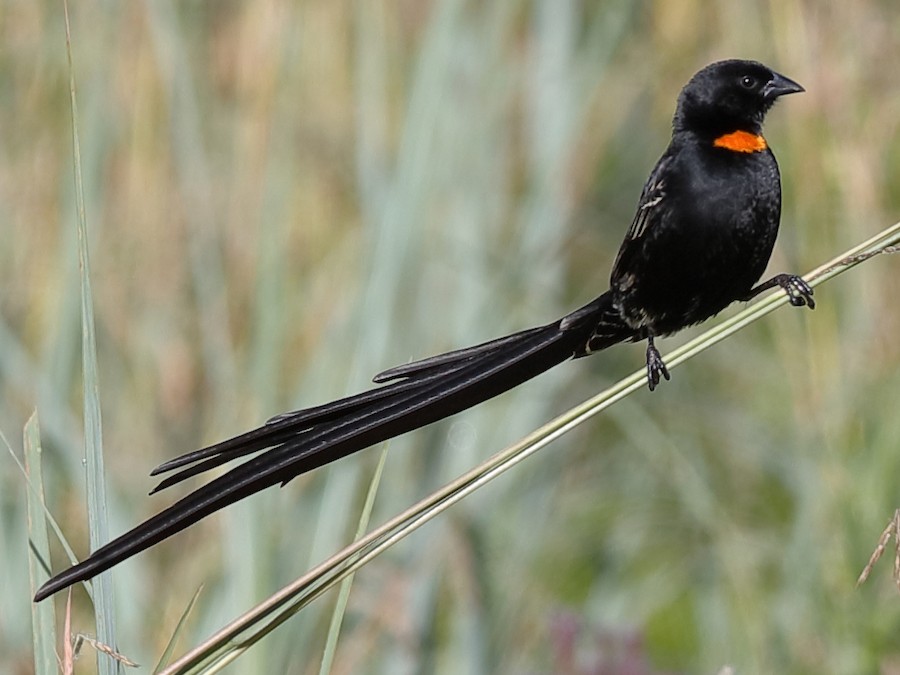
Red-collared Widowbird
Red-collared Widowbird
The Enigmatic Beauty of the Red-collared Widowbird: A Deep Dive into Its Habitat, Behavior, and Conservation
The African savannah is home to a myriad of fascinating bird species, but few are as visually striking and behaviorally captivating as the Red-collared Widowbird. With its velvety black plumage, vivid red collar, and dramatically elongated tail feathers during the breeding season, this bird is not just a marvel of nature—it’s a symbol of the intricate dance between evolution, ecology, and survival.
In this comprehensive guide, we’ll explore the Red-collared Widowbird in depth, examining its taxonomy, behavior, mating rituals, habitat preferences, and the ongoing conservation efforts to protect this unique species. Whether you’re a birdwatching enthusiast, a wildlife photographer, or a conservationist, this article will provide valuable insights into one of Africa’s most charismatic avian residents.
Introduction to the Red-collared Widowbird
The Red-collared Widowbird, scientifically known as Euplectes ardens, is a member of the Ploceidae family, which includes weavers and bishops. Native to sub-Saharan Africa, this species is most commonly found in grasslands, wetlands, and savannahs, where its flamboyant appearance and complex mating displays make it a favorite among birdwatchers and researchers alike.
Taxonomy and Classification
- Kingdom: Animalia
- Phylum: Chordata
- Class: Aves
- Order: Passeriformes
- Family: Ploceidae
- Genus: Euplectes
- Species: E. ardens
The Red-collared Widowbird belongs to a group of birds known for their elaborate breeding plumage and polygynous mating systems. It is closely related to other widowbirds, such as the Long-tailed Widowbird, but is distinguished by its bright red collar and slightly different habitat preferences.
Physical Characteristics
The Red-collared Widowbird is sexually dimorphic, meaning males and females exhibit different physical traits:
Males (Breeding Season)
- Jet-black plumage with a vivid red collar around the neck
- Extremely long tail feathers, sometimes up to 50 cm in length
- Slightly larger body size than females
Females
- Brownish and streaked plumage for camouflage
- Shorter tail and smaller body
- Less conspicuous appearance to avoid predators
These visual distinctions are most pronounced during the breeding season, when males transform into flamboyant performers to attract mates.
Habitat and Distribution
The Red-collared Widowbird is widely distributed across sub-Saharan Africa, with significant populations in:
- Kenya
- Tanzania
- Uganda
- South Africa
- Zambia
They prefer open grasslands and moist savannahs, often near water sources. The Turkana region in northern Kenya is a notable habitat, where birdwatchers can observe these birds in their natural environment.
Preferred Habitats:
- Wetlands with tall grasses
- Agricultural fields (especially during the non-breeding season)
- Edges of forests and bushlands
Diet and Feeding Habits
Red-collared Widowbirds are primarily granivorous, feeding on a variety of seeds and grains. However, they also consume insects, especially during the breeding season when protein is essential for chick development.
Common Food Sources:
- Grass seeds
- Millet and sorghum (in cultivated areas)
- Termites and ants
- Caterpillars and beetles
Their foraging behavior is typically ground-based, where they move in small flocks, especially outside the breeding season.
Mating Behavior and Sexual Selection
One of the most fascinating aspects of the Red-collared Widowbird is its mating system. Males engage in elaborate displays to attract females, which include:
- Territorial Displays: Males establish and defend territories rich in tall grasses.
- Flight Displays: Slow, exaggerated flights with tail feathers fully extended.
- Vocalizations: Series of chirps and whistles to signal presence and dominance.
Female Choice:
Females select mates based on the length of the male’s tail and the vibrancy of his red collar. Studies have shown that longer tails are associated with higher reproductive success, making this a classic example of sexual selection in action.
Role in the Ecosystem
The Red-collared Widowbird plays a vital role in its ecosystem:
- Seed Dispersal: Helps in the propagation of native grasses.
- Pest Control: Consumes large quantities of insects.
- Prey Species: Serves as food for larger birds of prey and mammals.
Their presence indicates a healthy grassland ecosystem, making them important bioindicators for conservationists.
Conservation Status and Threats
According to the IUCN Red List, the Red-collared Widowbird is currently listed as a species of Least Concern. However, this does not mean it is free from threats.
Major Threats:
- Habitat Loss: Due to agricultural expansion and urban development.
- Climate Change: Alters the availability of breeding habitats.
- Pesticide Use: Reduces insect populations and contaminates food sources.
Conservation Efforts:
- Protected areas like Turkana Wildlife Reserves offer safe habitats.
- Community-based conservation programs
- Environmental education and awareness campaigns
How to Spot the Red-collared Widowbird in the Wild
If you’re planning a birdwatching safari, the best time to see the Red-collared Widowbird is during the breeding season (typically between November and March), when males are in full display.
Tips for Birdwatchers:
- Visit wetlands and grasslands in the early morning or late afternoon.
- Use binoculars with a wide field of view.
- Look for males performing flight displays over tall grasses.
- Join a guided tour with Turkana Wildlife Safaris for expert insight.
FAQs
1. Where can I see the Red-collared Widowbird in Kenya?
You can spot this species in the Turkana region, as well as in other grassland areas across Kenya. Guided birdwatching tours are available through Turkana Wildlife Safaris.
2. What is the purpose of the male’s long tail?
The long tail is a result of sexual selection. Females prefer males with longer tails, as it signals good health and genetic fitness.
3. Are Red-collared Widowbirds endangered?
No, they are currently listed as Least Concern by the IUCN. However, habitat degradation poses a long-term threat.
4. What do Red-collared Widowbirds eat?
Their diet includes grass seeds, grains, and insects. During breeding, they consume more protein-rich insects to support chick development.
5. Can I photograph the Red-collared Widowbird?
Absolutely! Their dramatic appearance makes them a favorite among wildlife photographers. For the best experience, consider a photographic safari with experienced guides.
Conclusion
The Red-collared Widowbird is more than just a beautiful bird—it’s a living testament to the wonders of evolution and the delicate balance of ecosystems. From its flamboyant courtship displays to its role in seed dispersal and insect control, this species is a vital part of Africa’s natural heritage.
For those eager to witness this avian marvel, a journey to Kenya’s Turkana region offers not only the chance to see the Red-collared Widowbird in action but also to explore one of the continent’s most biodiverse landscapes.
Whether you’re a seasoned ornithologist or a curious traveler, the Red-collared Widowbird invites you to look closer, listen carefully, and appreciate the intricate beauty of the natural world.