
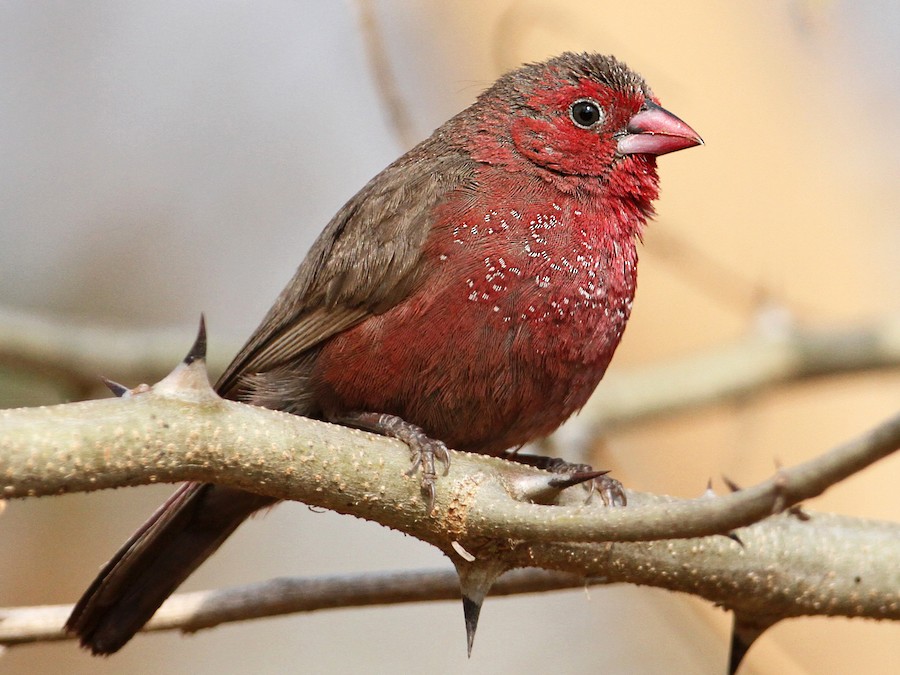
Bar-breasted Firefinch
Bar-breasted Firefinch
The Bar-breasted Firefinch: A Hidden Jewel of African Avifauna. African Birding Safari
Introduction
The Bar-breasted Firefinch (Lagonosticta rufopicta) is a small, brilliantly colored bird that graces the grasslands and savannas of sub-Saharan Africa. While it may not be as globally renowned as some of its avian cousins, this finch is a marvel of nature, offering a fascinating glimpse into the complex ecosystems of the African continent. This article delves deep into the world of the Bar-breasted Firefinch, exploring its habitat, behavior, diet, breeding patterns, and its role in the broader ecological tapestry.
Taxonomy and Classification
The Bar-breasted Firefinch belongs to the family Estrildidae, a group of small passerine birds known for their vibrant plumage and intricate social behaviors. The scientific classification is as follows:
- Kingdom: Animalia
- Phylum: Chordata
- Class: Aves
- Order: Passeriformes
- Family: Estrildidae
- Genus: Lagonosticta
- Species: L. rufopicta
This species is closely related to other members of the Lagonosticta genus, such as the Red-billed Firefinch and the African Firefinch, but it is distinguished by its unique breast markings and subtle coloration.
Physical Description
The Bar-breasted Firefinch is a small bird, measuring approximately 10 cm in length. Despite its diminutive size, it boasts a striking appearance:
- Plumage: Males exhibit a deep crimson-red face and breast, with fine dark barring across the chest—hence the name “bar-breasted.” The back and wings are olive-brown, and the underparts fade to a lighter pinkish hue.
- Females: Slightly duller in coloration, with less pronounced barring and a more subdued red on the face.
- Eyes: Dark and expressive, set against a vivid facial backdrop.
- Bill: Short, conical, and typically greyish-black—ideal for cracking seeds.
These birds are often mistaken for other firefinches, but the characteristic barred breast pattern is a reliable identifier.
Habitat and Distribution
The Bar-breasted Firefinch is native to a broad swath of sub-Saharan Africa, with a range that includes:
- Nigeria
- Cameroon
- Ghana
- Uganda
- South Sudan
- Central African Republic
Preferred Habitats:
- Moist savannas
- Open woodlands
- Grasslands near water sources
- Agricultural fields and village outskirts
These birds are highly adaptable and can thrive in both wild and semi-urban environments, provided there is sufficient cover and food availability.
Behavior and Social Structure
Bar-breasted Firefinches are known for their gregarious nature. They are often seen in small flocks, especially outside the breeding season.
Key Behavioral Traits:
- Social Bonds: Strong pair bonds are common, with mated pairs often seen foraging together.
- Territoriality: During breeding, males may become territorial, defending nesting sites with soft calls and displays.
- Communication: Their vocalizations are soft and melodious, consisting of high-pitched whistles and trills used for both mating and flock cohesion.
Unlike some more aggressive finch species, Bar-breasted Firefinches are generally peaceful and coexist well with other small birds.
Diet and Feeding Habits
Like many members of the Estrildidae family, the Bar-breasted Firefinch is primarily granivorous but supplements its diet with insects and other small invertebrates.
Common Food Sources:
- Grass seeds (especially from Panicum and Setaria species)
- Termites and ants
- Small beetles
- Soft fruits and berries
Feeding usually occurs on the ground, where the birds hop about energetically, picking at seeds and insects with their specialized bills.
Breeding and Reproduction
Breeding typically coincides with the rainy season, when food is abundant and vegetation offers ample nesting material and cover.
Breeding Highlights:
- Nesting: Nests are dome-shaped and constructed from grasses and plant fibers. They are often hidden in dense shrubs or tall grass.
- Clutch Size: 3 to 6 eggs
- Incubation: Around 12–14 days, primarily by the female
- Fledging: Chicks leave the nest approximately 18–21 days after hatching
Both parents participate in feeding the young, bringing a mix of seeds and insects to ensure proper nutrition.
Conservation Status
According to the IUCN Red List, the Bar-breasted Firefinch is listed as a species of “Least Concern.” This is due to its wide distribution and relatively stable population.
Conservation Factors:
- Population Trend: Stable
- Habitat Flexibility: High
- Threat Level: Low
However, localized threats such as habitat destruction and pesticide use in agriculture can impact regional populations.
Importance in Ecosystems
The Bar-breasted Firefinch plays a vital role in its ecosystem, contributing to seed dispersal and insect population control.
Ecological Contributions:
- Seed Dispersal: By feeding on various grasses, they help maintain plant diversity.
- Pest Control: Their insectivorous habits aid in controlling pest populations.
- Prey Species: Serve as food for raptors, snakes, and small mammals.
Their presence is an indicator of healthy, biodiverse habitats.
Threats and Challenges
While not currently endangered, the species faces several environmental pressures:
- Habitat Loss: Expansion of agriculture and urbanization
- Climate Change: Altered rainfall patterns affecting breeding cycles
- Pesticide Use: Reduces insect availability and contaminates food sources
- Predation: Increased due to habitat fragmentation
Conservation efforts should focus on habitat preservation and sustainable agricultural practices.
How to Spot a Bar-breasted Firefinch
Birdwatchers and ornithologists can identify this species by observing key features and behaviors.
Identification Tips:
- Look for small, red-faced birds with barred chests
- Often seen in pairs or small flocks near grassy areas
- Listen for soft, high-pitched whistles
- Active during early morning and late afternoon
Best Locations:
- Wet savannas in West and Central Africa
- Edges of agricultural fields
- Near water bodies with dense grass cover
Using binoculars and field guides like the Birds of Africa can enhance your birdwatching experience.
FAQ
1. What is the scientific name of the Bar-breasted Firefinch?
The scientific name is Lagonosticta rufopicta. It belongs to the Estrildidae family, known for small, colorful finches.
2. Where can I find the Bar-breasted Firefinch?
It is native to sub-Saharan Africa, particularly in countries like Nigeria, Ghana, and Uganda. It prefers moist savannas and open woodlands.
3. What does the Bar-breasted Firefinch eat?
Its diet includes grass seeds, insects, and small fruits. It forages mainly on the ground in open grassy areas.
4. Is the Bar-breasted Firefinch endangered?
No, it is currently classified as “Least Concern” by the IUCN, thanks to its wide distribution and stable population.
5. How can I identify a Bar-breasted Firefinch?
Look for a small bird with a red face and finely barred chest. Males are more vividly colored than females. They are often seen in pairs or small flocks.
Conclusion
The Bar-breasted Firefinch may be small in stature, but it holds a significant place in the avian world of Africa. With its vibrant plumage, engaging behaviors, and ecological importance, this bird is a testament to the richness of African biodiversity. Whether you’re a seasoned ornithologist or a curious nature enthusiast, understanding and appreciating this species adds depth to your knowledge of the natural world.
For more information on African birds, visit BirdLife International or explore the Handbook of the Birds of the World.