
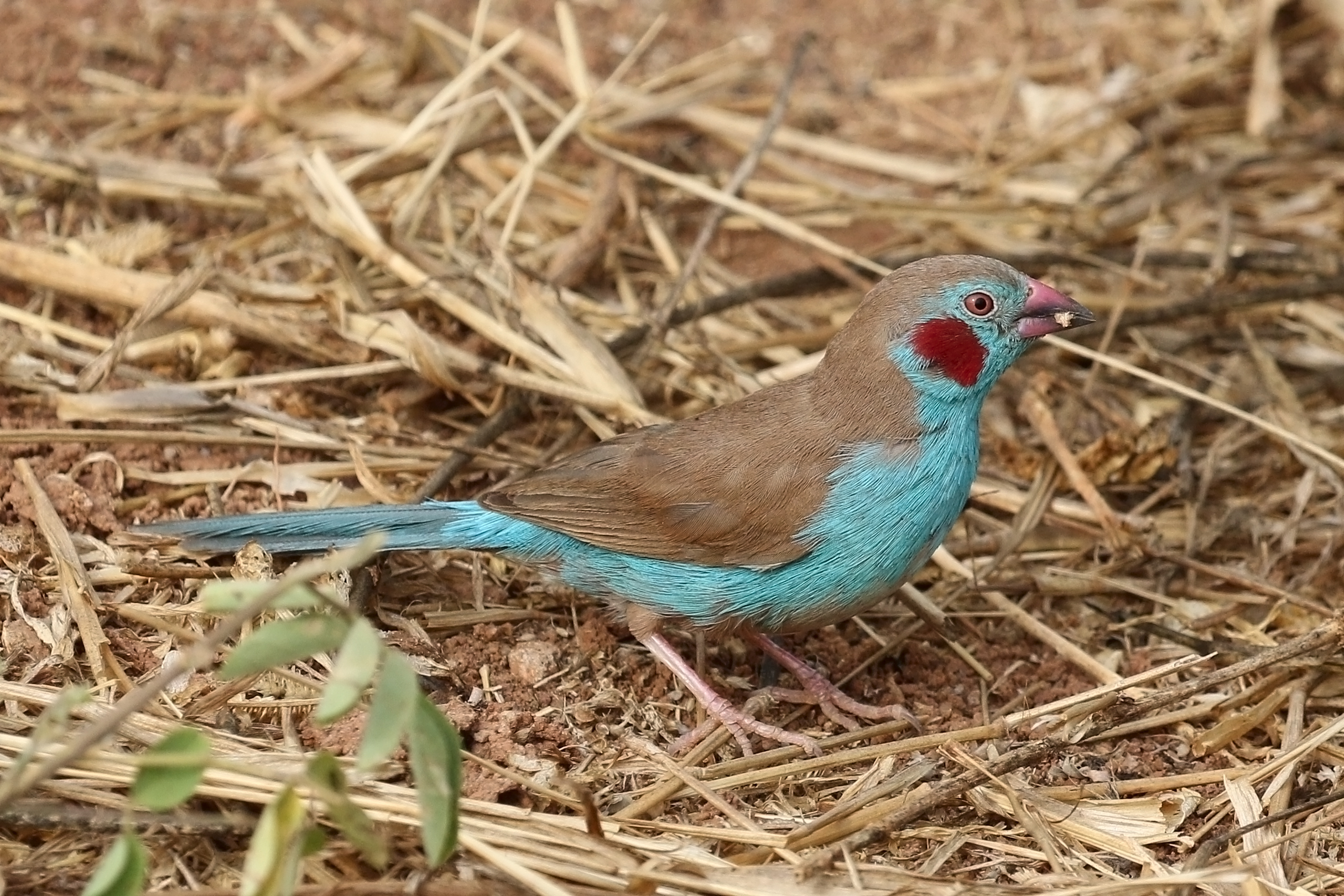
Red-cheeked Cordon-bleu
Red-cheeked Cordon-bleu
The Red-cheeked Cordon-bleu: A Jewel of the African Savannah. Uganda Birding Safari
Introduction
The Red-cheeked Cordon-bleu (Uraeginthus bengalus) is a small, vibrantly colored finch native to sub-Saharan Africa. Known for its striking plumage and melodious song, this bird is a favorite among avian enthusiasts and ornithologists alike. With its distinctive red cheek patch, especially prominent in males, and its soft blue body, the Red-cheeked Cordon-bleu is not only a visual delight but also a fascinating subject of ecological and behavioral studies.
In this comprehensive guide, we will delve into the habitat, diet, behavior, breeding patterns, and conservation status of this exquisite species. Whether you’re a birdwatcher, a breeder, or simply a nature lover.
Habitat and Distribution
The Red-cheeked Cordon-bleu is primarily found across the savannahs, scrublands, and open woodlands of sub-Saharan Africa. Its range extends from Senegal and Sudan in the north to Uganda, Kenya, and Tanzania in the east, and as far south as Angola and Zambia.
Preferred Environments
- Dry grasslands with scattered shrubs
- Agricultural lands and human settlements
- Edges of forests and riverine areas
These birds are highly adaptable and often thrive in semi-arid regions where other species may struggle. Their ability to live near human habitation has contributed to their stable population numbers.
Physical Characteristics
One of the most captivating aspects of the Red-cheeked Cordon-bleu is its vivid coloration and delicate structure.
Male vs. Female
- Males: Bright turquoise-blue body with a prominent red patch on each cheek.
- Females: Similar blue hue, but paler and lacking the red cheek patches.
- Juveniles: Duller brownish-blue with no red markings.
Size and Weight
- Length: 12–13 cm (4.7–5.1 inches)
- Weight: 9–12 grams (0.3–0.4 ounces)
Their small size and agile flight make them excellent foragers and elusive to predators.
Diet and Feeding Habits
The Red-cheeked Cordon-bleu primarily feeds on small seeds, but its diet is more versatile than one might assume.
Primary Food Sources
- Grass seeds (e.g., millet, sorghum)
- Small insects (especially during breeding)
- Green shoots and soft plant matter
These birds forage on the ground, often in pairs or small flocks. Their conical beak is perfectly adapted for cracking seeds, and during the breeding season, they increase their protein intake by hunting insects.
Mating and Breeding Behavior
Breeding is a fascinating aspect of the Red-cheeked Cordon-bleu’s life cycle, marked by intricate courtship displays and cooperative nesting.
Courtship Rituals
- Males perform a dance involving hopping and tail-flicking.
- They sing a soft, warbling song while holding a piece of nesting material in their beak.
- The red cheek patches become more vibrant during mating season.
Nesting
- Nests are built in bushes, trees, or even man-made structures.
- Constructed from grass, feathers, and soft materials.
- Both sexes participate in building and incubating.
Reproduction
- Clutch Size: 4–6 eggs
- Incubation Period: 11–13 days
- Fledging: 17–21 days post-hatching
The young are fed by both parents and become independent within a month.
Vocalizations and Communication
Though not as loud as some finches, the Red-cheeked Cordon-bleu has a gentle, melodic song that is used for both territorial defense and mate attraction.
Types of Calls
- Contact calls: Soft chirps used between mates or flock members.
- Alarm calls: Sharp, high-pitched notes to warn of predators.
- Courtship songs: Complex melodies performed by males.
Their vocal range is subtle but expressive, contributing to their popularity in aviculture.
Social Structure and Behavior
These birds are highly social, often seen in small flocks or pairs. Their behavior is characterized by cooperation, playfulness, and territoriality during the breeding season.
Social Traits
- Form monogamous pairs
- Engage in mutual preening
- Share food and nesting responsibilities
Territorial Behavior
- Males defend nesting sites
- Use songs and displays to deter rivals
Despite their small size, they exhibit complex social interactions and a strong bond with their mates.
Captive Care and Aviculture
Due to their beauty and gentle nature, Red-cheeked Cordon-bleus are popular in the pet trade and among avian breeders. However, they require specific conditions to thrive in captivity.
Housing Requirements
- Spacious aviary or large cage
- Plenty of perches and nesting areas
- Temperature: 20–28°C (68–82°F)
Diet in Captivity
- High-quality finch seed mix
- Fresh greens and sprouted seeds
- Occasional live food (e.g., mealworms)
Breeding in Captivity
- Provide nesting boxes and materials
- Ensure a quiet, stress-free environment
- Monitor for aggression during breeding
Proper care and attention can lead to successful breeding and long lifespans of up to 8–10 years in captivity.
Conservation Status
According to the IUCN Red List, the Red-cheeked Cordon-bleu is classified as a species of Least Concern. Its wide range and adaptability have protected it from the threats facing many other bird species.
Threats
- Habitat degradation
- Capture for the pet trade (regulated)
- Predation by domestic animals
Conservation Measures
- Protected areas across Africa
- Regulation of bird trade
- Public awareness and education
Although not endangered, continued monitoring is essential to ensure population stability.
Interesting Facts
- The name “Cordon-bleu” is French for “blue ribbon,” a nod to the bird’s striking color.
- Males can sing while holding nesting material—a rare behavior among finches.
- They often share territories with other finch species, forming mixed-species flocks.
- Their red cheek patches are a sexual signal used in mate selection.
- In some cultures, they are considered symbols of peace and harmony due to their gentle nature.
Frequently Asked Questions (FAQ)
1. Where can I see Red-cheeked Cordon-bleus in the wild?
You can spot them in sub-Saharan Africa, particularly in savannahs, open woodlands, and farmlands. Countries like Kenya, Ethiopia, and Uganda offer excellent birdwatching opportunities.
2. Can Red-cheeked Cordon-bleus be kept as pets?
Yes, they are popular in aviculture due to their calm temperament and beauty. However, they require proper care, diet, and space to thrive.
3. What do Red-cheeked Cordon-bleus eat?
In the wild, they eat grass seeds, insects, and green shoots. In captivity, a balanced diet includes finch seed mix, sprouted grains, and live food like mealworms.
4. How can I distinguish a male from a female?
Males have bright red cheek patches and a more vivid blue body, while females lack the red cheeks and are generally paler.
5. Are Red-cheeked Cordon-bleus endangered?
No, they are listed as Least Concern by the IUCN, thanks to their wide distribution and adaptability.
Conclusion
The Red-cheeked Cordon-bleu is more than just a beautiful bird—it’s a symbol of the rich biodiversity of Africa’s savannahs. From its vibrant plumage to its intricate social behaviors, this species captivates bird lovers and scientists alike. Whether observed in the wild or cared for in captivity, the Red-cheeked Cordon-bleu continues to enchant with its grace, resilience, and charm.
For those seeking to explore the avian wonders of Africa or enrich their understanding of exotic finches, the Red-cheeked Cordon-bleu offers a perfect starting point.