
Best time to visit Murchison Falls Uganda
Best time to visit Murchison Falls Uganda
The Best Time to Visit Murchison Falls Uganda for an Unforgettable Safari
Murchison Falls National Park is Uganda’s largest and most dramatic safari destination. The Victoria Nile explodes through a seven meter gorge, creating the world’s most powerful waterfall, while the surrounding savannah shelters elephants, lions, giraffes, hippos, and over 450 bird species. Choosing the right time to travel shapes everything from wildlife visibility to lodge prices and crowd levels. This guide breaks down the seasons, month by month conditions, and the experiences each window delivers, so you can plan a Murchison Falls safari with Turkana Wildlife Safaris Uganda that matches your priorities.
Understanding the Two Seasons at Murchison Falls
Murchison Falls sits close to the equator, so temperatures remain warm throughout the year. Rainfall, not temperature, defines the safari experience. The park has two dry seasons and two wet seasons, each offering a distinct character.
The long dry season runs from June to September. A shorter dry window spans December to February. The long wet season occurs from March to May, with April typically the wettest month. The short wet season falls between October and November.
During the dry seasons, daytime temperatures range from 25°C to 32°C, with humidity between 40 and 60 percent. The wet seasons stay warm, between 25°C and 30°C, but humidity can climb above 80 percent after rainfall.
Dry Season Safari: June to September and December to February
The dry seasons are widely considered the best time to visit Murchison Falls for classic game viewing and wildlife photography. As the tall grasses die back and lie flat, sight lines open across the savannah, making predator sightings far more frequent. Lions that would be invisible in metre high grass during the wet season are often found lying in plain view on open ground. Leopards become easier to spot along the south bank forest road for the same reason.
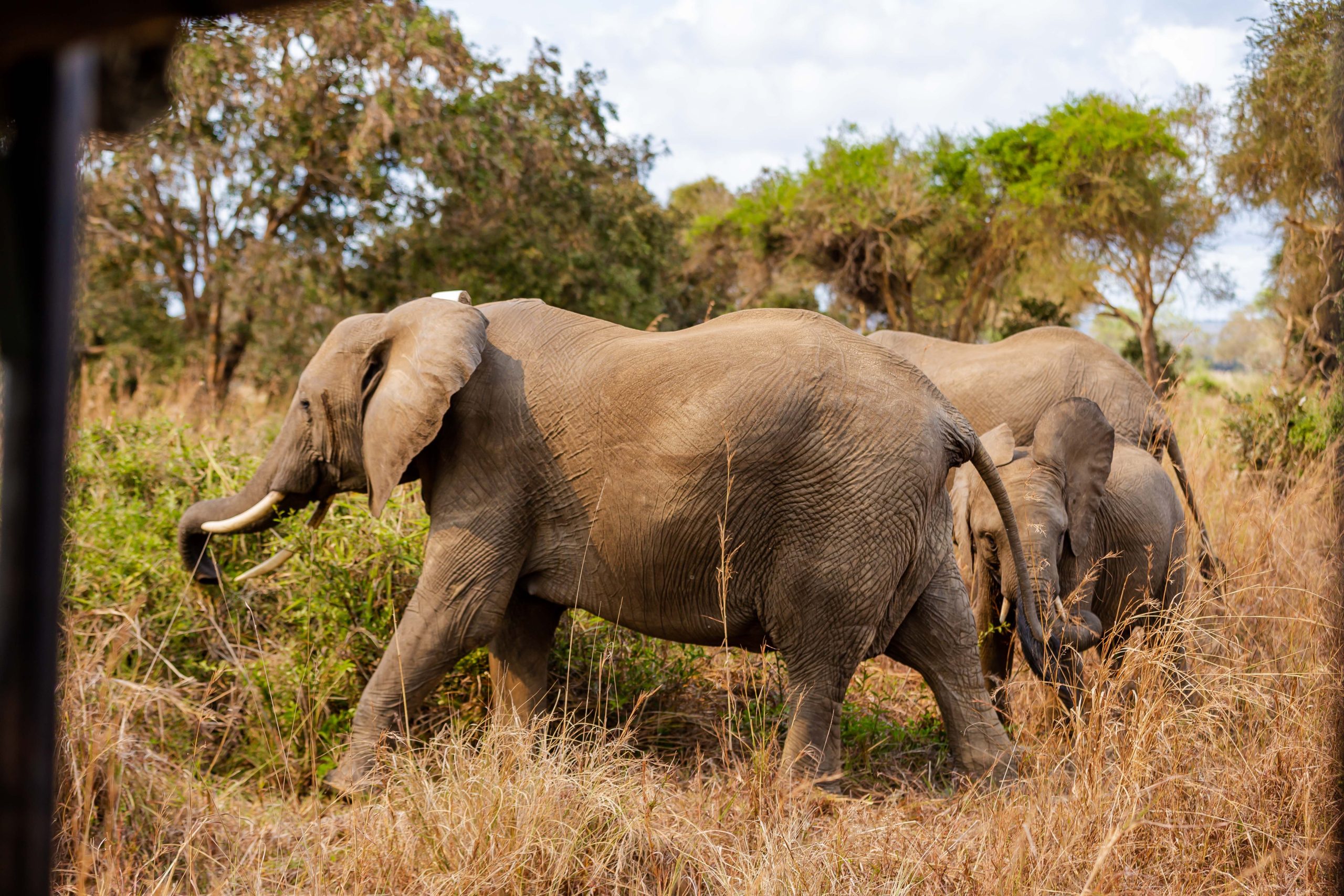
Elephant herds move toward the permanent water of the Victoria and Albert Nile banks, producing some of the most reliable elephant sightings in Uganda from both game drive circuits and afternoon boat cruises. Buffalo herds of several hundred animals gather around the floodplain margins, and the endangered Rothschild’s giraffes, one of the most threatened giraffe subspecies in the world, are easiest to approach and photograph in the dry season open country.
Road access is also most favorable during the dry months. The murram tracks inside the park become dusty but firm, making navigation easier for both self drive travelers and guided safari vehicles. A proper 4×4 vehicle with good ground clearance is still strongly recommended.
July and August are the absolute peak months for game drive quality, but they are also the busiest and most expensive period. The short dry season from December to February is a second peak window that is less crowded and often slightly less expensive, with excellent wildlife viewing, warm and dry weather, and easier availability at the most popular lodges.
For travelers ready to experience the dry season at its best, the 4 Days Murchison Falls Wildlife Safari from Turkana Wildlife Safaris Uganda delivers multiple game drives, a Nile boat cruise to the falls, and an optional Ziwa Rhino Sanctuary stop. Those seeking a shorter escape can consider the 2 Days Luxury Murchison Falls Safari, which packs the park’s highlights into a compact and comfortable itinerary.
Wet Season Magic: March to May and October to November
The wet seasons transform Murchison Falls into a lush, vibrant landscape that offers rewards unavailable during the drier months. The long wet season brings the heaviest rainfall of the year, and tracks on the north bank can become muddy and difficult, particularly in April. Wildlife disperses more widely across the savannah because water is available everywhere, making game viewing harder but still possible.
The greatest spectacle of the wet season is Murchison Falls itself. As the Victoria Nile runs at full volume, the waterfall is at its most dramatic and powerful, thundering through the narrow gorge with an intensity that is truly awe inspiring. For photographers and travelers seeking the most dramatic images of the falls, the wet season delivers an unforgettable experience.
The short wet season from October to November is a particularly attractive shoulder period. Rainfall is lighter than the long wet season and generally does not significantly affect game drive access. Prices drop, visitor numbers fall, and wildlife viewing remains solid. The migratory birds that arrive from the Palearctic in October and November make this one of the best birding periods of the year.
Birdwatchers should note that the best time for birding in Murchison Falls is during the low or wet season, particularly January to March and November to April. November and December are especially ideal, combining good road conditions and clear skies with peak activity of migratory species. The October to November window is also the most productive period for raptor watching.
For a value focused wet season experience, the 3 Days Budget Murchison Falls Safari from Turkana Wildlife Safaris Uganda offers an affordable way to enjoy the park’s green season beauty, including game drives and a Nile boat cruise.
Nile River Boat Safaris and Chimpanzee Tracking by Season
The boat safari along the Victoria Nile to the base of Murchison Falls is one of the park’s signature experiences. Boat safaris are superb year round, but December to February and June to September offer the calmest conditions and the highest concentration of wildlife along the riverbanks. During these dry months, animals gather at the river to drink, making sightings more frequent and rewarding. Morning cruises are excellent for birding, while afternoon and sunset trips maximize wildlife sightings and photography opportunities.
Chimpanzee tracking in Budongo Forest can be done all year, but the most suitable time is the dry season from December to January and June to August, when the ground is not as slippery as it can be in the rainy season. During May, June, July, and August, the success rate for chimpanzee tracking is over 90 percent because food is easy to find and the groups do not move very far.
Travelers who want to combine Murchison Falls with chimpanzee tracking should explore the 5 Days Big 5 Safari and Chimp Trekking from Turkana Wildlife Safaris Uganda, which pairs the park with Kibale National Park for a complete Uganda wildlife experience.
Month by Month Safari Planning Guide
January is one of the best months for a Murchison Falls safari. The dry season is in full swing, bringing sunshine, warm temperatures, and clear skies ideal for savannah safaris. With the Nile low and the grasses dry, wildlife congregates along the riverbanks, making January ideal for game drives and boat safaris. Expect elephants, lions, hippos, and the powerful surge of Murchison Falls at its most dramatic.
February stays dry and warm, offering fantastic conditions for travel and wildlife viewing. The northern regions can get hot and arid, but this is a peak time for spotting large game. February is ideal for game drives in Murchison Falls.
March marks the start of the long rains, with heavier showers. While roads can become muddy, landscapes turn lush and atmospheric, particularly rewarding for photographers and birders.
April sees peak rainfall across most of the region. The falls are at their most powerful, and the park is at its greenest and most vibrant. Birdwatching is exceptional during this month.
May offers warm and sunny weather, with maximum daytime temperatures between 22°C and 30°C and daily sunshine of eight hours or more.
June is the beginning of the long dry season and one of the best times to visit. Wildlife viewing becomes easier as grasses dry and animals concentrate around water sources. June to September offers the best game drive conditions.
July and August are the absolute peak months for game drive quality, with excellent visibility and wildlife concentrations along the Nile. These months are also the busiest and most expensive, so early booking is essential.
September remains part of the dry season and continues to offer excellent wildlife viewing. It is also a warm and sunny month.
October brings the short wet season, with lighter rainfall than the long wet season. This shoulder period is excellent value with lower prices, fewer visitors, and solid wildlife viewing. Migratory birds begin to arrive.
November is one of the best birding months, with migratory species present in large numbers and good road conditions during the short dry season.
December marks the return of the short dry season, with excellent wildlife viewing, warm and dry weather, and easier availability at popular lodges.
Frequently Asked Questions About Visiting Murchison Falls
What is the absolute best time to visit Murchison Falls for wildlife viewing?
The dry seasons from December to February and June to September are the best windows for classic game viewing. Grasses are short, wildlife concentrates around water sources, and road conditions are most favorable. July and August offer peak game drive quality, while December to February provides a less crowded alternative with excellent sightings.
Is the wet season worth considering for a Murchison Falls safari?
Yes. The wet season delivers lush scenery, dramatic waterfall photography, exceptional birdwatching, fewer crowds, and lower lodge rates. The short wet season from October to November is especially attractive because rainfall is lighter and does not significantly affect game drive access. The falls are at their most powerful during the long rains.
When is the best time for birdwatching in Murchison Falls?
Birdwatching is excellent year round, but the wet season months from January to March and November to April are the most productive. November and December combine good road conditions with peak migratory bird activity. October and November are also the best months for raptor watching.
How do I choose between the dry season and the wet season for my safari?
Choose the dry season if your priority is maximum wildlife visibility, easy road access, and classic savannah game drives. Choose the wet season if you value lush landscapes, dramatic waterfall photography, quiet trails, lower prices, and outstanding birding. The short wet season from October to November offers a balanced compromise with solid wildlife viewing and fewer visitors.
Can I combine Murchison Falls with chimpanzee tracking?
Yes. Budongo Forest borders the park and offers chimpanzee tracking. The dry season from December to January and June to August provides the easiest forest walks and the highest success rates, often above 90 percent during May through August. Turkana Wildlife Safaris Uganda offers a 5 Days Big 5 Safari and Chimp Trekking that combines Murchison Falls with Kibale National Park for a seamless primate and wildlife experience.
Conclusion
There is no single wrong time to visit Murchison Falls, only a time that matches your travel style. The dry seasons from December to February and June to September reward travelers with shorter grasses, concentrated wildlife, and firm roads, making them the premier choice for first time safari goers and photographers seeking predator sightings. The wet seasons from March to May and October to November trade easy game drives for lush scenery, thundering waterfalls, world class birding, fewer crowds, and better value. Whether you choose the peak clarity of July and August, the quieter dry window of December to February, or the green season magic of October and November, Turkana Wildlife Safaris Uganda offers a range of curated packages to match every season and budget. Explore the 3 Days Budget Murchison Falls Safari, the 2 Days Luxury Murchison Falls Safari, the 4 Days Murchison Falls Wildlife Safari, and the 5 Days Big 5 Safari and Chimp Trekking to begin planning your Murchison Falls adventure with confidence.