
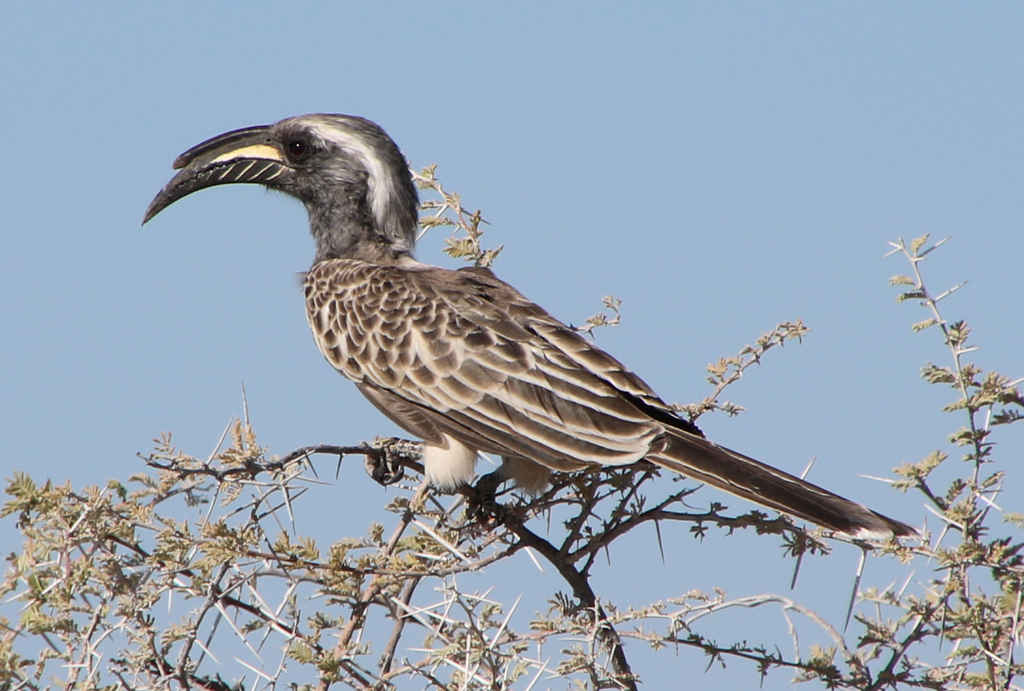
African Gray Hornbill
African Gray Hornbill
The African Gray Hornbill: Nature’s Winged Sentinel of the Savannah
Introduction
The African Gray Hornbill, with its distinctive silhouette and commanding call, is one of the most fascinating avian species native to the African continent. Often spotted gliding through the dry woodlands and savannahs, this bird is not just a visual marvel but also a critical component of its ecosystem. In this comprehensive guide, we’ll explore the biology, behavior, habitat, and ecological significance of the African Gray Hornbill.
Taxonomy and Classification
The African Gray Hornbill belongs to the family Bucerotidae, a group of birds known for their large, curved bills and unique nesting behaviors. Its scientific name is Lophoceros nasutus, previously classified under the genus Tockus. This bird is part of a broader group of hornbills found across Africa and Asia, each with distinct adaptations to their environments.
Classification Overview:
- Kingdom: Animalia
- Phylum: Chordata
- Class: Aves
- Order: Bucerotiformes
- Family: Bucerotidae
- Genus: Lophoceros
- Species: L. nasutus
Physical Characteristics
The African Gray Hornbill is instantly recognizable due to its slender body, long tail, and prominent bill. Its plumage is predominantly gray, with lighter underparts and darker wings. The most striking feature is its curved bill, which is black with a white stripe and lacks the large casque seen in other hornbill species.
Key Features:
- Length: 45–50 cm (17.7–19.7 inches)
- Weight: 200–300 grams
- Bill: Long, slightly curved, black and white
- Sexual Dimorphism: Males and females appear similar, though males may have slightly larger bills
This bird’s streamlined shape and muted coloration allow it to blend seamlessly into the savannah and woodland environments it inhabits.
Habitat and Distribution
The African Gray Hornbill is widely distributed across sub-Saharan Africa. It thrives in a variety of habitats, including:
- Dry savannahs
- Open woodlands
- Riverine forests
- Agricultural lands
Geographical Range:
- West Africa: Senegal, Ghana, Nigeria
- East Africa: Ethiopia, Kenya, Tanzania
- Southern Africa: Botswana, Zimbabwe, Mozambique
This adaptability has allowed the species to remain relatively stable in terms of population, even as human activity encroaches on its natural habitat.
Diet and Feeding Habits
As an omnivorous forager, the African Gray Hornbill has a diverse diet that includes both animal and plant matter. Its long bill is a versatile tool for picking fruits, snatching insects, and even catching small reptiles.
Typical Diet:
- Fruits: Figs, berries, and other native fruits
- Insects: Beetles, grasshoppers, caterpillars
- Small Vertebrates: Lizards, frogs
- Seeds and Nuts
This bird plays a crucial role in seed dispersal, aiding in the regeneration of plant life across its range. Its foraging behavior often involves hopping between branches or descending to the ground to hunt.
Reproduction and Nesting Behavior
One of the most fascinating aspects of hornbill biology is their unique nesting strategy. The African Gray Hornbill nests in tree cavities, where the female seals herself inside using mud, droppings, and food remains, leaving only a narrow slit through which the male feeds her and the chicks.
Breeding Facts:
- Breeding Season: Varies by region; typically during the rainy season
- Clutch Size: 2–4 eggs
- Incubation Period: ~24 days
- Fledging Period: 45–50 days
This nesting method protects the female and chicks from predators and harsh weather, though it requires a high level of cooperation and commitment from the male.
Vocalizations and Communication
The African Gray Hornbill is a vocal species, using a variety of calls to communicate with mates, signal alarm, or establish territory. Its call is a nasal “kok-kok-kok” or “cluck-cluck” sound, often heard during flight or while perched.
Communication Methods:
- Duets: Mated pairs often call in synchrony
- Territorial Calls: Loud, repetitive notes to warn intruders
- Alarm Calls: Sharp, high-pitched sounds to alert others of danger
These calls are essential for maintaining social bonds and navigating the dense foliage of their habitat.
Ecological Role and Importance
Beyond their aesthetic appeal, African Gray Hornbills are vital to the ecosystems they inhabit. Their feeding and nesting behaviors contribute to:
- Seed dispersal
- Insect population control
- Pollination (in some cases)
By consuming a wide range of fruits and defecating the seeds far from the parent plant, they ensure genetic diversity and forest regeneration.
Threats and Conservation Status
Although not currently endangered, the African Gray Hornbill faces several threats that could impact its long-term survival.
Major Threats:
- Habitat Loss: Due to deforestation and agricultural expansion
- Hunting and Trapping: In some regions for food or traditional medicine
- Climate Change: Altering rainfall patterns and food availability
Conservation Status:
- IUCN Red List: Least Concern (source)
- CITES: Not listed
Conservation efforts focus on habitat preservation and raising awareness about the bird’s ecological value.
Interesting Facts About the African Gray Hornbill
- Unlike many hornbills, the African Gray Hornbill often flies in a straight line rather than the undulating flight pattern typical of its relatives.
- It is one of the few hornbill species that can adapt to human-altered landscapes, often seen near farms and villages.
- The species is monogamous, forming long-term pair bonds.
- Its bill lacks a casque, a hollow structure found in many other hornbills, making it lighter and more agile in flight.
- Known for its intelligence, it uses tools and displays problem-solving skills in captivity.
Frequently Asked Questions
1. What does the African Gray Hornbill eat?
The African Gray Hornbill has an omnivorous diet that includes fruits, insects, small reptiles, and seeds. It plays a vital role in seed dispersal and insect control.
2. Where can I find the African Gray Hornbill?
This bird is native to sub-Saharan Africa, commonly found in savannahs, open woodlands, and even near agricultural areas.
3. How does the African Gray Hornbill nest?
The female seals herself inside a tree cavity, leaving only a small slit for the male to pass food through. This protects the nest from predators.
4. Is the African Gray Hornbill endangered?
No, it is currently listed as Least Concern by the IUCN, but it faces threats from habitat destruction and hunting.
5. What makes the African Gray Hornbill unique?
Its distinctive bill, monogamous behavior, and cooperative nesting strategy set it apart from many other bird species.
Conclusion
The African Gray Hornbill is more than just a striking figure in the African sky—it is a symbol of ecological balance, evolutionary ingenuity, and natural beauty. From its cooperative nesting habits to its role in seed dispersal, this bird exemplifies the interconnectedness of life in the savannah. As we continue to study and protect this remarkable species, we deepen our understanding of the ecosystems that sustain us all.
For more information on African birds and conservation efforts, explore organizations like BirdLife International and the African Bird Club.