
Batwa Lifestyle
Batwa Lifestyle
The Enigmatic Lifestyle of the Batwa People: A Deep Dive into Culture, Survival, and Identity
Introduction
Hidden within the dense rainforests of Central Africa, the Batwa people—often referred to as the “forest keepers” or “pygmies”—represent one of the oldest indigenous communities on the African continent. Once thriving as semi-nomadic hunter-gatherers in the Great Lakes region, particularly in Uganda, Rwanda, Burundi, and the Democratic Republic of Congo, the Batwa have faced centuries of marginalization, displacement, and cultural erosion. Yet, their lifestyle, deeply rooted in ecological harmony and spiritual connection to the forest, remains a profound testament to human adaptability and resilience.
In this comprehensive article, we explore the intricate Batwa lifestyle, from their traditional practices to the modern challenges they face. We’ll also examine how their unique cultural identity is being preserved in the face of globalization and environmental change.
Who Are the Batwa?
The Batwa are an indigenous people who traditionally inhabited the equatorial forests of Central Africa. As one of the oldest surviving tribes in the region, their ancestry is believed to date back over 60,000 years. They are recognized for their short stature, a trait that has led to the controversial label of “pygmies,” though this term is increasingly viewed as pejorative.
Historical Context
- Originally forest dwellers, the Batwa lived in symbiosis with nature.
- Their territories included the Bwindi Impenetrable Forest and Mgahinga Gorilla National Park.
- Colonization and the creation of national parks led to their forced eviction from ancestral lands.
- Today, they are among the most marginalized communities in East Africa.
Traditional Batwa Lifestyle
1. Hunter-Gatherer Economy
The Batwa’s economy was traditionally based on hunting, gathering, and small-scale subsistence farming. Their deep knowledge of the forest allowed them to:
- Hunt small game using bows, arrows, and traps.
- Gather wild honey, fruits, roots, and medicinal plants.
- Practice sustainable harvesting techniques that ensured ecological balance.
Their lifestyle was not only environmentally sustainable but also spiritually intertwined with the forest, which they considered sacred.
2. Spiritual Beliefs and Practices
The Batwa have a rich spiritual life centered around animism and ancestor worship. They believe that spirits inhabit natural elements like trees, rivers, and mountains. Key spiritual practices include:
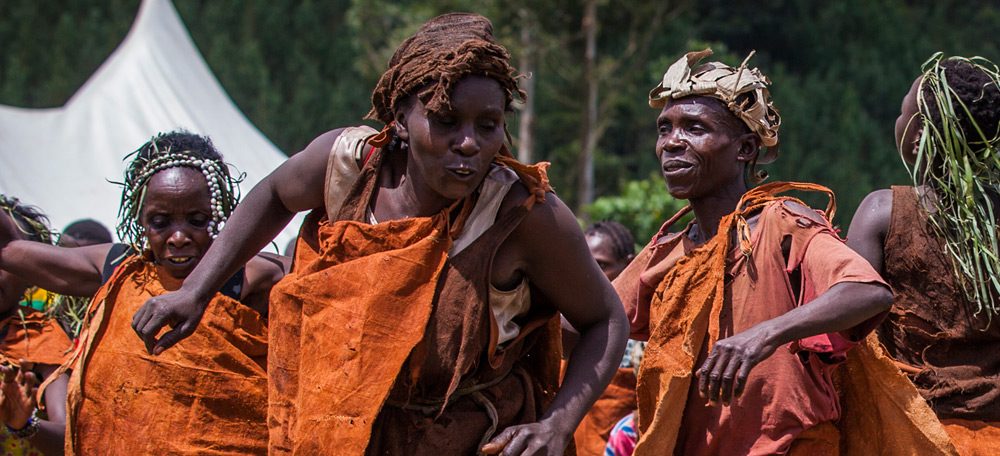
- Ritual dances and songs to honor forest spirits.
- Use of sacred groves for ceremonies.
- Oral storytelling as a means of preserving myths and ancestral knowledge.
3. Social Structure
Batwa communities are traditionally egalitarian, with decisions made collectively. Elders play a crucial role in guiding the community, and knowledge is passed down orally through generations.
- No rigid hierarchy.
- Gender roles are flexible, though men typically hunt while women gather.
- Communal parenting and shared responsibilities.
Displacement and Marginalization
Forced Evictions
In the 1990s, the establishment of national parks for gorilla conservation led to the mass eviction of the Batwa from their ancestral forests. This displacement had devastating effects:
- Loss of livelihood and cultural identity.
- Increased poverty and food insecurity.
- Lack of access to healthcare, education, and land rights.
Socioeconomic Challenges
Today, many Batwa live on the fringes of society, often in slums or temporary settlements. They face:
- Extreme poverty and malnutrition.
- Discrimination and social exclusion.
- Limited access to education and employment.
Despite these challenges, the Batwa continue to fight for recognition and the restoration of their rights.
Cultural Preservation and Modern Adaptation
Reviving Traditions
Efforts are underway to preserve Batwa culture through:
- Cultural centers and museums showcasing Batwa heritage.
- Documentation of oral histories and traditional practices.
- Community-led tourism initiatives that promote cultural exchange.
Education and Empowerment
NGOs and local governments are working to improve the lives of the Batwa through:
- Scholarships and educational programs.
- Skills training and income-generating projects.
- Legal advocacy for land rights and political representation.
Environmental Stewardship
The Batwa’s traditional knowledge of forest ecology is increasingly recognized as valuable in conservation efforts. Initiatives include:
- Involving Batwa in forest management and biodiversity research.
- Promoting eco-tourism that benefits indigenous communities.
- Recognizing the Batwa as custodians of biodiversity.
The Role of Tourism in Cultural Revival
Tourism has become a double-edged sword for the Batwa. While it offers economic opportunities, it also risks commodifying their culture. However, when managed ethically, tourism can:
- Provide income through guided forest walks and cultural performances.
- Educate visitors about Batwa history and traditions.
- Fund community development projects.
Examples of Ethical Tourism
- Batwa Trail in Uganda: A guided experience led by Batwa elders.
- Bwindi Community Hospital: Provides healthcare and employs Batwa staff.
- Uganda Cultural Safaris: Promotes responsible tourism and cultural sensitivity.
The Future of the Batwa People
The survival of the Batwa culture hinges on the recognition of their rights and the integration of their knowledge into national development strategies. Key areas of focus include:
- Legal recognition as indigenous people.
- Restitution of ancestral lands.
- Inclusion in policy-making and conservation planning.
Strategies for Empowerment
- Strengthening community-based organizations.
- Promoting intercultural education.
- Building alliances with other indigenous groups globally.
Frequently Asked Questions (FAQ)
1. Who are the Batwa people?
The Batwa are an indigenous group from Central Africa, traditionally known as forest-dwelling hunter-gatherers. They are among the oldest inhabitants of the Great Lakes region, including Uganda, Rwanda, and Burundi.
2. Why were the Batwa evicted from their ancestral lands?
The Batwa were displaced primarily due to the creation of national parks aimed at gorilla conservation. Governments and conservation agencies often failed to recognize the Batwa’s rights, leading to forced evictions without compensation.
3. How do the Batwa sustain themselves today?
Many Batwa communities rely on subsistence farming, casual labor, and cultural tourism. NGOs also support them through education, healthcare, and skills development programs.
4. What efforts are being made to preserve Batwa culture?
Cultural preservation efforts include documenting oral traditions, promoting eco-tourism, establishing cultural centers, and involving the Batwa in conservation projects.
5. How can I support the Batwa people?
You can support the Batwa by:
- Donating to reputable NGOs working with indigenous communities.
- Participating in ethical tourism initiatives.
- Advocating for indigenous rights and environmental justice.
Key Takeaways
- The Batwa lifestyle is a rich tapestry of ecological wisdom, spiritual depth, and communal living.
- Displacement and marginalization have severely impacted their way of life.
- Cultural revival and legal recognition are essential for their survival.
- Ethical tourism and conservation partnerships offer pathways to empowerment.
Conclusion
The story of the Batwa is one of resilience in the face of adversity. Their lifestyle, once harmoniously intertwined with the forest, has been disrupted by modern development and environmental policies. Yet, through cultural revival, legal advocacy, and sustainable tourism, there is hope for the Batwa people to reclaim their identity and thrive in a rapidly changing world.
By understanding and supporting the Batwa, we not only preserve a unique cultural heritage but also embrace a model of living that honors nature, community, and spiritual connection.