
Batwa People
Batwa People
The Batwa People: Guardians of the Forest and Keepers of Ancient Wisdom
Introduction
Nestled deep within the equatorial rainforests of Central Africa, the Batwa people—often referred to as the “forest keepers”—represent one of the oldest surviving Indigenous cultures on Earth. Their rich heritage, spiritual connection to nature, and unique way of life have endured for thousands of years, yet their existence remains largely unknown to the modern world. This article delves into the fascinating history, traditions, challenges, and resilience of the Batwa, offering a comprehensive exploration of their cultural legacy and current plight.
Who Are the Batwa?
The Batwa, also known as Twa or Abatwa, are an Indigenous pygmy people who traditionally inhabited the dense forests of the Great Lakes region of Central Africa. They are primarily found in:
- Southwestern Uganda
- Rwanda
- Burundi
- Eastern Democratic Republic of Congo (DRC)
As one of the oldest surviving hunter-gatherer communities, the Batwa have lived in harmony with the forest for millennia, relying on it for food, medicine, shelter, and spiritual sustenance.
A Deep Connection to the Forest
For the Batwa, the forest is not merely a resource—it is a sacred entity. Their cosmology, oral traditions, and daily practices are deeply intertwined with the natural world. They believe that the forest is alive, inhabited by spirits, and that every tree, animal, and stream has a role in the cosmic balance.
Their traditional lifestyle includes:
- Hunting small game using bows and arrows
- Gathering wild fruits, honey, and medicinal plants
- Building temporary shelters from leaves and branches
- Practicing animism and ancestral worship
Historical Displacement and Marginalization
The Batwa’s intimate bond with the forest was disrupted in the 20th century due to colonial expansion, conservation efforts, and modern development. One of the most significant blows came in the 1990s, when many Batwa were forcibly evicted from their ancestral lands to create national parks such as:
- Bwindi Impenetrable Forest National Park (Uganda)
- Mgahinga Gorilla National Park (Uganda)
- Volcanoes National Park (Rwanda)
These parks were established to protect endangered species like the mountain gorilla, but the Batwa were excluded from the decision-making process and received little to no compensation.
Consequences of Displacement
The forced eviction of the Batwa led to:
- Loss of traditional livelihoods
- Cultural disintegration
- Increased poverty and marginalization
- Limited access to education and healthcare
- Discrimination by dominant ethnic groups
Without land or legal recognition, many Batwa were reduced to landless laborers, beggars, or squatters on the fringes of society.
Cultural Heritage and Traditions
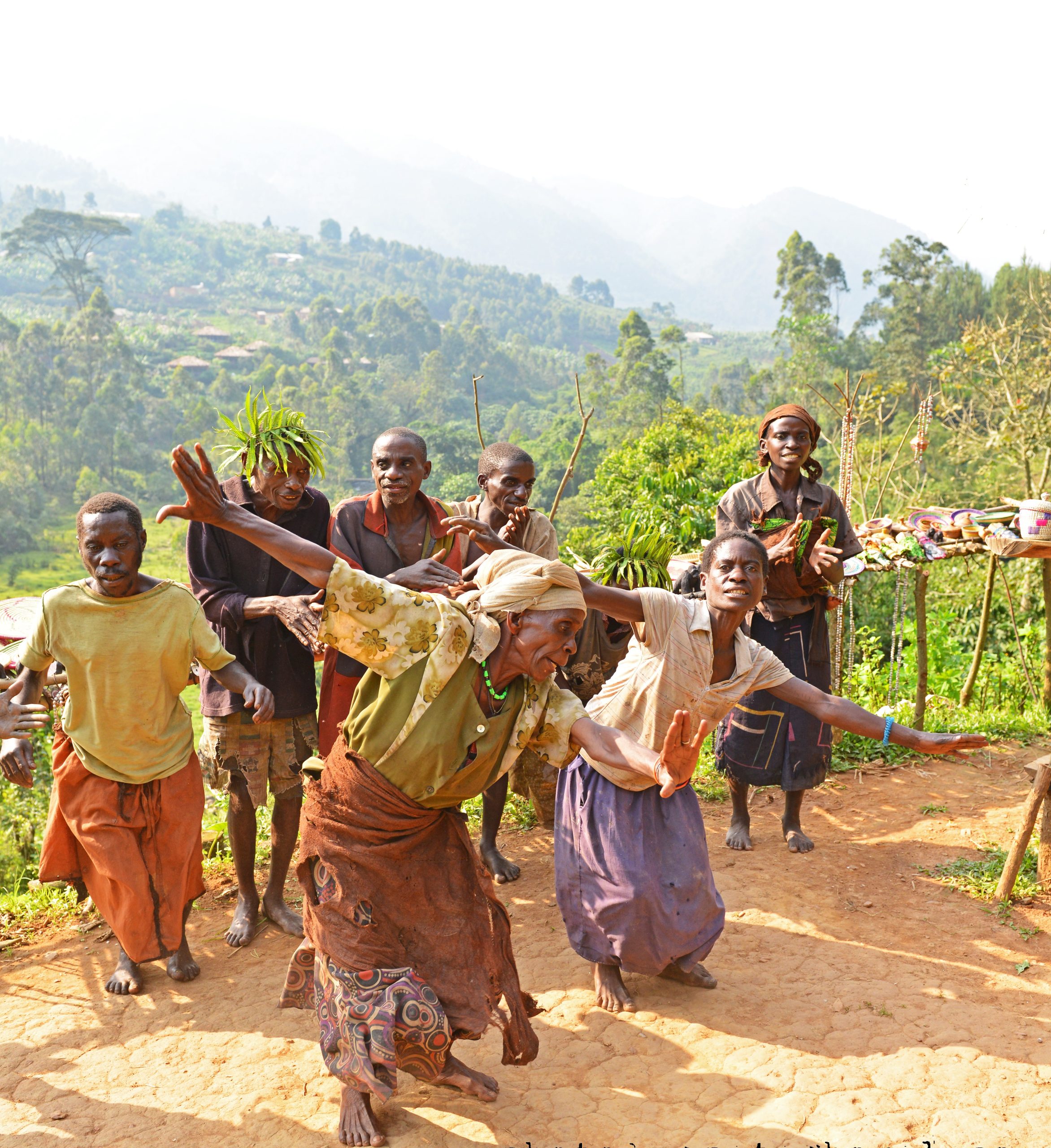
Despite centuries of marginalization, the Batwa have preserved a wealth of cultural knowledge that is invaluable to both anthropologists and environmentalists. Their oral traditions, music, dance, and spiritual beliefs offer a window into a way of life that predates modern civilization.
Language and Storytelling
The Batwa speak various Bantu languages, often adopting the dialects of neighboring communities. However, their oral storytelling traditions remain uniquely Batwa, filled with myths, legends, and moral tales that teach respect for nature and community.
Music and Dance
Music plays a central role in Batwa culture. Traditional instruments include:
- Drums made from hollowed-out logs and animal skins
- Flutes carved from bamboo
- Rattles and bells
Their dances are both celebratory and ceremonial, often performed during rites of passage, harvest festivals, and healing rituals.
Medicinal Knowledge
The Batwa possess extensive knowledge of ethnobotany, using hundreds of plant species for medicinal purposes. This traditional medicine is passed down through generations and includes treatments for:
- Malaria
- Respiratory infections
- Digestive issues
- Wounds and snake bites
The Batwa and Conservation
Ironically, the Batwa—who have lived sustainably in the forest for thousands of years—have been labeled as threats to conservation. Modern conservation models often exclude Indigenous voices, leading to policies that criminalize traditional practices.
Indigenous Knowledge and Biodiversity
Studies have shown that Indigenous-managed lands often have higher biodiversity than protected areas managed by governments or NGOs. The Batwa’s ecological knowledge includes:
- Sustainable hunting practices
- Seasonal harvesting to prevent overexploitation
- Fire management techniques
- Animal tracking and habitat preservation
A Shift Toward Inclusive Conservation
In recent years, there has been a growing recognition of the importance of Indigenous participation in conservation. Organizations like Survival International and Forest Peoples Programme advocate for the rights of the Batwa and other Indigenous groups to be stewards of their ancestral lands.
Legal Struggles and Human Rights
The Batwa face systemic discrimination and lack legal recognition in many countries. This has hindered their ability to claim land rights, access public services, and participate in political processes.
Landmark Legal Victories
In 2021, the Ugandan Constitutional Court ruled that the eviction of the Batwa from protected forests was unconstitutional and violated their rights. This landmark decision has sparked hope for restitution and justice.
However, implementation remains slow, and many Batwa communities still live in dire conditions without access to basic services.
Education and Empowerment
Education is a critical tool for the empowerment of Batwa communities. NGOs and local initiatives have begun to establish culturally sensitive schools that incorporate Batwa history, language, and values.
Challenges in Education
- High dropout rates due to poverty
- Language barriers
- Discrimination in mainstream schools
- Lack of culturally relevant curricula
Success Stories
Programs like the Batwa Development Program in Uganda have helped improve literacy rates, vocational skills, and community leadership among the Batwa.
Tourism and Cultural Preservation
Ethical tourism has emerged as a double-edged sword for the Batwa. While it offers economic opportunities and a platform to share their culture, it also risks commodifying their traditions.
The Batwa Experience
In Uganda, the “Batwa Experience” is a community-led initiative that allows visitors to learn about Batwa culture through guided forest walks, storytelling, and performances. It aims to:
- Generate income for Batwa families
- Educate the public about Batwa heritage
- Promote cultural pride and identity
The Future of the Batwa
The survival of the Batwa people hinges on a combination of legal recognition, cultural preservation, and sustainable development. Their knowledge systems, if respected and integrated, could contribute significantly to global efforts in conservation, climate resilience, and biodiversity.
Key Areas for Action
- Legal recognition of Indigenous land rights
- Inclusion in conservation and policy-making
- Investment in education and healthcare
- Protection of cultural heritage
- Support for community-led development
Frequently Asked Questions (FAQ)
1. Who are the Batwa people?
The Batwa are an Indigenous pygmy group from Central Africa, traditionally living as hunter-gatherers in the forests of Uganda, Rwanda, Burundi, and the DRC. They are known for their deep ecological knowledge and spiritual connection to the forest.
2. Why were the Batwa evicted from their ancestral lands?
The Batwa were evicted primarily to create national parks aimed at protecting endangered species like the mountain gorilla. These conservation efforts often excluded Indigenous voices, leading to forced displacement without compensation.
3. What challenges do the Batwa face today?
The Batwa face numerous challenges, including:
- Landlessness
- Poverty and marginalization
- Lack of access to education and healthcare
- Discrimination and social exclusion
4. How can we support the Batwa?
You can support the Batwa by:
- Donating to organizations like Survival International
- Supporting ethical tourism initiatives like the Batwa Experience
- Advocating for Indigenous rights and inclusive conservation policies
5. Why is Batwa culture important?
Batwa culture is a living repository of ancient ecological wisdom, sustainable living practices, and spiritual traditions. Preserving their culture not only honors human diversity but also contributes to global environmental stewardship.
Conclusion
The story of the Batwa people is one of resilience, wisdom, and injustice. As the world grapples with climate change, biodiversity loss, and cultural homogenization, the Batwa offer a powerful reminder of the value of Indigenous knowledge and the urgent need for inclusive, respectful approaches to conservation and development.
Their voices, long silenced, are beginning to rise. It is our collective responsibility to listen, learn, and stand in solidarity with the Batwa and all Indigenous peoples who protect the Earth’s most precious ecosystems.