
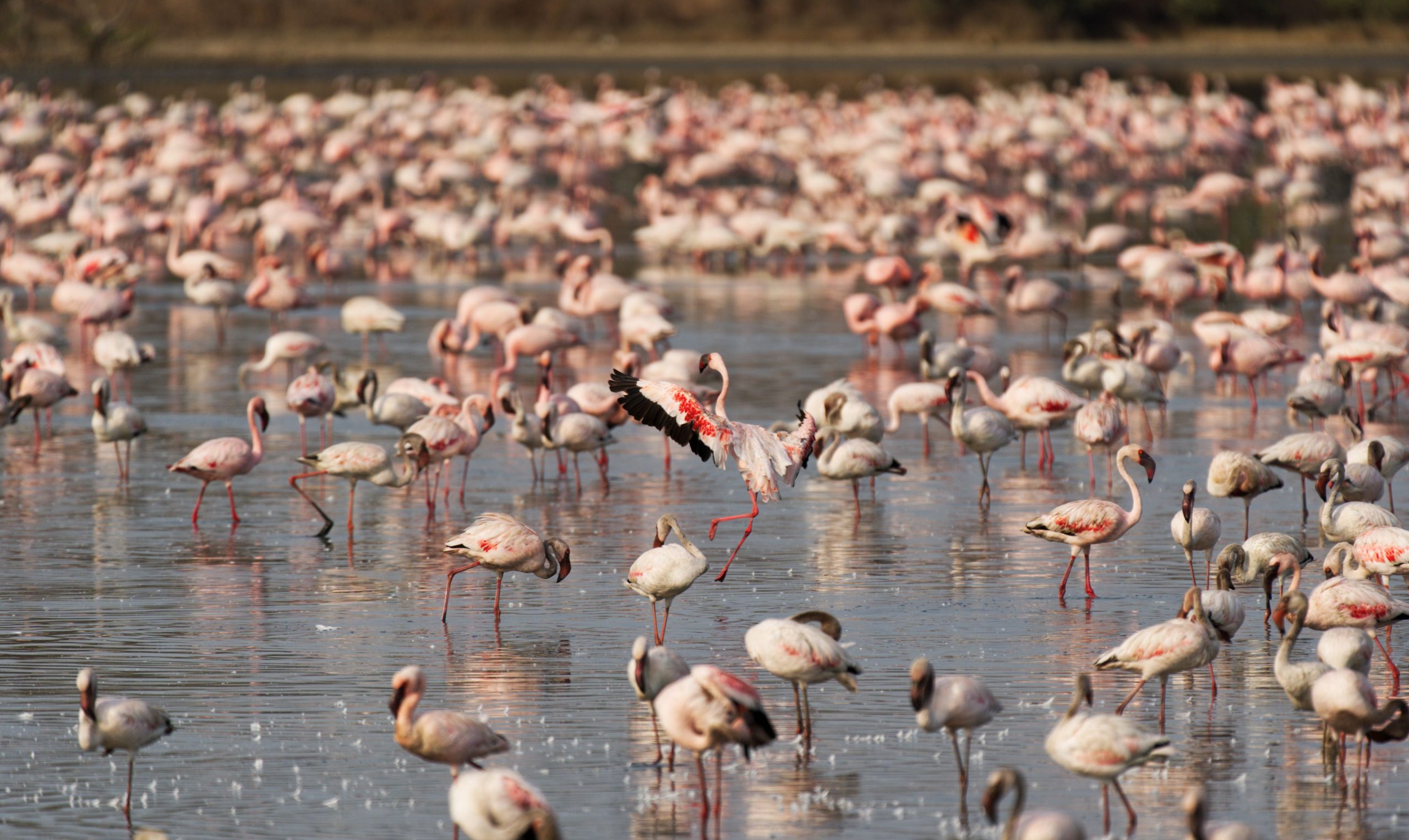
Flamingos in Lake Nakuru
Flamingos in Lake Nakuru
Flamingos in Lake Nakuru: A Spectacular Wildlife Experience in Kenya
Lake Nakuru is one of Kenya’s most famous wildlife destinations, celebrated for its breathtaking landscapes, abundant birdlife, and remarkable populations of rhinos and other wildlife. Among its most iconic attractions are the lesser and greater flamingos, whose graceful movements and vivid pink plumage have made Lake Nakuru famous around the world.
For travelers looking for an unforgettable East African safari, a visit to Lake Nakuru National Park offers an opportunity to experience flamingos alongside rhinos, lions, leopards, giraffes, buffaloes, zebras, and hundreds of bird species.
With Turkana Wildlife Safaris Uganda, travelers can combine a Lake Nakuru experience with a wider East African safari adventure, creating a journey that connects the remarkable wildlife destinations of Uganda and Kenya.
Why Are Flamingos Famous at Lake Nakuru?
Lake Nakuru became internationally famous because of the spectacular concentrations of flamingos that historically gathered along its shores. Kenya Wildlife Service describes the park as an important bird sanctuary and notes that it supports approximately 450 bird species, including both greater and lesser flamingos.
At times in the past, huge flocks of flamingos created the impression that the lake had been surrounded by a pink carpet. The sight of thousands of birds feeding, flying, and resting along the shoreline became one of Kenya’s most recognizable wildlife spectacles.
However, there is an important point for modern travelers: flamingo numbers at Lake Nakuru naturally fluctuate.
Recent Kenya Wildlife Service monitoring shows that changing water levels and lake chemistry have significantly affected the distribution of lesser flamingos. A 2026 KWS census reported that Lake Nakuru had around 500 lesser flamingos in January 2025, compared with more than 1.3 million recorded there in January 2006.
This does not mean flamingos have disappeared from Kenya. Rather, flamingos are highly mobile and move between suitable Rift Valley lakes as feeding conditions change.
The Two Main Flamingo Species at Lake Nakuru
Visitors may encounter two principal flamingo species.
1. Lesser Flamingo
The lesser flamingo is the species most strongly associated with the enormous pink flocks historically seen at Lake Nakuru.
They are smaller than greater flamingos and commonly feed on microscopic organisms and algae found in alkaline lakes. The availability of their food is closely connected to water chemistry.
The lesser flamingo is currently classified globally as Near Threatened, making conservation of its wetland habitats especially important.
2. Greater Flamingo
Greater flamingos are larger and generally have a more prominent bill and different coloration. They can also be seen in the Lake Nakuru ecosystem, although their feeding habits differ from those of lesser flamingos.
Both species contribute to the remarkable birdlife that makes Lake Nakuru a major destination for birdwatchers and wildlife photographers.
Why Do Flamingos Move Away From Lake Nakuru?
One of the most fascinating aspects of flamingo behavior is their ability to move between different lakes.
Lake Nakuru has experienced substantial changes in water levels. Rising water can dilute the lake’s alkalinity and alter the conditions needed for the growth of the algae that lesser flamingos depend on.
Kenya Wildlife Service reports that Lake Nakuru’s surface area has increased substantially compared with historical averages, while changing conditions across the Rift Valley have influenced where flamingos concentrate.
As conditions change, flamingos may move to other lakes such as Lake Bogoria, Lake Elementaita, Lake Magadi, or other suitable wetlands.
This is why seeing flamingos at Lake Nakuru should be considered a wildlife experience rather than a guaranteed spectacle.
When Is the Best Time to See Flamingos at Lake Nakuru?
There is no single month that guarantees enormous flamingo concentrations at Lake Nakuru.
Flamingo movements are influenced by:
- Water levels
- Alkalinity and salinity
- Food availability
- Rainfall
- Lake conditions
- Regional movements between Rift Valley lakes
Historical monitoring has shown seasonal movements between East African lakes, while recent KWS research emphasizes that flamingo numbers can change dramatically from one period to another.
For this reason, travelers should avoid planning a Lake Nakuru safari solely around the expectation of seeing millions of flamingos.
Instead, Lake Nakuru should be enjoyed as a complete wildlife destination, with flamingos being one of its most beautiful attractions.
Lake Nakuru Is More Than Flamingos
Even when flamingo numbers are low, Lake Nakuru remains an exceptional safari destination.
Kenya Wildlife Service identifies the park as an important sanctuary for both black and white rhinos, while the wider ecosystem supports a diverse range of wildlife.
During a game drive, visitors may have opportunities to see:
- Black rhinos
- White rhinos
- Lions
- Leopards
- Buffaloes
- Rothschild’s giraffes
- Zebras
- Waterbucks
- Impalas
- Warthogs
- Olive baboons
- Numerous waterbirds and terrestrial birds
The park’s scenic landscapes also make it attractive to photographers. The lake, surrounding woodland, escarpments, and viewpoints provide beautiful opportunities for wildlife and landscape photography.
Bird Watching at Lake Nakuru
Lake Nakuru is particularly rewarding for bird lovers.
KWS describes the park as an ornithological paradise with approximately 450 bird species.
Besides flamingos, visitors may encounter pelicans, herons, egrets, cormorants, fish eagles, storks, grebes, and many other species.
For photographers, the combination of birds, reflective water, open landscapes, and dramatic skies can produce memorable images.
Best Places to View the Lake and Flamingos
Several viewpoints around Lake Nakuru provide excellent opportunities to appreciate the landscape.
Baboon Cliff
Baboon Cliff is one of the best-known viewpoints for panoramic views over Lake Nakuru. From an elevated position, visitors can appreciate the lake, surrounding vegetation, and wildlife landscape.
Lion Hill
Lion Hill provides another scenic perspective and is a popular location for viewing the lake and surrounding park.
Out of Africa Hill
This viewpoint offers impressive views across the park and is particularly attractive for photography.
The changing light during morning and afternoon game drives can transform the appearance of the lake, making even a flamingo-free day visually rewarding.
Flamingo Photography at Lake Nakuru
Lake Nakuru is a wonderful destination for wildlife photographers.
When flamingos are present, photographers can capture:
- Large flocks moving across the water
- Flamingos feeding along the shoreline
- Birds taking flight
- Reflections on the lake
- Close-up portraits
- Interaction between flamingos and other waterbirds
- Wide-angle landscapes showing flamingos within their environment
A telephoto lens is particularly useful for wildlife photography, while binoculars are valuable for birdwatching.
Early morning and late afternoon generally provide attractive natural light and can also produce dramatic reflections and silhouettes.
Conservation of Flamingos at Lake Nakuru
The story of Lake Nakuru’s flamingos is also a story about conservation.
Changing water levels, habitat degradation, pollution, climate variability, and changes in food availability can affect flamingo populations and their movements. Kenya Wildlife Service and conservation partners continue monitoring flamingo populations across Kenya’s Rift Valley lakes.
The wider conservation picture is particularly important because flamingos do not depend on one lake alone. They move between interconnected wetland habitats across East Africa.
Protecting these habitats therefore requires cooperation between governments, conservation organizations, local communities, researchers, tourism operators, and visitors.
Responsible Tourism at Lake Nakuru
Visitors can contribute to conservation by following responsible safari practices.
KWS advises visitors to remain in designated areas and vehicles, avoid disturbing wildlife, follow park rules, avoid feeding animals, take rubbish away, and maintain appropriate distances from wildlife.
When photographing flamingos, patience is important. Avoid shouting, chasing birds, or encouraging a guide or driver to approach wildlife too closely simply to obtain a photograph.
The best wildlife encounters happen when animals are allowed to behave naturally.
Experience Lake Nakuru with Turkana Wildlife Safaris Uganda
For travelers coming from Uganda or planning a broader East African safari, Turkana Wildlife Safaris Uganda can be included in a customized itinerary featuring Kenya’s spectacular wildlife destinations.
A safari combining Uganda and Kenya can offer an extraordinary variety of experiences, from Uganda’s forests, primates, and savannah wildlife to Kenya’s Great Rift Valley landscapes and famous national parks.
A Lake Nakuru visit can be particularly rewarding as part of a longer safari because travelers can experience the park’s flamingos, rhinos, birdlife, scenery, and other wildlife rather than making the trip solely for one species.
Whether your interest is wildlife photography, birdwatching, family travel, honeymoon safaris, or a classic East African adventure, Lake Nakuru can add an unforgettable chapter to your journey.
What to Expect on a Lake Nakuru Safari
A typical Lake Nakuru experience may include:
Morning game drive:
Start early to explore the park when wildlife is active and the light is excellent for photography.
Lake viewing:
Visit suitable viewpoints and shoreline areas to look for flamingos and other waterbirds.
Rhino watching:
Explore the park’s habitats in search of black and white rhinos.
Birdwatching:
Look beyond flamingos for the park’s remarkable diversity of bird species.
Photography:
Capture wildlife, landscapes, birds, and the changing colors of the Great Rift Valley.
Scenic stops:
Enjoy viewpoints such as Baboon Cliff and other designated scenic locations.
Why Visit Lake Nakuru?
Lake Nakuru offers something that few safari destinations can match: the combination of a spectacular Rift Valley landscape, a famous lake ecosystem, exceptional birdlife, and major mammal species.
Even though flamingo numbers are no longer reliably as large as they were during the lake’s historic peak, the destination remains highly worthwhile.
The most important lesson for today’s traveler is simple: come to Lake Nakuru for the ecosystem, not just the pink horizon.
If the flamingos are present in large numbers, you may witness one of Africa’s great wildlife spectacles. If their numbers are smaller, you still have an excellent opportunity to see rhinos, lions, giraffes, buffaloes, birds, and beautiful landscapes.
Frequently Asked Questions About Flamingos in Lake Nakuru
1. Are there still flamingos in Lake Nakuru?
Yes. Flamingos still use Lake Nakuru, but their numbers fluctuate considerably. Recent monitoring shows that the lake is no longer guaranteed to host the enormous concentrations associated with its historic reputation.
2. Which flamingos can be seen at Lake Nakuru?
The two principal species are the lesser flamingo and greater flamingo.
3. Why are flamingo numbers changing?
Changes in water levels and water chemistry can affect the availability of food and suitable feeding habitat. Flamingos can then move to other lakes where conditions are more favorable.
4. Can I see millions of flamingos at Lake Nakuru?
It is possible to encounter significant concentrations, but visitors should not expect millions of birds on every visit. Historic counts were much higher than some recent counts.
5. Is Lake Nakuru still worth visiting if there are few flamingos?
Absolutely. The park is an important rhino sanctuary and supports approximately 450 bird species as well as numerous mammals.
6. What other wildlife can I see at Lake Nakuru?
Depending on conditions and luck, visitors may see rhinos, lions, leopards, buffaloes, giraffes, zebras, waterbucks, impalas, baboons, and many bird species.
7. Is Lake Nakuru good for photography?
Yes. The combination of wildlife, birds, lake scenery, viewpoints, and changing light makes the park an excellent photography destination.
8. Can Lake Nakuru be combined with a Uganda safari?
Yes. A Lake Nakuru visit can be incorporated into a broader East African itinerary that includes Uganda and Kenya. Turkana Wildlife Safaris Uganda can be part of planning a customized safari combining these destinations.
9. What should I bring for a Lake Nakuru safari?
Useful items include binoculars, a camera, sunscreen, sunglasses, drinking water, insect repellent, comfortable clothing, and suitable footwear. KWS also recommends visitors carry essentials such as a first-aid kit and camera equipment.
10. Are flamingos endangered?
The conservation status differs by species. The lesser flamingo is classified globally as Near Threatened, and its populations are affected by changes in wetland ecosystems.
Conclusion
Flamingos in Lake Nakuru remain one of Kenya’s most iconic wildlife experiences, but their story is more complex than the famous images of a lake covered in pink.
Lake Nakuru is a dynamic ecosystem. Water levels, food availability, weather, and lake chemistry influence where flamingos gather and how many are present. Recent monitoring demonstrates just how dramatically their numbers can change.
For this reason, a safari to Lake Nakuru should be approached with an appreciation for the entire ecosystem. The possibility of seeing flamingos is exciting, but the park’s rhinos, big cats, giraffes, buffaloes, diverse birdlife, and spectacular scenery make it a remarkable destination regardless of the size of the flamingo flock.
With Turkana Wildlife Safaris Uganda, travelers can explore Lake Nakuru as part of a wider East African safari experience, combining Kenya’s iconic landscapes with Uganda’s extraordinary wildlife destinations.
Lake Nakuru is not simply a place to see flamingos, it is a living conservation landscape where every visit tells a different wildlife story.