
Masai Tribe Customs
Masai Tribe Customs
The Rich and Enduring Customs of the Maasai Tribe: A Deep Dive into One of Africa’s Most Iconic Cultures
The Maasai tribe, known for their vibrant attire, intricate beadwork, and semi-nomadic lifestyle, are among the most recognized ethnic groups in Africa. Residing primarily in southern Kenya and northern Tanzania, the Maasai people have preserved their traditions and customs despite the pressures of modernization and globalization. This article explores the intricate tapestry of Maasai customs—from rites of passage and traditional dress to social structure and spiritual beliefs—offering a comprehensive understanding of a culture that continues to captivate the world.
Who Are the Maasai?
The Maasai are a Nilotic ethnic group, believed to have migrated from the Nile Valley to East Africa around the 15th century. Their society is deeply rooted in pastoralism, with cattle playing a central role in their economy, spirituality, and social status.
Traditional Maasai Customs and Practices
1. Rites of Passage
The Maasai have a well-structured system of rites of passage that mark the transition from one stage of life to another. These ceremonies are not only spiritual but also social, reinforcing community bonds.
• Enkipaata (Pre-Circumcision Ceremony)
This is a preparatory ceremony for young boys before circumcision. It involves teachings from elders, isolation from the community, and symbolic rituals.
• Emuratare (Circumcision)
Circumcision is a critical rite for boys, marking the transition from childhood to warriorhood. It is performed without anesthesia, and the boy must endure the pain without flinching—a sign of bravery and readiness for adult responsibilities.
• Eunoto (Warrior Graduation)
After serving as warriors (Morans) for about a decade, young men undergo the Eunoto ceremony, which transitions them into junior elders. This event includes head shaving, feasting, and blessings from elders.
• Female Circumcision (FGM)
Traditionally practiced as a rite of passage for girls, female genital mutilation (FGM) has been widely criticized and outlawed in both Kenya and Tanzania. However, it still persists in some communities despite ongoing efforts to eradicate it.
2. Marriage Customs
Marriage among the Maasai is arranged by the parents, and polygamy is common. The bride price is paid in cattle, and the wedding involves elaborate ceremonies, including:
- Blessings from elders
- Traditional songs and dances
- Exchange of gifts and livestock
- Relocation of the bride to the husband’s homestead
Women wear elaborate beaded necklaces and earrings during the ceremony, symbolizing beauty and status.
3. Clothing and Adornments
The Maasai are instantly recognizable by their distinctive attire:
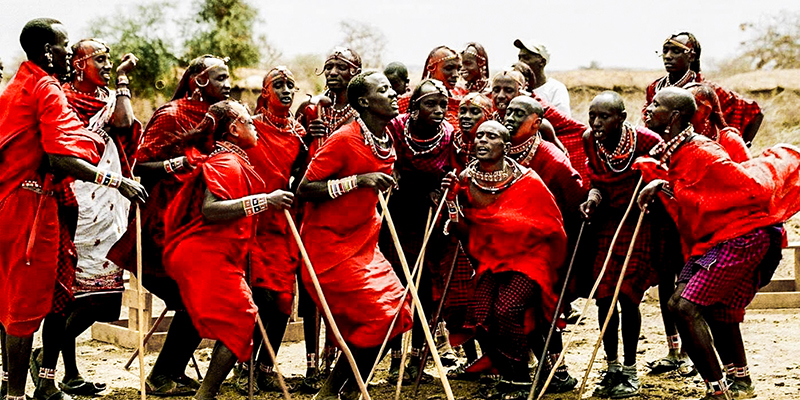
- Shúkà: The traditional red cloth wrapped around the body. Red symbolizes bravery and is believed to scare away lions.
- Beadwork: Worn by both men and women, the intricate beadwork reflects age, marital status, and social position.
- Jewelry: Includes earrings, necklaces, and bracelets made from colorful beads and metal.
Each color in the beadwork has symbolic meaning:
- Red: Bravery and strength
- Blue: Energy and sustenance
- White: Purity and health
- Green: Land and production
- Orange/Yellow: Hospitality
4. Diet and Cuisine
The Maasai diet is primarily composed of:
- Milk
- Meat
- Blood (collected from live cattle and mixed with milk)
These foods are considered sacred and are central to their sustenance. In times of celebration or healing, blood is consumed for its perceived medicinal properties.
5. Spiritual Beliefs
The Maasai believe in a monotheistic god called Enkai (also spelled Engai), who is both benevolent and wrathful. Enkai is associated with rain, fertility, and prosperity. The tribe does not have temples; instead, nature is their place of worship.
Spiritual leaders, known as Laibons, serve as healers, prophets, and mediators between Enkai and the people. They play a vital role in rituals, blessings, and conflict resolution.
Social Structure and Governance
The Maasai society is patriarchal and organized into age-sets and clans.
Age-Sets
Males are grouped into age-sets that progress through stages of life together:
- Boys
- Morans (warriors)
- Junior elders
- Senior elders
Each age-set has specific roles and responsibilities, ensuring a structured and cohesive society.
Clans
Clans are patrilineal and determine marriage eligibility. Inter-clan marriage is encouraged to strengthen social bonds and prevent inbreeding.
The Role of Cattle in Maasai Culture
Cattle are the cornerstone of Maasai life. They are not only a source of food but also a symbol of wealth, status, and spirituality. A man’s worth is often measured by the number of cattle he owns.
Cattle are used for:
- Dowries
- Ritual sacrifices
- Daily sustenance (milk and blood)
- Currency in trade and conflict resolution
Maasai Dance and Music
Music and dance are integral to Maasai ceremonies. Their dances are characterized by rhythmic jumping, chanting, and call-and-response singing. The most famous dance is the Adumu, or “jumping dance,” performed by warriors to showcase strength and attract potential brides.
Challenges and Modern Influence
Despite their resilience, the Maasai face numerous challenges:
- Land Disputes: Encroachment by developers and conservationists has reduced their grazing lands.
- Climate Change: Droughts and erratic weather patterns threaten their pastoral lifestyle.
- Education vs. Tradition: Younger generations are increasingly exposed to modern education, leading to a gradual erosion of traditional customs.
However, many Maasai are finding ways to balance tradition and modernity. Some have become educators, politicians, and entrepreneurs while still honoring their heritage.
Maasai and Tourism
The Maasai have become cultural ambassadors through tourism. Visitors to Kenya and Tanzania often engage in:
- Village tours
- Traditional dance performances
- Beadwork workshops
- Storytelling sessions
While tourism provides income, it also raises concerns about cultural commodification and authenticity.
Conservation and the Maasai
The Maasai have historically coexisted with wildlife, making them natural allies in conservation efforts. Organizations are now partnering with Maasai communities to promote eco-tourism and sustainable land use.
Maasai in the Digital Age
With the advent of mobile technology and social media, the Maasai are increasingly connected to the global community. Platforms like Instagram and YouTube showcase Maasai fashion, music, and storytelling, allowing them to control their narrative and share their culture on a global stage.
FAQs About Maasai Customs
1. Why do Maasai wear red?
Red is believed to symbolize bravery and is thought to deter predators like lions. It also holds spiritual significance in Maasai culture.
2. Do the Maasai still practice traditional ceremonies?
Yes, many traditional ceremonies are still practiced, although some, like female circumcision, are being phased out due to legal and ethical concerns.
3. What role do women play in Maasai society?
Women are central to family life and are responsible for building homes, raising children, and managing household duties. They also create and sell beadwork, contributing to the economy.
4. How is wealth measured in Maasai culture?
Wealth is primarily measured by the number of cattle a person owns. Land and family size also contribute to one’s social standing.
5. Are the Maasai adapting to modern life?
Yes, many Maasai are integrating modern education and technology while maintaining core aspects of their cultural identity.
Conclusion
The customs of the Maasai tribe offer a fascinating glimpse into a culture that has withstood the test of time. Their vibrant traditions, spiritual depth, and communal values provide a rich tapestry of human experience. As the world continues to evolve, the Maasai stand as a testament to the strength of cultural preservation and the beauty of diversity.