
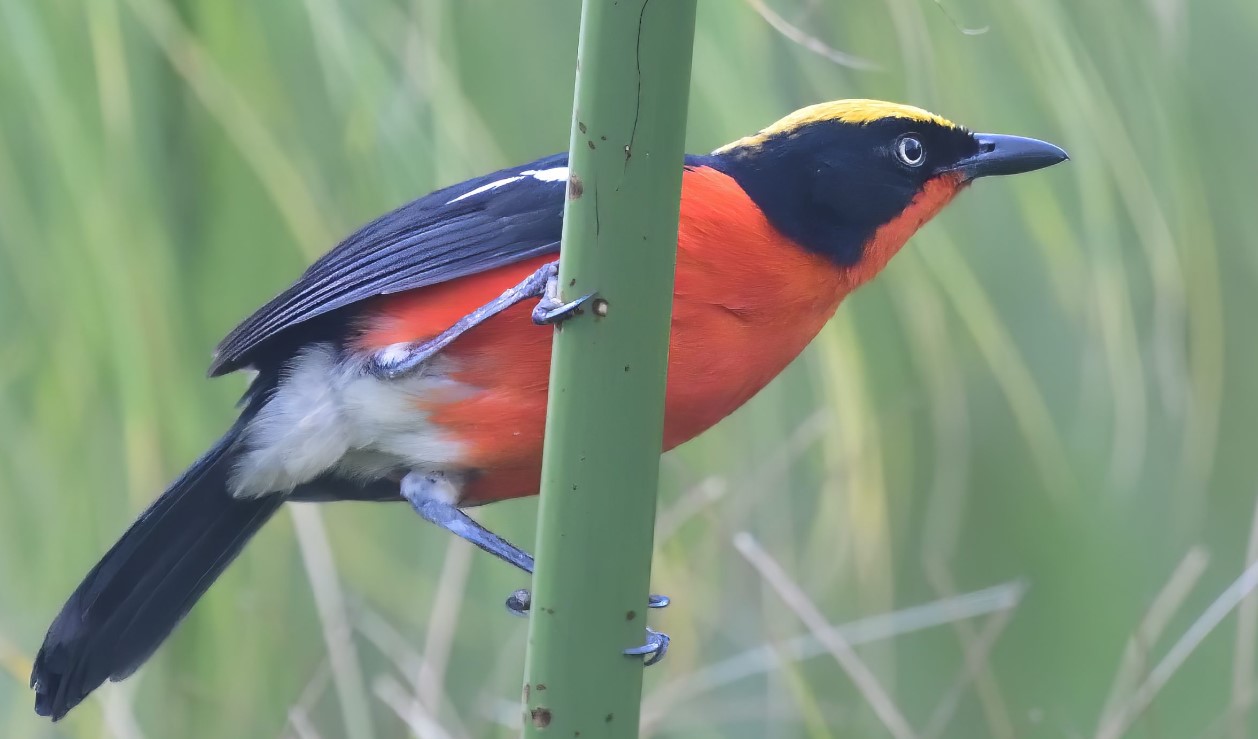
Papyrus Gonolek
Papyrus Gonolek
The Papyrus Gonolek: A Jewel of Africa’s Wetlands
Introduction
The Papyrus Gonolek (Laniarius mufumbiri) is one of the most enigmatic and visually striking birds native to the papyrus swamps of Central and East Africa. With its dazzling crimson chest and jet-black plumage, this elusive bird is more than just a visual marvel—it’s a vital indicator of the health of Africa’s wetland ecosystems. In this comprehensive guide, we delve into the biology, habitat, conservation status, and ecological significance of the Papyrus Gonolek.
What is the Papyrus Gonolek?
The Papyrus Gonolek is a passerine bird belonging to the family Malaconotidae, commonly known as bush-shrikes. It is a species endemic to papyrus swamps, particularly in countries like Uganda, Rwanda, Burundi, and parts of western Kenya and Tanzania.
Key Characteristics
- Scientific Name: Laniarius mufumbiri
- Family: Malaconotidae
- Habitat: Papyrus swamps and wetlands
- Conservation Status: Near Threatened (IUCN Red List)
- Diet: Insectivorous—feeds on beetles, caterpillars, and other small invertebrates
- Behavior: Shy, elusive, and often heard more than seen
Habitat and Distribution
The Papyrus Gonolek is a habitat specialist, meaning it thrives in very specific environmental conditions. It is almost exclusively found in dense papyrus (Cyperus papyrus) swamps, which are freshwater wetlands dominated by tall, grass-like plants.
Geographic Range
- Uganda: Especially around Lake Victoria and the Albertine Rift
- Rwanda: Akagera National Park and surrounding wetlands
- Burundi: Northern and central wetland zones
- Western Kenya: Yala Swamp and Lake Victoria basin
- Tanzania: Northwestern regions bordering Lake Victoria
These regions are not only biodiversity hotspots but also critical for maintaining regional hydrology and carbon sequestration.
Morphology and Identification
Physical Appearance
The Papyrus Gonolek is a medium-sized bird, measuring about 18 cm in length. Its striking coloration makes it relatively easy to identify—if you’re lucky enough to spot one.
- Head and Upperparts: Glossy black
- Underparts: Bright crimson red
- Wings: Black with white patches
- Tail: Long and black, often flicked expressively
Vocalization
One of the most distinctive features of the Papyrus Gonolek is its duet call. Mated pairs often engage in synchronized singing, where one bird produces a harsh, chattering call and the other responds with a softer, melodious note. This vocal behavior is essential for territory defense and pair bonding.
Ecological Role
The Papyrus Gonolek plays a crucial role in the wetland ecosystem. As an insectivore, it helps control populations of potentially harmful insects. Its presence also indicates a healthy, undisturbed wetland environment.
Ecological Functions
- Pest Control: Feeds on insects that could otherwise damage native flora
- Bioindicator: Sensitive to habitat degradation, making it a key species for ecological monitoring
- Seed Dispersal: Occasionally consumes small fruits, aiding in plant propagation
Conservation Status and Threats
IUCN Red List Status: Near Threatened
The Papyrus Gonolek is classified as Near Threatened due to its limited range and the ongoing degradation of its habitat.
Major Threats
- Habitat Loss: Drainage of wetlands for agriculture and urban development
- Pollution: Runoff from farms introduces pesticides and fertilizers into swamps
- Climate Change: Alters rainfall patterns and water levels, affecting papyrus growth
- Invasive Species: Non-native plants and animals disrupt the native ecosystem
Conservation Efforts
- Protected Areas: Presence in national parks like Akagera and Mabamba Bay Wetland Sanctuary
- Community Engagement: Local conservation groups promoting sustainable wetland use
- Research and Monitoring: Ongoing studies to better understand population dynamics and threats
Importance of Papyrus Swamps
The survival of the Papyrus Gonolek is intrinsically tied to the health of papyrus swamps, which are among the most productive and ecologically important ecosystems in Africa.
Ecosystem Services Provided by Papyrus Swamps
- Water Filtration: Removes pollutants from freshwater systems
- Carbon Sequestration: Stores large amounts of carbon in plant biomass
- Flood Control: Absorbs excess rainfall and reduces downstream flooding
- Biodiversity Hotspot: Home to numerous endemic and endangered species
Birdwatching and Ecotourism
The Papyrus Gonolek is a prized sighting for birdwatchers and nature enthusiasts. Its rarity and beauty make it a flagship species for wetland ecotourism in East Africa.
Best Birding Locations
- Mabamba Bay Wetland (Uganda): Also home to the elusive Shoebill
- Akagera National Park (Rwanda): Offers guided swamp tours
- Yala Swamp (Kenya): A critical habitat for endemic bird species
Tips for Spotting the Papyrus Gonolek
- Go Early: Birds are most active at dawn
- Be Quiet: The species is extremely shy and sensitive to noise
- Use a Guide: Local experts know the best spots and calls
- Listen First: Learn to recognize its duet call
How You Can Help
Individual Actions
- Support Wetland Conservation NGOs: Donate or volunteer
- Promote Sustainable Tourism: Choose eco-friendly tour operators
- Raise Awareness: Share information about the importance of wetland ecosystems
Policy Advocacy
- Lobby for Wetland Protection Laws: Encourage governments to enforce environmental regulations
- Participate in Citizen Science: Join bird counts and habitat monitoring programs
Frequently Asked Questions (FAQ)
1. What makes the Papyrus Gonolek unique?
The Papyrus Gonolek is unique due to its exclusive dependence on papyrus swamps, its striking coloration, and its duet vocalizations. It serves as a bioindicator for wetland health, making it ecologically significant.
2. Why is the Papyrus Gonolek considered Near Threatened?
Its classification stems from its limited distribution and the rapid degradation of its papyrus swamp habitat due to human activity and climate change. Learn more on the IUCN Red List.
3. Where can I see the Papyrus Gonolek in the wild?
Top locations include Mabamba Bay Wetland, Akagera National Park, and Yala Swamp.
4. What does the Papyrus Gonolek eat?
It primarily feeds on insects such as beetles, grasshoppers, and caterpillars. Occasionally, it may consume small fruits and seeds.
5. How can wetlands be protected?
Wetlands can be protected through community-based conservation, stricter environmental laws, sustainable land-use practices, and public education campaigns. Visit Ramsar for more information on wetland conservation.
Conclusion
The Papyrus Gonolek is more than just a beautiful bird—it is a sentinel of Africa’s vanishing wetlands. Its survival depends on our ability to preserve and restore the papyrus swamps it calls home. By understanding its ecological role, supporting conservation efforts, and spreading awareness, we can ensure that future generations will continue to marvel at this rare and resplendent species.
For more on wetland biodiversity and bird conservation, explore resources like BirdLife International, Wetlands International, and African Bird Club.