
Rwandan Education
Rwandan Education
The Evolution and Challenges of the Rwandan Education System
Introduction
Rwanda has made significant strides in its education sector over the past few decades. From rebuilding after the 1994 genocide to implementing innovative policies aimed at improving literacy and digital skills, the country has demonstrated a strong commitment to education. This article explores the evolution, challenges, and future prospects of the Rwandan education system, highlighting key reforms, policies, and their impact on the nation’s development.
Historical Background of Education in Rwanda
Pre-Colonial Education
Before colonial rule, education in Rwanda was largely informal and community-based. The traditional education system focused on transmitting cultural values, history, and survival skills through oral traditions. Elders played a crucial role in teaching young generations about leadership, farming, and social responsibilities.
Colonial Influence on Education
During the colonial period, Belgium introduced a formal education system based on Western models. However, this system was largely designed to serve the colonial administration, creating disparities in access to education. Schools were primarily run by missionaries, and education was limited to a small elite group.
Post-Independence Reforms
After gaining independence in 1962, Rwanda sought to expand access to education. However, political instability and ethnic divisions hindered progress. The education system remained underdeveloped, with low enrollment rates and inadequate infrastructure.
The Impact of the 1994 Genocide on Education
The 1994 Rwandan Genocide had a devastating impact on the education sector. Schools were destroyed, teachers were killed or displaced, and the entire system collapsed. In the aftermath, the government prioritized rebuilding the education sector as a cornerstone of national recovery and reconciliation.
Key Reforms in the Rwandan Education System
Introduction of Free Primary Education
In 2003, Rwanda introduced free primary education, significantly increasing enrollment rates. This policy aimed to ensure that every child had access to basic education, reducing illiteracy and promoting social equality.
Competency-Based Curriculum (CBC)
In 2015, Rwanda adopted a Competency-Based Curriculum (CBC) to replace the traditional rote-learning system. The CBC focuses on practical skills, critical thinking, and problem-solving, preparing students for the modern job market.
Promotion of ICT in Education
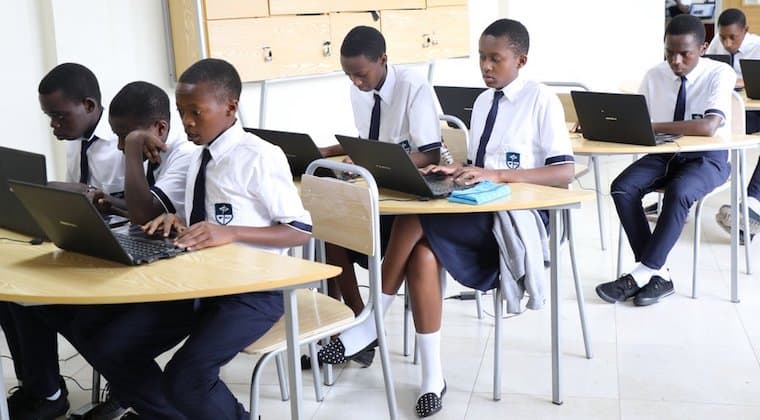
Rwanda has embraced Information and Communication Technology (ICT) as a key driver of education. The government launched initiatives such as the One Laptop per Child (OLPC) program, aiming to integrate digital learning into classrooms. Today, many schools use e-learning platforms to enhance learning experiences.
Expansion of Higher Education
The government has invested heavily in higher education, establishing institutions such as the University of Rwanda and attracting international universities. Scholarships and partnerships with global institutions have also improved access to quality education.
Challenges Facing the Rwandan Education System
Despite significant progress, Rwanda’s education sector faces several challenges:
- Overcrowded Classrooms – The rapid increase in enrollment has led to overcrowded classrooms, affecting the quality of education.
- Shortage of Qualified Teachers – There is a lack of adequately trained teachers, particularly in rural areas.
- Limited Infrastructure – Many schools still lack proper facilities, including libraries, laboratories, and internet access.
- Language Barriers – The transition from French to English as the medium of instruction has posed challenges for both teachers and students.
- Youth Unemployment – Despite improvements in education, many graduates struggle to find employment due to a mismatch between skills and job market demands.
Government Initiatives to Improve Education
Teacher Training Programs
To address the shortage of qualified teachers, the government has introduced teacher training programs and incentives to attract more professionals into the education sector.
School Infrastructure Development
Significant investments have been made in building new schools, equipping classrooms with modern technology, and improving sanitation facilities.
Private Sector and International Partnerships
The Rwandan government collaborates with international organizations and the private sector to enhance education quality. Partnerships with institutions like Carnegie Mellon University Africa and Mastercard Foundation have contributed to skills development.
The Future of Education in Rwanda
Emphasis on STEM Education
Rwanda is prioritizing Science, Technology, Engineering, and Mathematics (STEM) education to prepare students for careers in innovation and technology. New STEM-focused schools and programs are being introduced to nurture talent in these fields.
Expansion of Vocational Training
To tackle youth unemployment, the government is expanding Technical and Vocational Education and Training (TVET) programs. These programs equip students with practical skills needed in industries such as agriculture, construction, and manufacturing.
Digital Transformation in Education
With the rise of EdTech, Rwanda is investing in online learning platforms, digital libraries, and smart classrooms to enhance learning experiences. The goal is to make education more accessible and interactive.
Frequently Asked Questions (FAQ)
1. What are the main challenges in the Rwandan education system?
The main challenges include overcrowded classrooms, a shortage of qualified teachers, inadequate infrastructure, language barriers, and a mismatch between education and job market needs.
2. How has Rwanda improved access to education?
Rwanda has introduced free primary and secondary education, invested in ICT, expanded higher education institutions, and partnered with international organizations to improve education quality.
3. What is the Competency-Based Curriculum (CBC) in Rwanda?
The Competency-Based Curriculum (CBC) focuses on practical skills, creativity, and critical thinking rather than rote memorization. It aims to prepare students for the modern workforce.
4. How is ICT integrated into Rwandan education?
The government has implemented initiatives like the One Laptop per Child (OLPC) program, digital learning platforms, and smart classrooms to enhance education through technology.
5. What is the future of education in Rwanda?
The future of education in Rwanda includes a stronger emphasis on STEM education, expansion of vocational training, and increased use of digital learning technologies to improve accessibility and quality.
Conclusion
Rwanda’s education system has undergone a remarkable transformation over the years. While challenges remain, the government’s commitment to education reforms, digital learning, and skills development continues to drive progress. By addressing existing gaps and leveraging technology, Rwanda is on track to build a more inclusive and competitive education system that empowers future generations.
For more insights on education in Rwanda, explore Rwanda’s Ministry of Education and stay updated on the latest policies and initiatives.