
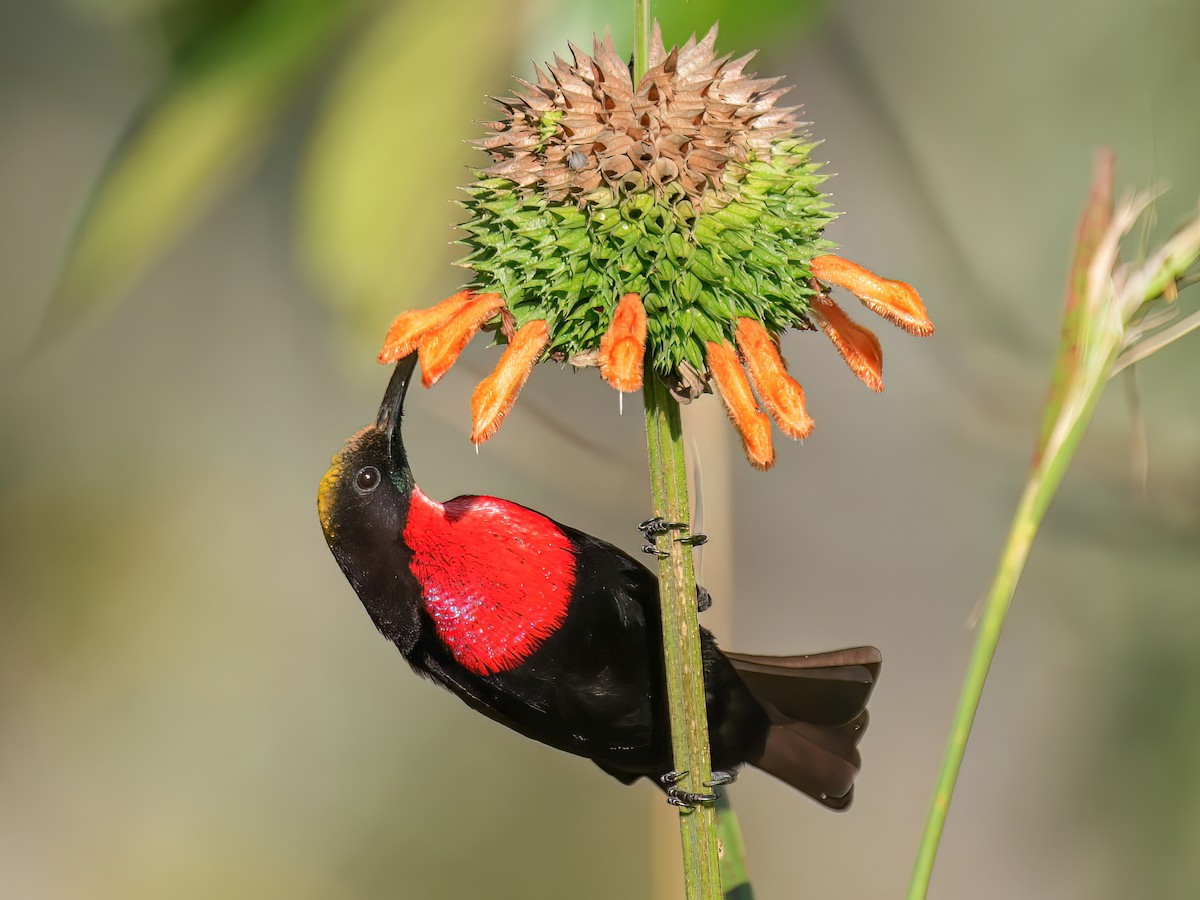
Scarlet-chested Sunbird
Scarlet-chested Sunbird
The Scarlet-chested Sunbird: A Jewel of the African Skies
Introduction
Among the dazzling avian wonders of sub-Saharan Africa, the Scarlet-chested Sunbird (Chalcomitra senegalensis) stands out as a radiant marvel. With its iridescent plumage and energetic demeanor, this bird is not only a delight to birdwatchers but also a vital player in the ecosystems it inhabits. From its shimmering scarlet chest to its agile flight patterns, the Scarlet-chested Sunbird is a true embodiment of nature’s artistry.
In this comprehensive guide, we delve deep into the world of this spectacular sunbird, exploring its habitat, behavior, diet, breeding habits, and ecological significance. We also discuss conservation concerns and how you can contribute to preserving this vibrant species.
Taxonomy and Classification
The Scarlet-chested Sunbird belongs to the family Nectariniidae, a group of small, nectar-feeding birds known for their dazzling colors and dynamic flight. Its scientific name, Chalcomitra senegalensis, reflects its African roots, with the species being widely distributed across the continent.
Scientific Classification
- Kingdom: Animalia
- Phylum: Chordata
- Class: Aves
- Order: Passeriformes
- Family: Nectariniidae
- Genus: Chalcomitra
- Species: senegalensis
Physical Description
The Scarlet-chested Sunbird is a medium-sized sunbird, measuring approximately 12–15 cm in length. Its most striking feature is the vivid, metallic scarlet patch that adorns the chest of the male, contrasting beautifully with the glossy black plumage.
Sexual Dimorphism
- Male: Glossy black with a brilliant scarlet chest and a metallic green crown.
- Female: Duller in appearance, with olive-brown upperparts and a pale yellowish underside.
This sexual dimorphism plays a crucial role during the mating season, where the male’s vibrant colors are used to attract females.
Habitat and Distribution
The Scarlet-chested Sunbird is widely distributed across sub-Saharan Africa. It thrives in a variety of habitats, including:
- Savannas
- Woodlands
- Forest edges
- Urban gardens
- Scrublands
Its adaptability allows it to flourish in both wild and semi-urban environments, making it a common sight in many African countries.
Geographic Range
The species is found in countries such as:
- Nigeria
- Kenya
- Uganda
- Tanzania
- South Africa
- Ethiopia
- Zambia
- Zimbabwe
This expansive range is a testament to the bird’s resilience and ecological flexibility.
Behavior and Lifestyle
Scarlet-chested Sunbirds are known for their energetic and agile behavior. They are often seen flitting from flower to flower, hovering briefly like hummingbirds to sip nectar.
Feeding Habits
Their diet primarily consists of:
- Nectar: Sourced from a wide range of flowering plants.
- Insects and spiders: Especially during the breeding season to provide protein for their young.
- Fruits and berries: Occasionally consumed when nectar is scarce.
These birds play a vital role in pollination, making them important ecological agents.
Vocalizations
The sunbird’s call is a series of high-pitched, rapid notes. Males often sing from prominent perches to establish territory and attract mates.
Breeding and Reproduction
The breeding season of the Scarlet-chested Sunbird varies depending on the region and climate. However, it generally coincides with the rainy season when food is abundant.
Nesting Behavior
- Nest Type: Suspended, purse-shaped nests made from grasses, leaves, and spider webs.
- Nest Location: Often built in shrubs or small trees, hidden among foliage.
- Clutch Size: Typically 1–3 eggs.
- Incubation Period: Around 13–15 days.
- Parental Care: Both parents participate in feeding the chicks.
The intricate construction of their nests showcases the bird’s remarkable instinct and craftsmanship.
Ecological Importance
The Scarlet-chested Sunbird is more than just a visual delight—it plays a crucial ecological role.
Pollination
By feeding on nectar, these birds inadvertently transfer pollen from one flower to another, aiding in the reproduction of many plant species. This makes them essential contributors to biodiversity and the health of ecosystems.
Pest Control
Their consumption of insects helps regulate pest populations, making them beneficial for agricultural areas and gardens.
Conservation Status
According to the IUCN Red List, the Scarlet-chested Sunbird is currently listed as a species of “Least Concern.” However, this does not mean it is free from threats.
Threats to Survival
- Habitat loss due to deforestation and urbanization.
- Climate change affecting flowering seasons and food availability.
- Pesticide use reducing insect populations.
Conservation Measures
- Habitat protection through the establishment of reserves and protected areas.
- Sustainable agriculture to minimize pesticide use.
- Public awareness campaigns to promote bird-friendly practices.
How to Spot a Scarlet-chested Sunbird
Birdwatchers and nature enthusiasts can increase their chances of spotting this sunbird by:
- Visiting flowering gardens or forest edges during early morning hours.
- Looking for movement among flowering shrubs.
- Listening for their distinctive high-pitched calls.
- Using binoculars to spot the male’s scarlet chest from a distance.
Cultural Significance
In many African cultures, birds like the Scarlet-chested Sunbird are seen as symbols of beauty, vitality, and the interconnectedness of life. Their presence in folklore and traditional art reflects the deep appreciation for avian life across the continent.
How You Can Help
You don’t have to be a scientist to contribute to the conservation of the Scarlet-chested Sunbird. Here are some simple yet impactful actions:
Create a Bird-Friendly Garden
- Plant native flowering plants.
- Avoid chemical pesticides.
- Provide clean water sources.
Support Conservation Organizations
- Donate to or volunteer with groups focused on bird conservation.
- Participate in citizen science projects like bird counts.
Educate Others
- Share information about sunbirds on social media.
- Encourage schools to include bird conservation in their curriculum.
Fascinating Facts
- The Scarlet-chested Sunbird can hover like a hummingbird but usually prefers to perch while feeding.
- Despite their small size, males are fiercely territorial during the breeding season.
- They can recognize individual humans and may become accustomed to regular visitors in gardens.
Related Species
The Scarlet-chested Sunbird belongs to a diverse family with several closely related species, including:
Each species has unique adaptations and coloration, contributing to the rich tapestry of African birdlife.
Frequently Asked Questions (FAQ)
1. What does the Scarlet-chested Sunbird eat?
The sunbird primarily feeds on nectar, but also consumes insects, spiders, and occasionally fruits. This diverse diet supports its high-energy lifestyle.
2. Where can I see a Scarlet-chested Sunbird?
They are commonly found in sub-Saharan Africa, especially in gardens, woodlands, and forest edges. Countries like Kenya, Uganda, and South Africa offer excellent birdwatching opportunities.
3. Are Scarlet-chested Sunbirds endangered?
No, they are currently listed as a species of Least Concern, but habitat destruction and climate change could pose future threats.
4. How do Scarlet-chested Sunbirds contribute to the ecosystem?
They are important pollinators and help control insect populations, making them vital for ecological balance.
5. How can I attract Scarlet-chested Sunbirds to my garden?
Planting native flowering plants, avoiding pesticides, and providing water sources can make your garden a haven for these beautiful birds.
Conclusion
The Scarlet-chested Sunbird is more than just a splash of color in the African landscape—it is a symbol of ecological harmony, resilience, and natural beauty. By understanding and appreciating this remarkable bird, we not only enrich our own lives but also contribute to the broader effort of conserving biodiversity.
Whether you’re a seasoned ornithologist or a casual nature lover, the Scarlet-chested Sunbird offers endless fascination. Let us protect and celebrate this avian gem, ensuring that future generations can continue to marvel at its scarlet brilliance.