
Shoebill Stork Birding Safari Tour Uganda
Shoebill Stork Birding Safari Tour Uganda
Shoebill Stork Birding Safari Tour Uganda. The Ultimate Guide with Turkana Wildlife Safaris Uganda
Uganda is one of Africa’s premier birdwatching destinations, attracting birders and wildlife enthusiasts from around the world. Among its most iconic species is the prehistoric-looking Shoebill Stork (Balaeniceps rex), a rare and highly sought-after bird that thrives in the country’s wetlands. A Shoebill Stork Birding Safari Tour Uganda offers an unforgettable opportunity to observe this magnificent bird in its natural habitat while discovering hundreds of other spectacular bird species and wildlife.
Turkana Wildlife Safaris Uganda specializes in tailor-made birding adventures, providing expertly guided tours to Uganda’s finest birding hotspots. Whether you are a professional birder, wildlife photographer, or nature lover, our safaris promise exceptional sightings, comfortable accommodations, and authentic African experiences.
Why Choose Uganda for a Shoebill Stork Birding Safari?
Uganda is home to more than 1,070 recorded bird species, representing nearly half of Africa’s bird population. Its diverse ecosystems, including wetlands, forests, savannahs, mountains, and lakes provide ideal habitats for both resident and migratory birds. The Shoebill is among the country’s greatest birding attractions, with Uganda offering some of the highest chances of seeing this vulnerable species in the wild.
Meet the Shoebill Stork
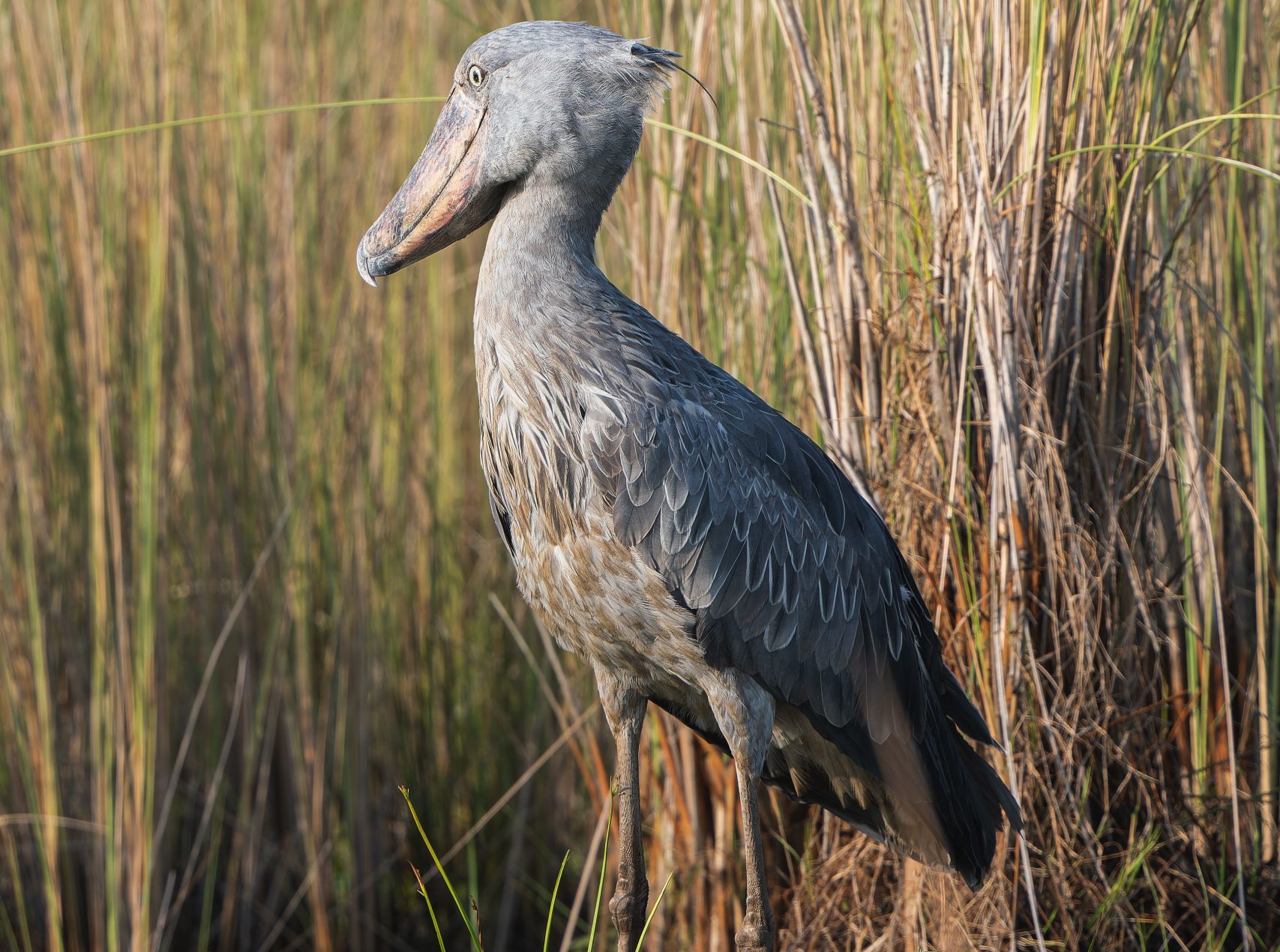
The Shoebill Stork is one of Africa’s most extraordinary birds. Standing up to 1.5 meters tall with an enormous shoe-shaped bill, it resembles a creature from prehistoric times. Its remarkable patience, silent hunting style, and piercing gaze have earned it nicknames such as the “King of the Marshes” and the “Statue Bird.”
Interesting Facts
- Scientific name: Balaeniceps rex
- Height: Up to 150 cm
- Wingspan: Up to 2.6 meters
- Lifespan: Over 35 years
- Conservation status: Vulnerable
- Primary diet: Lungfish, catfish, frogs, snakes, and small reptiles
The Shoebill spends hours standing motionless before striking its prey with incredible speed.
Best Places to See the Shoebill Stork in Uganda
1. Mabamba Swamp
Located near Entebbe on the shores of Lake Victoria, Mabamba Wetland is widely recognized as Uganda’s premier Shoebill destination. Early morning canoe excursions through papyrus channels provide excellent opportunities for close encounters.
Birds commonly seen include:
- Shoebill Stork
- Papyrus Gonolek
- African Jacana
- Malachite Kingfisher
- Blue-breasted Bee-eater
- African Pygmy Goose
Mabamba is internationally recognized as a Ramsar Wetland and Important Bird Area.
2. Murchison Falls National Park
The Nile Delta in Murchison Falls National Park offers one of Uganda’s finest multi-day Shoebill birding experiences. Boat cruises along the Albert Delta combine birdwatching with sightings of elephants, buffaloes, giraffes, crocodiles, hippos, and numerous waterbirds.
3. Ziwa Rhino Sanctuary
The Lugogo Swamp inside Ziwa Rhino Sanctuary is another excellent location where visitors can combine rhino tracking with Shoebill birding, creating a unique wildlife experience.
Other Exceptional Birding Destinations in Uganda
A birding safari with Turkana Wildlife Safaris Uganda can also include:
- Bwindi Impenetrable National Park
- Queen Elizabeth National Park
- Kibale National Park
- Semuliki National Park
- Lake Mburo National Park
- Budongo Forest Reserve
These destinations host Albertine Rift endemics, forest specialists, raptors, waterbirds, and many rare species.
What to Expect on a Shoebill Birding Safari
A typical safari includes:
- Professional birding guide
- Early morning canoe or boat excursions
- Comfortable safari vehicle
- Wildlife game drives
- Photography opportunities
- Bird identification assistance
- Accommodation and meals
- Airport transfers
- Customized itineraries
Every safari is designed around maximizing bird sightings while enjoying Uganda’s spectacular landscapes.
Best Time to Visit
Shoebill birding is possible throughout the year.
However, the best months include:
- December to February
- June to August
These periods generally experience less rainfall, making birding trails and canoe excursions more accessible.
Birds You May See Besides the Shoebill
Uganda offers incredible diversity, including:
- Grey Crowned Crane
- Great Blue Turaco
- African Fish Eagle
- Papyrus Gonolek
- African Green Broadbill
- Green-breasted Pitta
- Giant Kingfisher
- Malachite Kingfisher
- Ross’s Turaco
- Saddle-billed Stork
- African Skimmer
- Blue Swallow
- White-winged Warbler
Wildlife You Can Combine with Birding
A Shoebill safari can easily be combined with:
- Gorilla trekking
- Chimpanzee tracking
- Big Five safaris
- Boat cruises on the Nile
- Rhino tracking
- Cultural experiences
- Nature walks
- Photography tours
This creates a complete Ugandan wildlife adventure.
Why Book with Turkana Wildlife Safaris Uganda?
Turkana Wildlife Safaris Uganda offers personalized and professionally guided birding experiences that cater to both first-time visitors and experienced birders.
Our services include:
- Experienced local bird guides
- Customized itineraries
- Private and group safaris
- Comfortable transportation
- Affordable safari packages
- Quality accommodations
- Responsible eco-tourism practices
- Excellent customer support
Whether you’re searching for the legendary Shoebill or aiming to record hundreds of bird species, we strive to deliver a memorable safari experience.
Frequently Asked Questions (FAQs)
1. Where is the best place to see the Shoebill Stork in Uganda?
Mabamba Swamp near Entebbe is considered the most reliable location, followed by the Albert Delta in Murchison Falls National Park.
2. How likely is it to see a Shoebill?
With an experienced bird guide and an early morning excursion, sighting success is generally high at Uganda’s top Shoebill locations, especially in Mabamba Wetland.
3. How many bird species are found in Uganda?
Uganda has recorded more than 1,070 bird species, making it one of Africa’s leading birdwatching destinations.
4. When is the best time for a birding safari?
Birding is excellent year-round, with June–August and December–February often providing the most favorable conditions.
5. Can beginners join a birding safari?
Absolutely. Turkana Wildlife Safaris Uganda welcomes beginners, hobbyists, photographers, and expert birders alike.
6. How long should a Shoebill safari be?
A one-day excursion is sufficient for Mabamba Swamp, while 3–10 day itineraries allow visitors to explore multiple birding destinations across Uganda.
7. Can birding be combined with gorilla trekking?
Yes. Many visitors combine Shoebill birding with gorilla trekking, chimpanzee tracking, wildlife safaris, and cultural tours.
8. What should I bring?
Bring binoculars, a camera with a telephoto lens, lightweight clothing, waterproof footwear, insect repellent, sunscreen, and a bird field guide if desired.
Conclusion
A Shoebill Stork Birding Safari Tour Uganda is one of Africa’s most rewarding wildlife experiences. From gliding quietly through the papyrus channels of Mabamba Swamp to exploring the rich birdlife of Murchison Falls National Park, Uganda offers exceptional opportunities to encounter one of the world’s most fascinating birds alongside an astonishing diversity of wildlife.
With Turkana Wildlife Safaris Uganda, every journey is carefully planned to provide expert guiding, personalized service, and unforgettable encounters with Uganda’s remarkable natural heritage. Whether your goal is to see the legendary Shoebill, photograph rare birds, or enjoy a complete wildlife safari, Uganda promises an adventure that will leave lasting memories.