
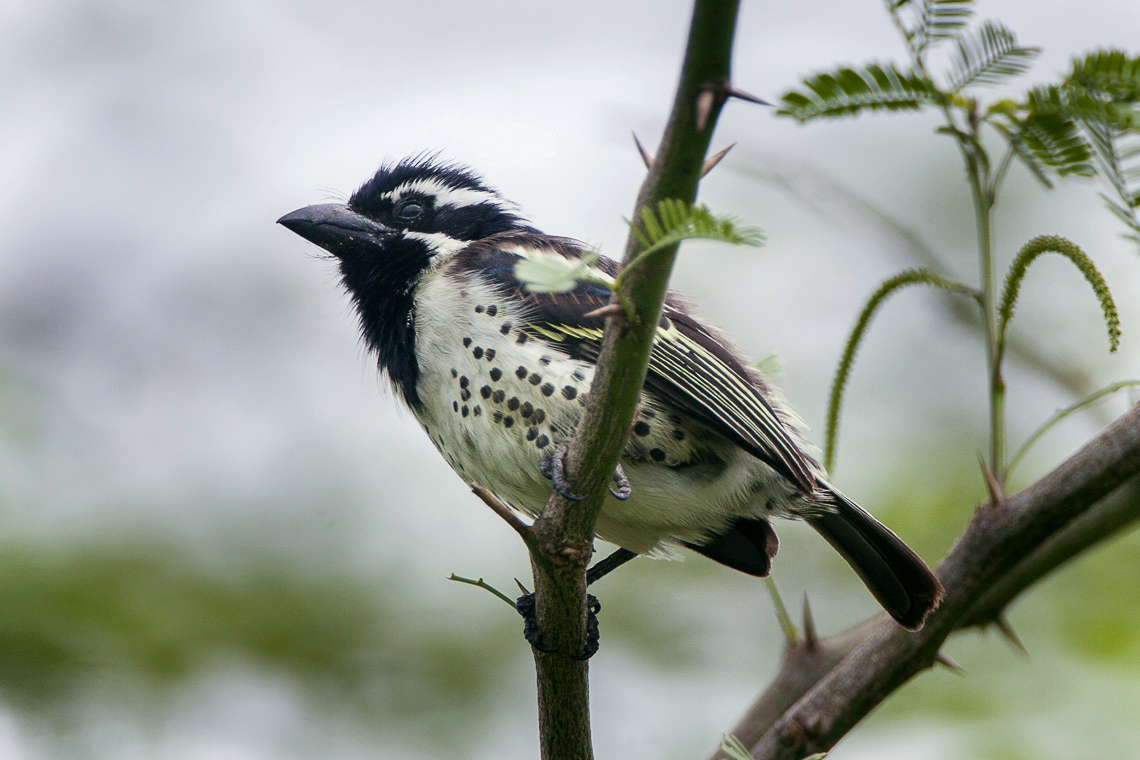
Spot-Flanked Barbet
Spot-Flanked Barbet
The Spot-Flanked Barbet: A Jewel of African Avifauna
Introduction to the Spot-Flanked Barbet
The Spot-flanked Barbet (Tricholaema lacrymosa) is a striking bird species native to the woodlands and savannas of sub-Saharan Africa. Known for its distinctive plumage and melodic calls, this bird is a member of the Lybiidae family, which includes other African barbets. Its unique appearance—marked by characteristic black spots on its flanks—makes it a favorite among birdwatchers and ornithologists alike.
In this comprehensive guide, we’ll delve into the biology, habitat, behavior, and conservation status of the Spot-flanked Barbet.
Taxonomy and Classification
The Spot-flanked Barbet belongs to:
- Kingdom: Animalia
- Phylum: Chordata
- Class: Aves
- Order: Piciformes
- Family: Lybiidae
- Genus: Tricholaema
- Species: T. lacrymosa
This species was first described in 1855 by the German naturalist Gustav Hartlaub. The genus Tricholaema includes several other species of barbets, but T. lacrymosa stands out due to its unique markings and vocalizations.
Physical Description
The Spot-flanked Barbet is a small to medium-sized bird, measuring approximately 16–18 cm in length. Its most distinguishing features include:
- Black spots on the white underparts, especially on the flanks
- Black crown and nape, often with a slight gloss
- White throat bordered by a black line
- Red or orange eyes, depending on the subspecies
- Stout, hooked bill, typical of barbets
These birds exhibit sexual monomorphism, meaning males and females look alike, which can make field identification challenging without behavioral cues.
Distribution and Habitat
The Spot-flanked Barbet is widely distributed across East and Central Africa, including countries such as:
- Uganda
- Kenya
- Tanzania
- Democratic Republic of Congo
- Rwanda
- Burundi
It thrives in a variety of habitats, including:
- Open woodlands
- Savanna grasslands
- Forest edges
- Cultivated lands and gardens
This adaptability makes it a resilient species in the face of moderate habitat disturbance.
Diet and Foraging Behavior
Like other members of the Lybiidae family, the Spot-flanked Barbet is omnivorous. Its diet includes:
- Fruits and berries (especially figs)
- Insects such as beetles, ants, and caterpillars
- Nectar from flowering plants
- Occasionally, small lizards or other vertebrates
Foraging Strategies
- Gleaning from foliage
- Hovering briefly to pluck fruits
- Probing into bark crevices for insects
Their strong, chisel-like beaks are perfectly adapted for accessing food hidden in tree bark or fruit husks.
Vocalizations and Communication
The Spot-flanked Barbet is known for its distinctive duetting calls, which are often used for:
- Territorial defense
- Mate attraction
- Pair bonding
Their calls are a series of rapid, rhythmic notes, often described as a “poop-poop-poop” sound. Duets are typically performed by mated pairs and can last for several minutes.
Breeding and Nesting Habits
Breeding Season
The breeding season varies by region but generally coincides with the rainy season, when food is abundant.
Nesting Behavior
- Cavity nesters: They excavate holes in dead trees or branches
- Both sexes participate in excavation
- Clutch size: 2–4 eggs
- Incubation period: ~13–15 days
- Fledging: Chicks leave the nest after about 30 days
The Spot-flanked Barbet is known for its cooperative breeding, where non-breeding individuals assist in raising the young—a fascinating behavior that enhances chick survival.
Predators and Threats
Although not currently endangered, the Spot-flanked Barbet faces several natural and anthropogenic threats:
Natural Predators
- Snakes (especially tree-climbing species)
- Birds of prey such as hawks and eagles
- Mammals like genets and monkeys
Human-Induced Threats
- Deforestation
- Agricultural expansion
- Urbanization
- Climate change
Despite these threats, the species is listed as Least Concern on the IUCN Red List, thanks to its wide distribution and adaptability.
Conservation Efforts
While the Spot-flanked Barbet is not currently endangered, conservationists emphasize the importance of:
- Preserving natural habitats
- Promoting agroforestry
- Educating local communities
- Monitoring population trends
Organizations like BirdLife International are actively involved in habitat conservation and species monitoring across Africa.
Cultural Significance
In some African cultures, barbets are considered symbols of joy and fertility. Their vibrant plumage and cheerful calls often associate them with good fortune and natural harmony.
Birdwatching tourism in East Africa also benefits from the presence of colorful species like the Spot-flanked Barbet, contributing to eco-tourism economies.
Spotting the Spot-Flanked Barbet: Tips for Birdwatchers
If you’re planning a birdwatching trip to East Africa, here are some tips to increase your chances of spotting this elusive bird:
Best Locations
- Kakamega Forest, Kenya
- Bwindi Impenetrable Forest, Uganda
- Serengeti National Park, Tanzania
Best Times
- Early morning and late afternoon are peak activity times
- Rainy season increases vocalizations and breeding activity
Equipment Suggestions
- Binoculars with at least 8x magnification
- Field guide specific to East African birds
- Camera with telephoto lens for photography
Ecological Role
The Spot-flanked Barbet plays a crucial role in its ecosystem:
- Seed dispersal: Through fruit consumption and excretion
- Pollination: By feeding on nectar
- Insect population control: By preying on various insects
Their nesting cavities are sometimes reused by other species like woodpeckers, owls, and bats, contributing to biodiversity.
Comparison with Similar Species
Several other barbets share overlapping ranges and similar features. Here’s how the Spot-flanked Barbet compares:
| Species | Key Differences |
|---|---|
| Black-collared Barbet | Lacks flank spots, has a red head |
| White-headed Barbet | Larger, with a white head and throat |
| Crested Barbet | More colorful, with a yellow and red body |
Pay close attention to flank markings, vocalizations, and habitat preferences for accurate identification.
Frequently Asked Questions (FAQ)
1. What does the Spot-flanked Barbet eat?
The Spot-flanked Barbet is omnivorous, feeding on fruits, insects, nectar, and occasionally small vertebrates. Its diet helps in seed dispersal and pollination.
2. Where can I find the Spot-flanked Barbet?
This bird is native to East and Central Africa, including Kenya, Uganda, and Tanzania. Look for it in woodlands, savannas, and forest edges.
3. Is the Spot-flanked Barbet endangered?
No, it is currently listed as Least Concern on the IUCN Red List. However, habitat loss poses a long-term threat.
4. How does the Spot-flanked Barbet communicate?
It uses duets and vocal calls for communication, especially during breeding and territorial defense. These calls are often synchronized between mated pairs.
5. What makes the Spot-flanked Barbet unique?
Its spotted flanks, duetting behavior, and cooperative breeding make it a standout among African barbets. It also plays a vital role in ecosystem functioning.
Conclusion
The Spot-flanked Barbet is more than just a beautiful bird—it’s a vital component of African ecosystems, a symbol of biodiversity, and a delight for birdwatchers. Understanding its behavior, habitat, and ecological role helps us appreciate the intricate web of life it supports.
Whether you’re an ornithologist, a conservationist, or a nature enthusiast, the Spot-flanked Barbet offers a fascinating glimpse into the avian wonders of Africa.