
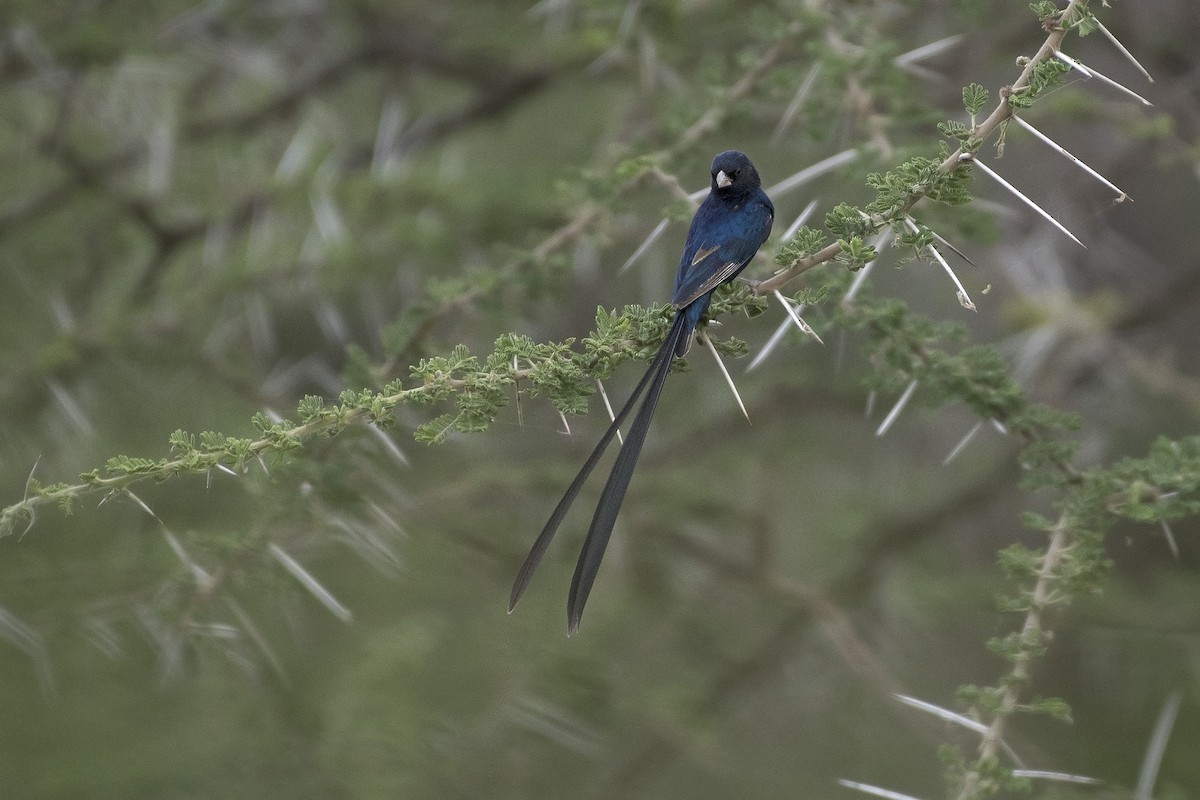
Steel-blue Whydah
Steel-blue Whydah
The Steel-blue Whydah: A Jewel of the African Skies. Birding Safari
Introduction
The Steel-blue Whydah (Vidua hypocherina) is a captivating avian species that graces the savannas and shrublands of sub-Saharan Africa. With its iridescent plumage, elaborate mating displays, and fascinating parasitic breeding behavior, this bird is a marvel of evolutionary adaptation. This comprehensive guide explores the life, habitat, behavior, and conservation of the Steel-blue Whydah, offering a deep dive into one of nature’s most intriguing feathered wonders.
Taxonomy and Classification
The Steel-blue Whydah belongs to the family Viduidae, a group of birds known for their brood parasitic behavior. Here’s a breakdown of its classification:
- Kingdom: Animalia
- Phylum: Chordata
- Class: Aves
- Order: Passeriformes
- Family: Viduidae
- Genus: Vidua
- Species: V. hypocherina
This species is closely related to other whydahs and indigobirds, which share similar ecological niches and reproductive strategies.
Physical Characteristics
The Steel-blue Whydah is a small passerine bird, but what it lacks in size, it makes up for in elegance and color.
Male Features
- Breeding Plumage: Males display a shimmering steel-blue or purplish-blue plumage during the breeding season.
- Tail Feathers: Long, flowing tail feathers that can exceed the length of the body.
- Bill: Short, conical, and pale in color.
Female Features
- Coloration: Females are generally brownish and streaked, resembling sparrows.
- Size: Slightly smaller and less conspicuous than males.
- Camouflage: Their duller plumage helps them blend into their surroundings, especially during nesting.
Habitat and Distribution
The Steel-blue Whydah is native to parts of Central and East Africa. Its preferred habitats include:
- Savannas
- Open woodlands
- Shrublands
- Grasslands near water sources
Geographic Range
- Countries: Found in nations such as Uganda, Kenya, Tanzania, and parts of the Democratic Republic of Congo.
- Elevation Range: Typically inhabits areas between 500 to 2,000 meters above sea level.
Their presence is often dictated by the availability of host species for reproduction.
Diet and Feeding Habits
The Steel-blue Whydah is primarily granivorous, feeding on a variety of seeds. However, its diet can be more diverse depending on availability.
Primary Diet
- Grass seeds
- Millet
- Sorghum
Occasional Supplements
- Insects (especially during breeding season)
- Small berries
- Nectar
They forage mostly on the ground or in low vegetation, often in small flocks outside the breeding season.
Reproductive Behavior
The reproductive strategy of the Steel-blue Whydah is both fascinating and complex. Unlike most birds, they do not build their own nests or rear their young.
Mating Displays
- Aerial Acrobatics: Males perform elaborate flight displays to attract females.
- Vocal Mimicry: They often mimic the calls of their host species to deceive and attract mates.
Breeding Season
- Timing: Generally coincides with the rainy season when food is abundant.
- Pairing: Males may mate with multiple females during a single season.
Brood Parasitism: A Unique Strategy
One of the most remarkable traits of the Steel-blue Whydah is its reliance on brood parasitism.
How It Works
- Host Species: Primarily parasitizes the nests of the Green-winged Pytilia (Pytilia melba).
- Egg Laying: The female lays her eggs in the host’s nest, often removing one of the host’s eggs to avoid detection.
- Chick Mimicry: Whydah chicks mimic the gape pattern and begging calls of the host’s chicks, ensuring they are fed and raised.
Evolutionary Advantage
- Energy Conservation: Saves energy by outsourcing parental care.
- Increased Reproductive Output: Females can lay eggs in multiple nests, increasing their chances of offspring survival.
Conservation Status
According to the IUCN Red List, the Steel-blue Whydah is currently listed as a species of Least Concern.
Threats
- Habitat Loss: Due to agriculture and urban expansion.
- Climate Change: Altering the distribution of host species.
- Pesticide Use: Reduces insect populations and seed availability.
Conservation Efforts
- Habitat Protection: Preserving savanna and woodland ecosystems.
- Research Programs: Monitoring population trends and breeding behaviors.
- Public Awareness: Educating local communities about the ecological role of whydahs.
Cultural Significance
In various African cultures, birds like the Steel-blue Whydah are often seen as symbols of beauty and mystery.
Symbolism
- Elegance: Their striking plumage and graceful flight are admired.
- Mystery: Their secretive breeding habits have inspired folklore and myths.
In Aviculture
Though not commonly kept as pets, some bird enthusiasts admire their beauty and behavior, especially during the breeding season.
How to Spot a Steel-blue Whydah
Birdwatching enthusiasts can increase their chances of spotting this elusive bird by following these tips:
Best Times
- Early Morning: When birds are most active.
- Breeding Season: Males are more visible due to their displays.
Locations
- Near Water Sources: Especially in savanna regions.
- Close to Host Species: Look for areas populated by Green-winged Pytilias.
Equipment
- Binoculars: Essential for spotting tail feathers and plumage details.
- Field Guide: Helps distinguish between similar species.
- Camera: For documenting sightings and behaviors.
Frequently Asked Questions
1. What makes the Steel-blue Whydah unique among birds?
The most distinctive trait is its brood parasitism, where it lays eggs in the nests of other birds, specifically the Green-winged Pytilia, and relies on them to raise its young.
2. Where can I see a Steel-blue Whydah in the wild?
You can spot them in savannas and open woodlands across Central and East Africa, particularly in Uganda, Kenya, and Tanzania.
3. How can I differentiate between a male and a female?
Males exhibit vibrant steel-blue plumage and long tail feathers during the breeding season, while females are brown and streaked, resembling sparrows.
4. Is the Steel-blue Whydah endangered?
No, it is currently listed as Least Concern by the IUCN, although habitat loss and climate change pose potential threats.
5. Do Steel-blue Whydahs harm their host species?
While they do reduce the reproductive success of their hosts, they rarely cause population collapse, as host species have evolved defenses against parasitism.
Conclusion
The Steel-blue Whydah is a testament to the wonders of evolutionary biology. From its dazzling appearance to its cunning reproductive strategy, it captivates ornithologists and bird lovers alike. As we continue to explore the complexities of avian life, species like the Steel-blue Whydah remind us of nature’s ingenuity and the delicate balance that sustains biodiversity.
By protecting their habitats and understanding their ecological roles, we ensure that these avian gems continue to grace our skies for generations to come.