
Masai Tribe Facts
Masai Tribe Facts
Discovering the Masai Tribe: Fascinating Facts About One of Africa’s Most Iconic Peoples
The Masai (also spelled Maasai) tribe is one of the most renowned and culturally rich ethnic groups in Africa. Known for their vibrant attire, unique customs, and deep-rooted traditions, the Masai people have captivated the world with their resilience and cultural pride. In this comprehensive article, we delve into the most intriguing facts about the Masai tribe, exploring their history, lifestyle, beliefs, and more.
Origins and History of the Masai Tribe
The Masai people are a Nilotic ethnic group native to East Africa, primarily inhabiting southern Kenya and northern Tanzania. Their ancestry traces back to the Nile Valley, from where they migrated southward around the 15th century.
They moved through the Great Rift Valley, eventually settling in the fertile regions of the savannah. At their height, the Masai controlled vast territories, dominating trade routes and grazing lands. However, British colonization in the 19th century drastically reduced their land, leading to significant socio-economic changes.
Despite these challenges, the Masai have maintained a strong sense of identity, preserving their customs and resisting assimilation.
Masai Language and Communication
The Masai speak the Maa language, which belongs to the Eastern Nilotic branch of the Nilo-Saharan language family. However, many are also fluent in Swahili and English, especially in urban areas or tourist zones.
Maa is a tonal language, where meanings change based on pitch and intonation. The Masai have a strong oral tradition, with stories, history, and knowledge passed down through generations. Their language is rich in proverbs and metaphors, reflecting their pastoral life and deep connection with nature.
Traditional Clothing and Adornments
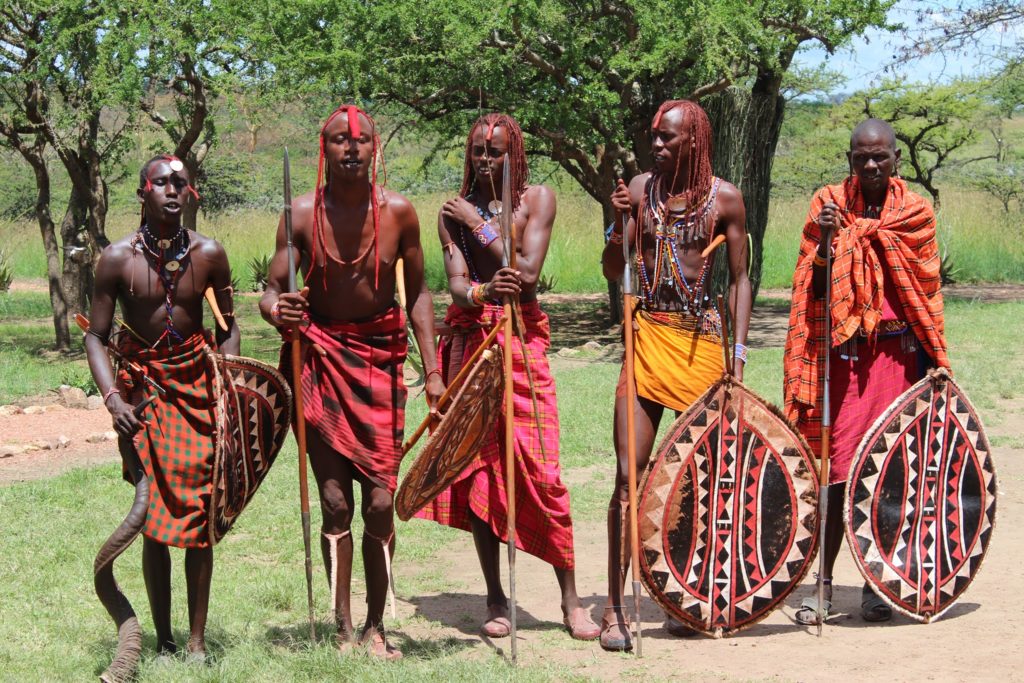
Masai attire is instantly recognizable due to its vibrant colors and intricate beadwork.
Main Garments:
- Shúkà: A red-checked or striped cloth wrapped around the body
- Beaded Jewelry: Necklaces, earrings, and bracelets made from colorful beads
- Sandals: Traditionally made from cowhide or recycled tires
Symbolism of Colors:
- Red: Represents bravery and unity
- Blue: Symbolizes the sky and rain
- Green: Stands for land and nourishment
Clothing is not merely decorative—it signifies age, marital status, and social role within the community.
Social Structure and Gender Roles
Masai society is organized into age-sets and clans, with a strong emphasis on communal living.
Hierarchical Structure:
- Elders: Decision-makers and custodians of tradition
- Morans (Warriors): Young men trained to protect the community
- Women: Responsible for building homes, raising children, and managing food
While patriarchal in structure, women hold significant influence within the family and community through their roles in rituals and social cohesion.
Spiritual Beliefs and Religion
The Masai practice a monotheistic religion centered around a deity named Enkai (or Engai), who embodies both masculine and feminine aspects.
Spiritual Concepts:
- Enkai Narok: The benevolent, black god
- Enkai Na-nyokie: The vengeful, red god
- Laibon: Spiritual leaders who act as healers and mediators
Rituals, sacrifices, and prayers are integral to maintaining harmony with nature and the divine. Their spiritual beliefs are deeply intertwined with their daily lives and natural surroundings.
Masai Diet and Culinary Practices
The Masai diet is predominantly based on livestock products, reflecting their pastoral lifestyle.
Core Foods:
- Milk: A staple consumed daily
- Meat: Eaten during special occasions
- Blood: Mixed with milk for ceremonial purposes
During dry seasons, reliance on milk increases, while in times of celebration, feasts with roasted meat are common. Their diet is deeply symbolic, representing strength, purity, and continuity.
Rites of Passage and Ceremonies
Life in the Masai community is marked by elaborate ceremonies that signify transitions in life stages.
Key Ceremonies:
- Enkipaata: Pre-circumcision ceremony for boys
- Emuratta: Circumcision rite marking the transition to manhood
- Eunoto: Graduation of warriors to elder status
- Marriage Ceremonies: Involving dowry negotiations and elaborate rituals
These rites reinforce communal bonds and cultural continuity, ensuring that traditions are passed down through generations.
Masai Warriors: The Morans
Morans are young Masai men who undergo rigorous training to become protectors of the community.
Warrior Life Includes:
- Living in isolation to develop strength and discipline
- Learning skills such as hunting, herding, and combat
- Participating in ceremonial dances, such as the famous Adumu or “jumping dance”
Becoming a Moran is a prestigious phase, celebrated with pride and reverence. It marks a young man’s readiness to take on responsibilities within the tribe.
Cattle Culture and Economic Life
Cattle are the cornerstone of Masai life, serving as currency, food source, and status symbol.
Economic Functions of Cattle:
- Used in bride price during marriage arrangements
- Serve as a wealth indicator—more cattle equals higher status
- Exchanged for goods and services in trade and barter
The Masai practice nomadic herding, moving their livestock to find fresh grazing land. Their traditional knowledge helps manage livestock health and ensure sustainability.
Modern Challenges and Cultural Preservation
Despite globalization, the Masai strive to preserve their heritage amidst numerous challenges.
Key Issues:
- Land disputes due to encroachment by developers and conservation projects
- Climate change affecting grazing patterns and water availability
- Balancing modern education with traditional teachings
Preservation Efforts:
- Establishment of cultural centers and museums
- Advocacy through NGOs and community leaders
- Integration of eco-tourism with traditional practices
The Masai exemplify cultural resilience in the face of modernization, adapting while maintaining their identity.
Masai and Tourism
The Masai have become cultural ambassadors through tourism, offering visitors a glimpse into their lifestyle.
Tourist Attractions:
- Masai Mara National Reserve, home to wildlife and Masai villages
- Cultural tours including dance performances and craft markets
- Homestays offering authentic experiences with Masai families
While tourism provides income, it also raises concerns about cultural commodification. The challenge lies in preserving authenticity while engaging with the global community.
FAQs About the Masai Tribe
1. Where do the Masai people live?
The Masai primarily reside in southern Kenya and northern Tanzania, particularly in the Great Rift Valley region.
2. What language do the Masai speak?
They speak the Maa language, though many also communicate in Swahili and English.
3. Why is cattle so important to the Masai?
Cattle are central to Masai life, serving as a source of food, wealth, and spiritual significance. They are used in dowries, rituals, and daily sustenance.
4. What is the role of Masai warriors?
Masai warriors, or Morans, protect the community, undergo rigorous training, and participate in cultural ceremonies. They are highly respected within the tribe.
5. How are the Masai preserving their culture?
Through education, tourism, cultural centers, and advocacy, the Masai are actively working to maintain their traditions while adapting to modern challenges.
Conclusion
The Masai tribe stands as a beacon of cultural endurance and identity in a rapidly changing world. Their vibrant traditions, deep spirituality, and harmonious relationship with nature offer valuable lessons in sustainability and community. As they navigate the complexities of modernity, the Masai continue to inspire admiration and respect across the globe.
Their story is not just one of survival, but of thriving with dignity, pride, and an unwavering connection to their roots.