
Shelley’s Crimsonwing
Shelley’s Crimsonwing
Shelley’s Crimsonwing: The Elusive Jewel of Africa’s Montane Forests
Introduction
Deep within the misty montane forests of Central and East Africa, a rare and resplendent bird flits silently through the undergrowth — the Shelley’s Crimsonwing. Known scientifically as Cryptospiza shelleyi, this elusive finch is one of the most enigmatic and least understood birds on the planet. With its vivid crimson plumage and secretive habits, it has captivated ornithologists and birdwatchers alike, becoming a symbol of the hidden wonders of Africa’s highland ecosystems.
In this comprehensive guide, we delve into the world of Shelley’s Crimsonwing, exploring its habitat, behavior, conservation status, and the challenges it faces in the wild. Whether you’re a seasoned birder or a curious nature enthusiast, this article will unveil the mysteries surrounding this avian gem.
Taxonomy and Classification
Shelley’s Crimsonwing belongs to the family Estrildidae, a group of small, seed-eating birds known as estrildid finches. The species was first described in 1903 by the British ornithologist George Ernest Shelley, after whom it is named.
Scientific Classification:
- Kingdom: Animalia
- Phylum: Chordata
- Class: Aves
- Order: Passeriformes
- Family: Estrildidae
- Genus: Cryptospiza
- Species: Cryptospiza shelleyi
Shelley’s Crimsonwing is one of four species within the Cryptospiza genus, all of which are known for their vibrant red coloration and preference for dense forest habitats.
Physical Description
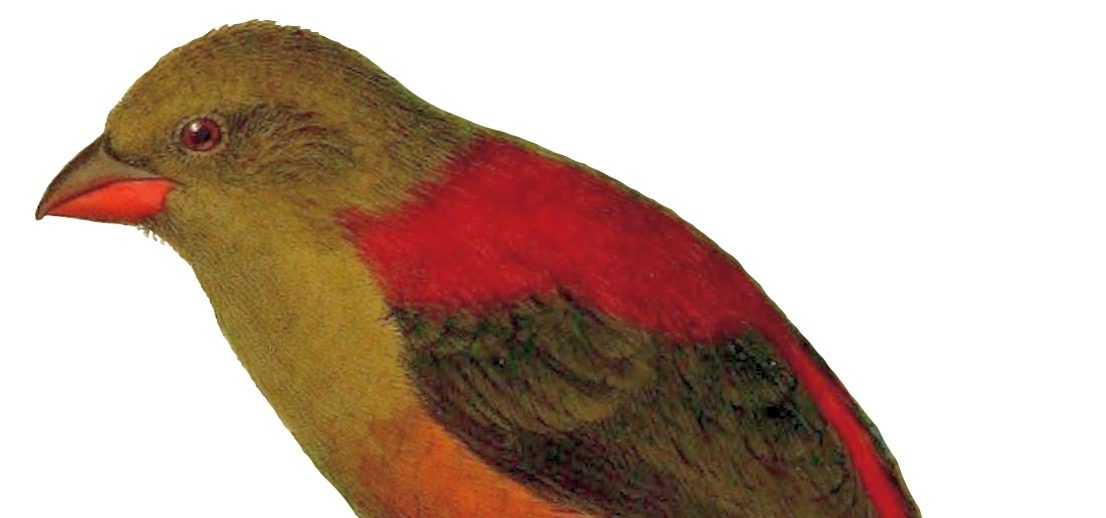
The striking appearance of Shelley’s Crimsonwing is one of its most distinguishing features. This small finch measures approximately 11–12 cm in length and weighs around 14 grams.
Key Physical Characteristics:
- Plumage: Males exhibit a brilliant crimson coloration across the head, breast, and flanks, with darker wings and tail. Females are slightly duller, with more olive-green tones on the back and wings.
- Beak: Short, conical, and black — ideal for cracking seeds.
- Eyes: Dark and beady, providing excellent vision in low-light forest conditions.
- Legs and Feet: Pale pinkish-grey, adapted for perching and foraging in dense vegetation.
This vivid coloration makes the bird a visual marvel, though its shy nature and preference for thick underbrush make sightings exceedingly rare.
Habitat and Distribution
Shelley’s Crimsonwing is endemic to the Albertine Rift montane forests, a biodiversity hotspot that stretches across parts of Uganda, Rwanda, Burundi, and the Democratic Republic of Congo.
Preferred Habitats:
- Altitude: Typically found at elevations between 1,500 and 3,000 meters.
- Environment: Moist montane forests, especially areas with dense bamboo and undergrowth.
- Microhabitats: Forest edges, clearings, and secondary growth where seeding grasses are abundant.
Despite its relatively wide range, the bird is highly localized and rarely seen, making population estimates difficult.
Key Locations:
- Bwindi Impenetrable Forest — Uganda
- Nyungwe Forest National Park — Rwanda
- Kahuzi-Biéga National Park — DRC
These regions are not only vital for Shelley’s Crimsonwing but also support numerous other endemic and endangered species.
Behavior and Diet
Shelley’s Crimsonwing is a secretive and solitary bird, often moving silently through the undergrowth in search of food.
Feeding Habits:
- Primary Diet: Grass seeds, particularly from bamboo and other understory plants.
- Supplementary Diet: Small insects and larvae, especially during the breeding season.
- Foraging Behavior: Ground forager, often seen hopping along the forest floor or low shrubs.
Behavioral Traits:
- Vocalizations: Soft, high-pitched calls, often described as “tsee-tsee-tsee.”
- Social Structure: Usually found alone or in pairs; rarely forms flocks.
- Territoriality: Little is known, but likely maintains small territories during breeding.
These behaviors make the bird difficult to study, contributing to its mysterious reputation.
Breeding and Life Cycle
Very little is known about the breeding habits of Shelley’s Crimsonwing, largely due to its secretive nature and the inaccessibility of its habitat.
What We Know:
- Breeding Season: Believed to coincide with the rainy season, when food is abundant.
- Nesting Sites: Likely builds cup-shaped nests in dense vegetation close to the ground.
- Clutch Size: Estimated at 2–4 eggs.
- Parental Care: Both parents may be involved in feeding and protecting the young.
Further research is urgently needed to understand the reproductive biology of this elusive species.
Conservation Status
According to the IUCN Red List, Shelley’s Crimsonwing is currently classified as Vulnerable.
Reasons for Vulnerability:
- Restricted Range: Confined to a narrow band of montane forest.
- Low Detectability: Makes population monitoring difficult.
- Habitat Loss: Ongoing deforestation and human encroachment.
Despite being one of Africa’s most sought-after birds by ornithologists, confirmed sightings are exceedingly rare, with some experts fearing it may be on the brink of extinction in parts of its range.
Threats to Survival
Shelley’s Crimsonwing faces a multitude of threats, many of which are driven by human activity.
Major Threats:
- Deforestation: Logging and agricultural expansion are rapidly reducing suitable habitat.
- Mining: Particularly in the DRC, mining operations are encroaching on protected areas.
- Climate Change: Altered rainfall patterns may affect food availability and breeding cycles.
- Lack of Data: Insufficient research hampers effective conservation strategies.
These threats are compounded by the bird’s naturally low population density and elusive behavior.
Conservation Efforts
Several organizations are working to protect Shelley’s Crimsonwing and its habitat.
Key Initiatives:
- Habitat Protection: Expansion and enforcement of protected areas like Bwindi Impenetrable National Park.
- Ecotourism: Promoting responsible birdwatching to generate income for local communities.
- Research Programs: Ongoing studies by institutions such as the African Bird Club and BirdLife International.
- Community Engagement: Involving indigenous communities in conservation planning and forest stewardship.
These efforts are crucial for ensuring the survival of this rare and beautiful species.
Why Shelley’s Crimsonwing Matters
Beyond its aesthetic appeal, Shelley’s Crimsonwing plays a vital role in the health of montane forest ecosystems.
Ecological Importance:
- Seed Dispersal: Helps maintain plant diversity by spreading seeds.
- Indicator Species: Its presence reflects the overall health of the forest.
- Biodiversity Value: Represents the unique evolutionary history of the Albertine Rift.
Preserving this species means protecting an entire ecosystem teeming with life.
FAQs
1. Why is Shelley’s Crimsonwing so rarely seen?
Shelley’s Crimsonwing is extremely shy and lives in dense, remote forests. Its secretive behavior and low population density make it one of the most elusive birds in Africa.
2. Where can I see Shelley’s Crimsonwing?
Your best chance is in protected areas like Bwindi Impenetrable Forest in Uganda or Nyungwe Forest in Rwanda. However, sightings are rare and not guaranteed.
3. What does Shelley’s Crimsonwing eat?
Its diet mainly consists of grass seeds, especially from bamboo, and occasionally small insects during the breeding season.
4. Is Shelley’s Crimsonwing endangered?
It is listed as Vulnerable by the IUCN, meaning it faces a high risk of extinction in the wild due to habitat loss and other threats.
5. How can I help conserve Shelley’s Crimsonwing?
Support organizations like BirdLife International, participate in responsible ecotourism, and raise awareness about the importance of preserving Africa’s montane forests.
Conclusion
Shelley’s Crimsonwing is more than just a bird — it is a living symbol of the fragile beauty that exists within Africa’s montane forests. Its survival hinges not only on the protection of its habitat but also on our collective efforts to understand and appreciate the intricate web of life it represents.
As we continue to explore and document the natural world, let us remember that even the most elusive creatures deserve our attention, our respect, and our protection.