
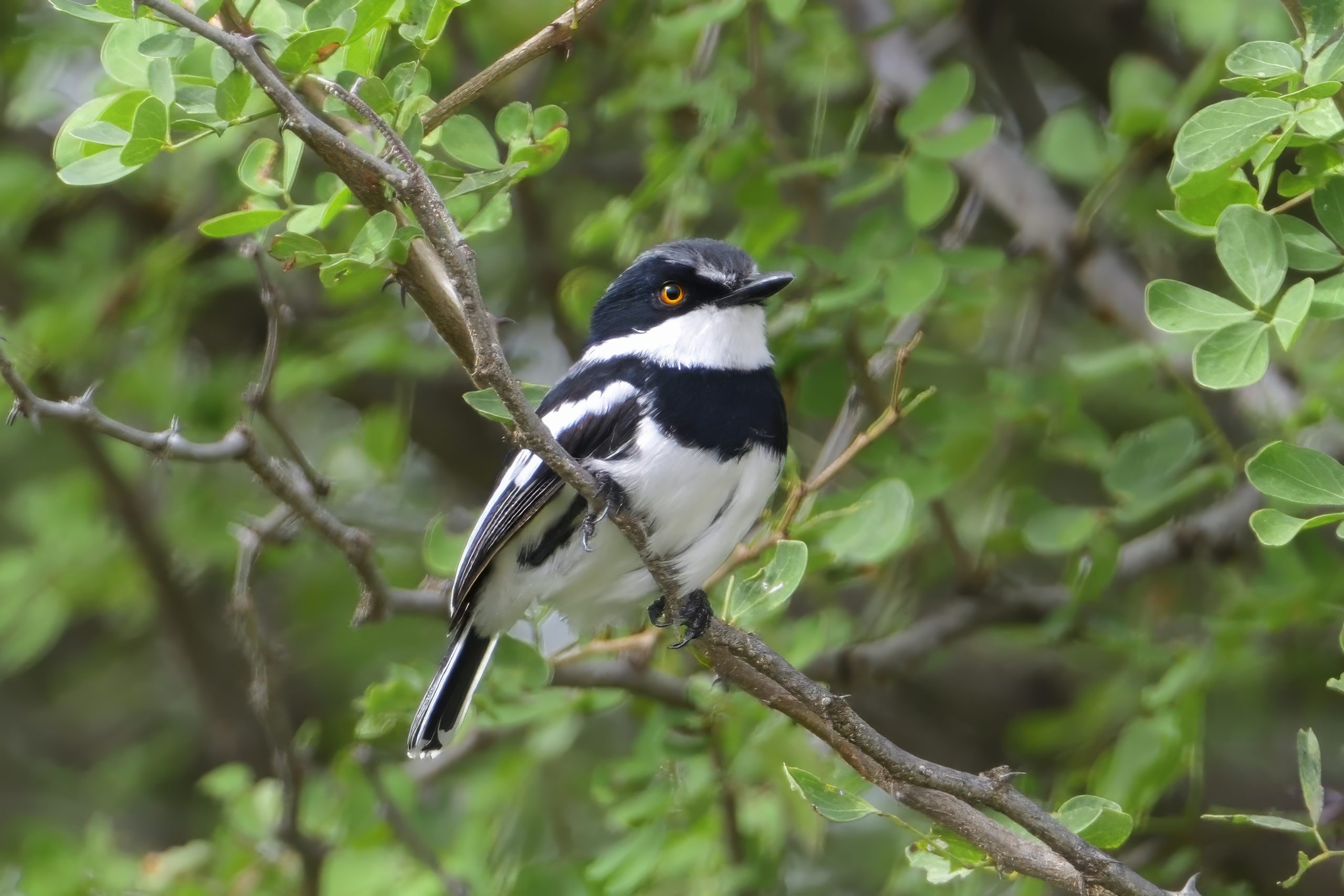
Pygmy Batis
Pygmy Batis
The Pygmy Batis: A Jewel of African Avifauna
Introduction
Among the vibrant tapestry of Africa’s avian biodiversity, the Pygmy Batis (Batis perkeo) stands out as a captivating, yet often overlooked, species. This diminutive bird, cloaked in contrasting hues of black, white, and gray, is a master of stealth and agility. Despite its small stature, the Pygmy Batis plays a significant role in the ecosystem, contributing to insect population control and serving as a vital link in the food chain.
In this comprehensive guide, we will delve deeply into the world of the Pygmy Batis, exploring its habitat, behavior, diet, conservation status, and more. Birding Safari
Taxonomy and Classification
The Pygmy Batis belongs to the family Platysteiridae, a group of small, insectivorous birds endemic to sub-Saharan Africa. The genus Batis comprises several species, all known for their distinctive plumage and active foraging behavior.
- Kingdom: Animalia
- Phylum: Chordata
- Class: Aves
- Order: Passeriformes
- Family: Platysteiridae
- Genus: Batis
- Species: Batis perkeo
This classification places the Pygmy Batis among the passerines, or perching birds, which are the most diverse order of birds globally.
Physical Characteristics
Despite being one of the smallest members of its genus, the Pygmy Batis is striking in appearance.
Key Features:
- Size: Approximately 8–9 cm in length
- Weight: Around 6–8 grams
- Coloration:
- Males: Black head, white underparts, and a bold black breast band
- Females: Similar pattern with a slightly browner hue and a rufous breast band
- Eyes: Bright yellow, giving them a piercing gaze
- Bill: Short, slightly hooked—ideal for catching insects
The bird’s compact body and agile wings make it a swift flier, often darting through shrubs and low trees in search of prey.
Habitat and Distribution
The Pygmy Batis is primarily found in the dry savannas and acacia woodlands of East Africa. Its range includes:
- Ethiopia
- Kenya
- Somalia
- South Sudan
- Uganda
Preferred Habitats:
- Dry thornbush
- Acacia scrublands
- Semi-arid savanna
- Open woodland edges
These birds are typically found at altitudes ranging from 500 to 1,800 meters, where they can exploit the abundance of insects in their environment.
Behavior and Social Structure
The Pygmy Batis is a territorial and monogamous species. Pairs often remain together throughout the breeding season, defending their territory vigorously from intruders.
Behavioral Traits:
- Foraging: Active and acrobatic, often seen flitting between branches
- Vocalizations: High-pitched, rapid calls used for communication and territory defense
- Territoriality: Males are especially aggressive during the breeding season
These birds are usually observed in pairs or small family groups, rarely forming large flocks.
Feeding Habits
As an insectivore, the Pygmy Batis plays a crucial role in controlling insect populations.
Diet Includes:
- Beetles
- Flies
- Caterpillars
- Ants
- Spiders
They hunt by gleaning insects from leaves and branches or making short aerial sallies to catch flying prey. Their sharp vision and quick reflexes make them efficient predators.
Breeding and Reproduction
Breeding typically coincides with the rainy season, when insect availability is at its peak.
Reproductive Behavior:
- Nesting: Small cup-shaped nests made of plant fibers, spider webs, and lichens
- Location: Built in the fork of a tree or shrub, well-camouflaged
- Clutch Size: 2–3 eggs
- Incubation: Lasts about 14–16 days, primarily by the female
- Fledging: Chicks leave the nest after approximately 2 weeks
Both parents participate in feeding the chicks, showcasing a high degree of parental investment for such a small bird.
Conservation Status
According to the IUCN Red List, the Pygmy Batis is currently classified as Least Concern. However, localized threats could impact populations in the future.
Conservation Concerns:
- Habitat degradation due to agriculture
- Deforestation
- Climate change affecting insect availability
Despite these threats, the species remains relatively stable across its range, thanks in part to its adaptability to different habitats.
Ecological Importance
The Pygmy Batis contributes to the ecological balance in several ways:
- Insect Control: Helps regulate insect populations, reducing the spread of pests
- Prey for Predators: Serves as food for larger birds and mammals
- Indicator Species: Presence indicates a healthy, insect-rich environment
Their role in the ecosystem underscores the importance of conserving even the smallest bird species.
Threats and Challenges
Although not currently endangered, the Pygmy Batis faces several challenges:
Major Threats:
- Habitat Loss: Due to expanding agriculture and urbanization
- Pesticide Use: Reduces insect prey and can poison birds indirectly
- Climate Variability: Alters breeding cycles and food availability
Conservation efforts must focus on habitat preservation and sustainable land-use practices to ensure the species’ long-term survival.
How to Spot a Pygmy Batis
Birdwatchers looking to observe the Pygmy Batis should focus on dry woodland areas during the early morning or late afternoon.
Birding Tips:
- Look for quick, darting movements among low shrubs
- Listen for high-pitched, repetitive calls
- Use binoculars to spot their distinctive plumage
- Visit East African reserves such as Samburu National Reserve or Awash National Park
Patience and a keen eye are essential, as these birds are small and swift.
Interesting Facts
- The Pygmy Batis is one of the smallest members of the Platysteiridae family.
- Despite its size, it is a fierce defender of its territory.
- The species is sexually dimorphic, with males and females displaying different breast band colors.
- It is named “Pygmy” due to its miniature size compared to other batis species.
- Their nests are often camouflaged so well that even experienced birders struggle to find them.
FAQs
1. What makes the Pygmy Batis unique among African birds?
The Pygmy Batis is notable for its tiny size, striking plumage, and agile foraging behavior. Its ability to thrive in arid environments sets it apart from many other insectivorous birds.
2. Where can I see the Pygmy Batis in the wild?
You can spot the Pygmy Batis in East African countries like Kenya, Ethiopia, and Somalia, particularly in dry acacia woodlands and savannas.
3. Is the Pygmy Batis endangered?
No, the species is currently listed as Least Concern by the IUCN, though it faces potential threats from habitat loss and climate change.
4. What does the Pygmy Batis eat?
It feeds primarily on insects such as beetles, flies, and caterpillars, using a combination of gleaning and aerial hunting techniques.
5. How can I help conserve the Pygmy Batis?
Support organizations that focus on habitat conservation in Africa, advocate for sustainable agriculture, and avoid products that contribute to deforestation.
Conclusion
The Pygmy Batis may be small, but its ecological significance and captivating behavior make it a true marvel of the avian world. As we continue to study and protect the rich biodiversity of Africa, this tiny bird reminds us that even the smallest creatures play a vital role in the grand scheme of nature.
By raising awareness and promoting conservation, we can ensure that future generations will also have the opportunity to marvel at the elegance and resilience of the Pygmy Batis.