
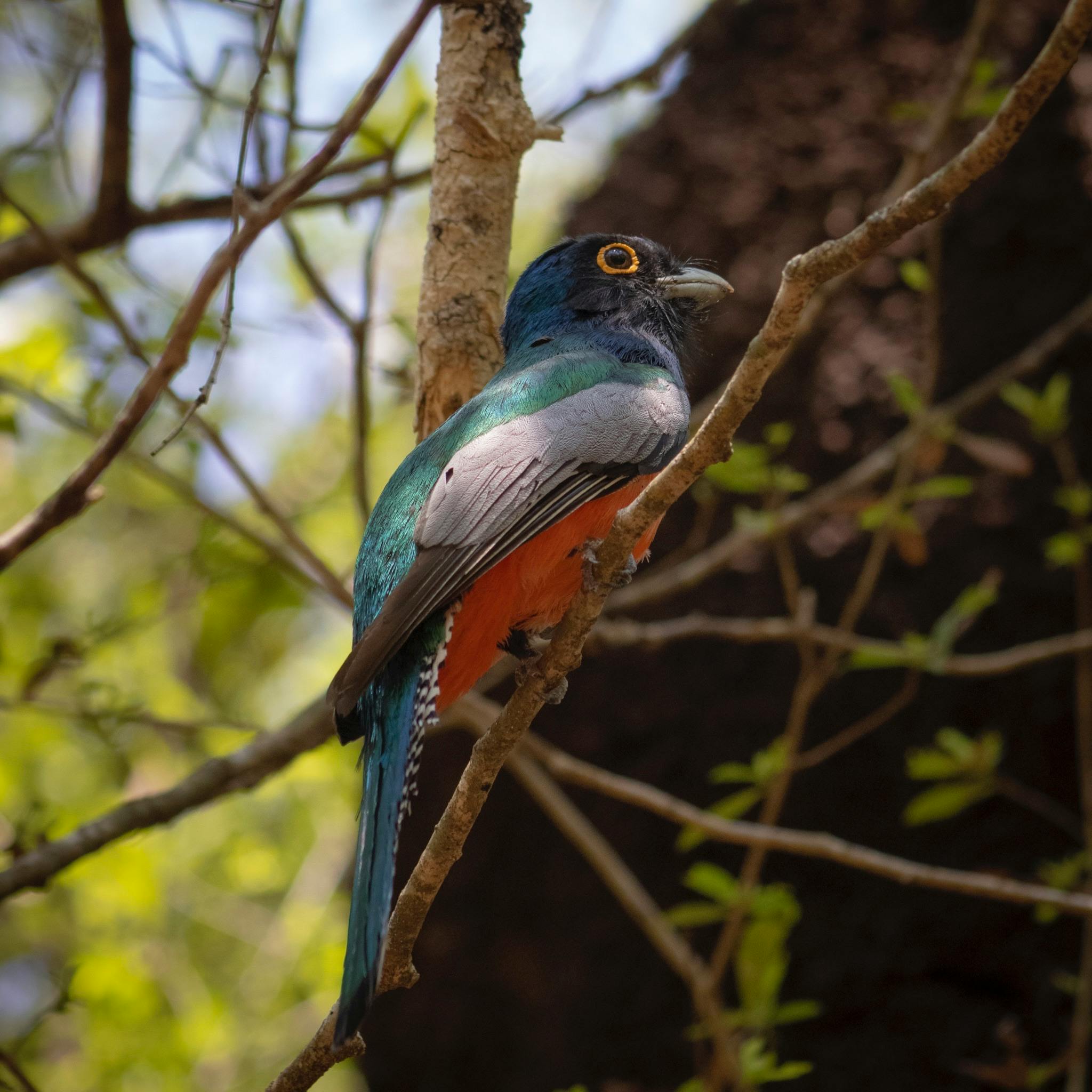
Bar-Tailed Trogon
Bar-Tailed Trogon
The Enigmatic Bar-tailed Trogon: A Jewel of African Forests
The Bar-tailed Trogon (Apaloderma vittatum) is one of the most captivating yet lesser-known avian species inhabiting the montane forests of central and eastern Africa. With its iridescent plumage, elusive behavior, and ecological significance, this bird offers a fascinating glimpse into the biodiversity of tropical highland ecosystems. This comprehensive guide delves into the biology, habitat, behavior, and conservation status of the Bar-tailed Trogon, providing a detailed portrait of this forest gem.
Introduction to the Bar-tailed Trogon
The Bar-tailed Trogon is a species of bird in the family Trogonidae, a group known for their vibrant colors and secretive lifestyles. Native to the high-altitude forests of Africa, this bird is often overshadowed by its more flamboyant relatives, such as the Resplendent Quetzal. However, its understated beauty and ecological importance make it a subject worthy of attention.
Taxonomy and Classification
The Bar-tailed Trogon belongs to the following taxonomic hierarchy:
- Kingdom: Animalia
- Phylum: Chordata
- Class: Aves
- Order: Trogoniformes
- Family: Trogonidae
- Genus: Apaloderma
- Species: Apaloderma vittatum
It is closely related to other African trogons, such as the Narina Trogon and the Bare-cheeked Trogon, though it is distinct in both appearance and habitat preference.
Physical Characteristics
A Palette of Subtle Brilliance
Unlike some of its more flamboyant relatives, the Bar-tailed Trogon exhibits a more subdued yet equally mesmerizing coloration:
- Males:
- Metallic green head and upperparts
- Bright red belly
- White breast band
- Distinctive barred tail (from which it gets its name)
- Females:
- Brownish head and back
- Duller red underparts
- Less pronounced tail barring
Size and Structure
- Length: Approximately 28–30 cm
- Wingspan: Around 40 cm
- Weight: 70–90 grams
Its compact size and rounded wings make it well-adapted for maneuvering through dense forest canopies.
Habitat and Distribution
Preferred Ecosystems
The Bar-tailed Trogon thrives in:
- Montane forests
- Moist evergreen woodlands
- Forest edges and clearings
These birds are typically found at elevations ranging from 1,200 to 3,000 meters above sea level.
Geographic Range
Their range includes:
- Central Africa: Democratic Republic of Congo, Rwanda, Burundi
- East Africa: Uganda, Kenya, Tanzania
- Southern Africa: Malawi, Zambia
They are particularly abundant in protected areas such as:
Behavior and Diet
Feeding Habits
The Bar-tailed Trogon is an opportunistic feeder, consuming a variety of forest-dwelling prey:
- Insects (beetles, caterpillars, grasshoppers)
- Small invertebrates
- Fruits and berries
They often employ a “sit-and-wait” strategy, perching silently before swooping down on unsuspecting prey.
Daily Activity
- Diurnal: Active during the day
- Solitary or in pairs: Rarely seen in flocks
- Territorial: Males are known to defend their feeding and nesting areas
Breeding and Nesting Habits
Courtship and Mating
The breeding season varies by region but generally occurs during the rainy season when food is abundant. Males perform aerial displays and vocalizations to attract mates.
Nesting
- Nest Site: Natural cavities in dead trees or abandoned woodpecker holes
- Nest Composition: Minimal; eggs are laid directly on the cavity floor
- Clutch Size: Typically 2–3 eggs
- Incubation Period: Around 16–18 days
- Parental Care: Both parents share incubation and feeding duties
Ecological Role
The Bar-tailed Trogon plays a vital role in forest ecosystems:
- Pest Control: By consuming insects, they help regulate pest populations
- Seed Dispersal: Their frugivorous diet aids in the dispersal of native plant species
- Indicator Species: Their presence signals a healthy, undisturbed forest environment
Threats and Conservation Status
Major Threats
- Habitat Loss: Deforestation for agriculture and logging is the primary threat
- Climate Change: Alters the delicate balance of montane ecosystems
- Human Disturbance: Tourism and encroachment can disrupt breeding behaviors
Conservation Status
According to the IUCN Red List, the Bar-tailed Trogon is currently listed as “Least Concern,” but its population is decreasing in some areas due to habitat degradation.
Conservation Efforts
- Protected Areas: Many of their habitats fall within national parks and reserves
- Ecotourism: Responsible tourism helps fund conservation programs
- Research and Monitoring: Ongoing studies aim to better understand their ecology and needs
How to Spot the Bar-tailed Trogon
Best Locations
Tips for Birdwatchers
- Time of Day: Early morning or late afternoon
- Equipment: Binoculars with good light-gathering capability
- Guides: Local birding guides increase your chances of a sighting
- Patience: These birds are shy and often remain motionless for long periods
Interesting Facts
- The Bar-tailed Trogon is one of the few African trogons that inhabit high-altitude forests.
- Their tail feathers have a unique barred pattern that distinguishes them from other species.
- Despite their bright colors, they are masters of camouflage in the dappled forest light.
- Their call is a soft, mournful “whoop” repeated at intervals—often the only clue to their presence.
- They are monogamous and form long-term pair bonds.
FAQs
1. Where can I see the Bar-tailed Trogon in the wild?
You can spot them in montane forests across central and eastern Africa, particularly in protected areas like Nyungwe Forest and Bwindi Impenetrable Forest.
2. What do Bar-tailed Trogons eat?
Their diet includes insects, small invertebrates, and various fruits, making them both insectivorous and frugivorous.
3. Are Bar-tailed Trogons endangered?
They are currently listed as “Least Concern” by the IUCN, but habitat loss is a growing threat.
4. How do they build their nests?
They use natural tree cavities or abandoned woodpecker holes, laying eggs directly on the cavity floor without adding nesting material.
5. What makes the Bar-tailed Trogon unique?
Its combination of metallic green plumage, barred tail, and elusive behavior makes it a unique and cherished sight for birdwatchers and researchers alike.
Conclusion
The Bar-tailed Trogon is more than just a beautiful bird—it is a symbol of the rich biodiversity found in Africa’s montane forests. Its presence indicates a thriving ecosystem, and its survival depends on our commitment to preserving these fragile habitats. Whether you’re a seasoned ornithologist or a casual bird lover, encountering this elusive trogon in the wild is an unforgettable experience that underscores the importance of conservation and ecological awareness.