
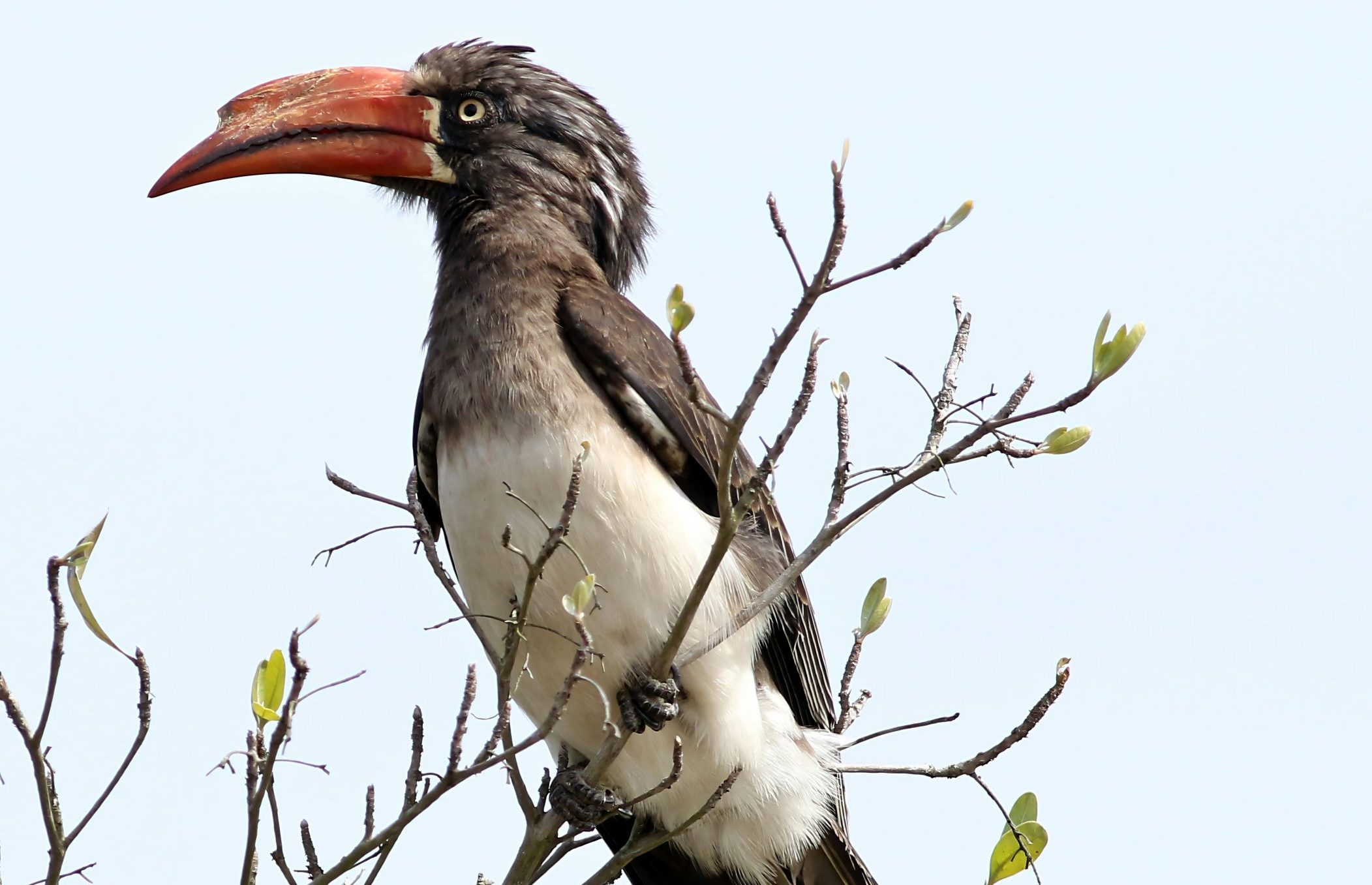
Crowned Hornbill
Crowned Hornbill
Crowned Hornbill: A Complete Guide to One of Africa’s Most Fascinating Birds
The African wilderness is home to a myriad of spectacular bird species, but few are as captivating and ecologically significant as the Crowned Hornbill. With its distinctive casque, vibrant plumage, and unique behavioral traits, this bird stands out not only for its appearance but also for its role in maintaining the balance of forest ecosystems.
In this comprehensive guide, we’ll delve into everything you need to know about the Crowned Hornbill, from its habitat and diet to its breeding habits and conservation status.
Introduction to the Crowned Hornbill
The Crowned Hornbill (Lophoceros alboterminatus) is a medium-sized bird belonging to the Bucerotidae family. Known for its striking appearance and loud, cackling calls, this species is native to the forests and woodlands of sub-Saharan Africa.
Unlike its larger relatives such as the Southern Ground Hornbill, the Crowned Hornbill is more arboreal and prefers dense canopies where it can forage and nest.
Taxonomy and Classification
- Kingdom: Animalia
- Phylum: Chordata
- Class: Aves
- Order: Bucerotiformes
- Family: Bucerotidae
- Genus: Lophoceros
- Species: L. alboterminatus
The Crowned Hornbill was previously classified under the genus Tockus, but recent phylogenetic studies have reclassified it under Lophoceros, aligning it more closely with other forest-dwelling hornbills.
Physical Characteristics
The Crowned Hornbill is easily recognizable due to its:
- Size: Approximately 50 cm (20 inches) in length
- Weight: Around 200–300 grams
- Coloration:
- Dark brown to black plumage
- White belly and underparts
- Reddish-orange bill with a prominent casque
- Sexual Dimorphism: Males typically have a larger casque than females
Its casque, a hollow structure on top of the bill, is not just ornamental—it plays a role in vocal resonance and species identification.
Habitat and Distribution
This species is primarily found in:
- Eastern and Southern Africa
- From southern Somalia and Kenya down to northern KwaZulu-Natal in South Africa
- Preferred Habitats:
- Coastal and inland forests
- Riverine woodlands
- Dense thickets and forest edges
The Crowned Hornbill is a non-migratory bird, although it may move locally in search of food.
Explore more about African forest habitats.
Diet and Feeding Behavior
Crowned Hornbills are omnivorous, with a diet that includes:
- Fruits (especially figs and berries)
- Insects (grasshoppers, beetles, caterpillars)
- Small vertebrates (lizards, frogs, and occasionally small birds)
- Other invertebrates (spiders, snails)
Feeding Techniques
- Aerial hunting: Catching insects mid-flight
- Foraging in foliage: Using their long bills to probe crevices
- Cooperative feeding: Sometimes seen feeding in small groups
Their frugivorous tendencies make them key seed dispersers in their ecosystems.
Breeding and Reproduction
The Crowned Hornbill exhibits fascinating reproductive behavior, including:
- Monogamous pairing
- Breeding season: Typically during the wet season (varies by region)
- Nesting:
- Nests in natural tree cavities
- Female seals herself inside using mud, feces, and food remains
- Leaves a small slit for the male to pass food through
Reproductive Cycle
- Eggs laid: 3–5
- Incubation: 23–25 days
- Fledging period: 6–8 weeks
This unique nesting behavior protects the female and chicks from predators.
Behavioral Traits
Crowned Hornbills are:
- Highly vocal: Known for their loud, cackling calls
- Social: Often seen in small family groups
- Territorial: Defend nesting sites aggressively
- Diurnal: Active during the day, especially in the early morning and late afternoon
Their calls can often be heard echoing through the forest canopy, serving both to mark territory and maintain group cohesion.
Conservation Status
According to the IUCN Red List, the Crowned Hornbill is currently listed as:
- Status: Least Concern (LC)
- Population trend: Stable
However, localized threats such as deforestation, habitat fragmentation, and illegal pet trade can impact regional populations.
Ecological Importance
Crowned Hornbills play a vital role in their ecosystems:
- Seed dispersal: By consuming and excreting seeds, they help regenerate forests
- Pest control: By feeding on insects and small animals, they help maintain ecological balance
- Indicator species: Their presence reflects the health of forest habitats
Their decline could signal broader environmental issues, making their conservation crucial.
Threats and Challenges
Despite their current conservation status, Crowned Hornbills face several ongoing threats:
Major Threats
- Habitat loss due to logging and agriculture
- Climate change affecting food availability
- Human encroachment and urbanization
- Hunting and trapping for traditional medicine or pets
Conservation Measures
- Protected areas: Many reside in national parks and reserves
- Environmental education: Raising awareness among local communities
- Research and monitoring: Tracking population trends and habitat use
Learn more about bird conservation efforts in Africa.
How to Spot a Crowned Hornbill
Birdwatchers looking to observe this species should:
- Visit forested areas in East and Southern Africa
- Look for movement in the canopy—they are often seen flying between trees
- Listen for their calls—a series of loud, nasal cackles
- Go birding during early morning or late afternoon when they are most active
Birding Hotspots
- Arabuko Sokoke Forest, Kenya
- iSimangaliso Wetland Park, South Africa
- Udzungwa Mountains, Tanzania
Interesting Facts
- The casque of the Crowned Hornbill is not solid—it’s a lightweight structure made of keratin.
- They can live up to 20 years in the wild.
- Crowned Hornbills are one of the few hornbill species that seal their nests completely.
- They are excellent fliers, capable of agile maneuvers through dense forest.
- Their eyesight is incredibly sharp, aiding in both hunting and navigation.
FAQs
1. What is the scientific name of the Crowned Hornbill?
The scientific name is Lophoceros alboterminatus, previously known as Tockus alboterminatus.
2. Where can I see a Crowned Hornbill in the wild?
They are commonly found in coastal and inland forests of East and Southern Africa, including countries like Kenya, Tanzania, Mozambique, and South Africa.
3. What do Crowned Hornbills eat?
Their diet includes fruits, insects, small reptiles, and other invertebrates, making them important for both seed dispersal and pest control.
4. Are Crowned Hornbills endangered?
No, they are currently listed as Least Concern by the IUCN, though local populations may be at risk due to habitat destruction.
5. How do Crowned Hornbills reproduce?
They are monogamous and nest in tree cavities, where the female seals herself in during incubation, relying on the male to bring food.
Conclusion
The Crowned Hornbill is more than just a beautiful bird—it is a keystone species that contributes significantly to the health and diversity of African forests. Its unique behaviors, ecological roles, and adaptability make it a subject of fascination for ornithologists and nature lovers alike.
As we continue to face environmental challenges, understanding and protecting species like the Crowned Hornbill becomes ever more important. Whether you’re a seasoned birder or a curious traveler, spotting this majestic bird in its natural habitat is a truly unforgettable experience.