
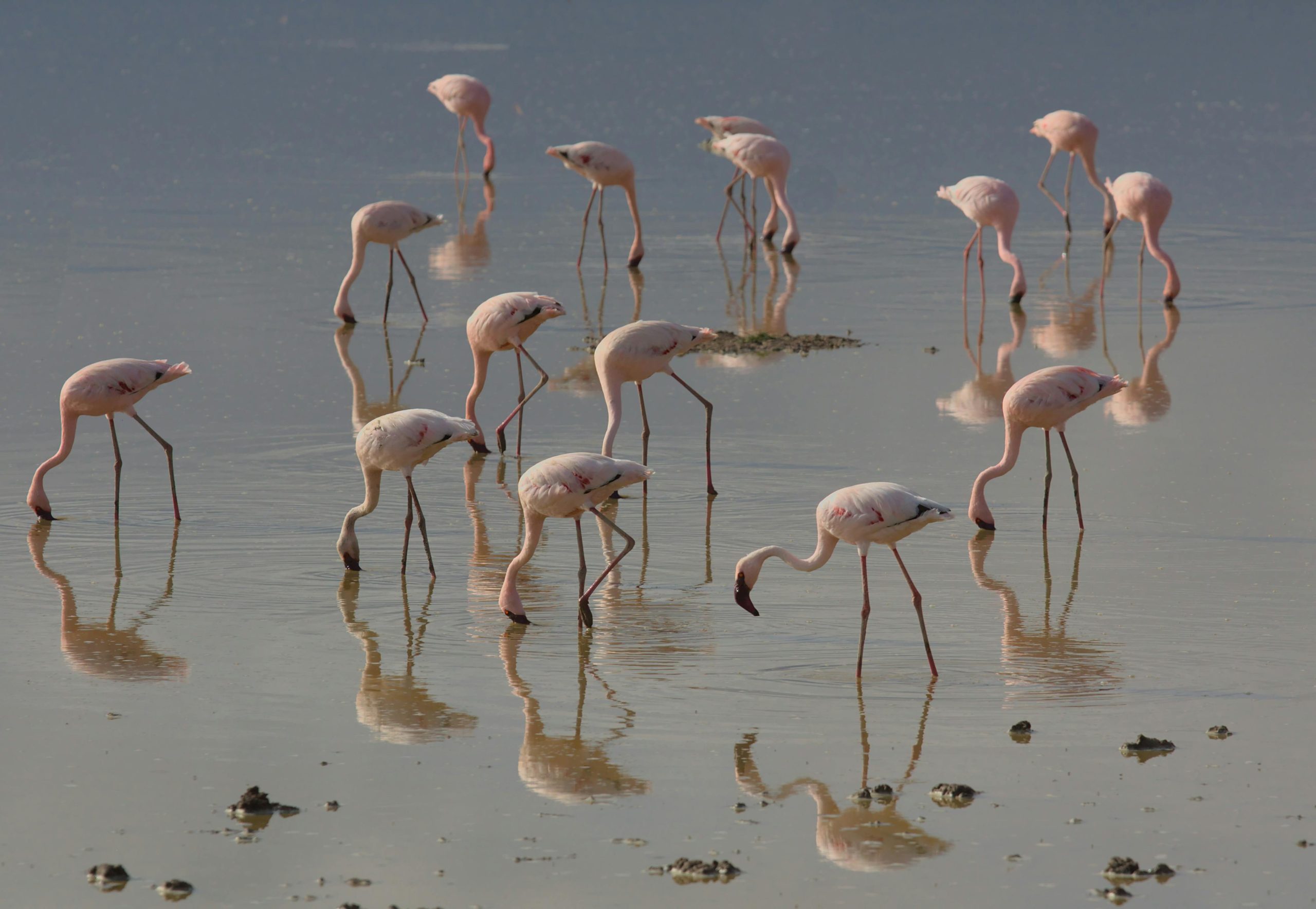
Flamingo Facts Kenya
Flamingo Facts Kenya
Flamingo Facts in Kenya: Where to See Them, Why They Gather, and How to Experience Their Rift Valley Spectacle
Kenya’s flamingos are more than a postcard cliché they’re an ecological story written in alkaline lakes, microscopic algae, shifting water chemistry, and seasonal movements across the Great Rift Valley. From the iconic shores of Lake Nakuru to the lesser-visited flamingo havens farther north, these birds offer one of Africa’s most visually arresting wildlife encounters.
In this guide, you’ll discover essential flamingo facts specific to Kenya, how and why flamingo numbers change, the best places and times to see them, and how to plan an ethical safari experience.
Flamingo Basics: What Makes Kenya So Special?
Kenya sits at the heart of the East African Rift system, home to a chain of soda lakes that create ideal flamingo habitat. These lakes often contain high levels of dissolved salts and minerals, and they support blooms of algae and tiny organisms prime flamingo food.
Two main flamingo species occur in Kenya:
- Lesser Flamingo (Phoeniconaias minor)
- Smaller, deeper pink
- Often forms massive flocks
- Specializes in feeding on algae (especially Arthrospira, commonly called spirulina)
- Greater Flamingo (Phoenicopterus roseus)
- Larger, paler pink/whitish
- More generalist feeder, takes small invertebrates as well as algae
- Usually appears in smaller groups compared to the lesser flamingo
Why are flamingos pink?
Flamingos get their coloration from pigments (carotenoids) in their diet mainly algae and small aquatic organisms. In Kenya’s soda lakes, those dietary sources can be abundant, producing especially vivid plumage in healthy birds.
Where to See Flamingos in Kenya (Top Locations)
Flamingo viewing in Kenya is dynamic: numbers shift due to rainfall patterns, lake chemistry, food availability, and disturbance. Here are the most reliable and famous areas.
1) Lake Nakuru National Park
Lake Nakuru has long been Kenya’s signature flamingo destination, though flock sizes vary greatly year to year. Even when flamingos are fewer, Nakuru remains outstanding for:
- White rhino and black rhino viewing
- Rothschild’s giraffe
- Scenic viewpoints and woodland birdlife
If you’re planning a Rift Valley itinerary, explore safari options via Turkana Wildlife Safaris.
2) Lake Bogoria (National Reserve)
Often one of the most consistent flamingo sites, Bogoria’s hot springs, geysers, and mineral-rich waters are a powerful draw. It’s also visually dramatic for photographers because of:
- Steaming geothermal vents
- Strong contrast between blue-green water and pink flocks
- Striking escarpment backdrops
3) Lake Elementeita (Soda Lake)
A quieter alternative between Nakuru and Naivasha, Elementeita can host both greater and lesser flamingos, often alongside:
- Pelicans
- Avocets and stilts
- Shorebird migrations
This is a strong option if you want fewer crowds and a more relaxed pace.
4) Lake Naivasha (Freshwater Adjacent)
Naivasha itself is freshwater, so it’s not a core flamingo feeding lake but it can be a useful base for a Rift Valley circuit and offers:
- Boat safaris for hippos and birds
- Access to nearby crater hikes and private conservancies
5) Northern Kenya Routes (For Adventurous Birders)
In some seasons, flamingo movements extend into less-visited northern landscapes. If you’re considering a more expedition-style journey, Turkana Wildlife Safaris is a relevant starting point for exploring broader northern Kenya travel logistics.
Why Flamingo Numbers Change So Much in Kenya
A common surprise for travelers is arriving at a “famous flamingo lake” and seeing fewer birds than expected. This is normal and it’s part of the ecology.
Key reasons include:
- Rainfall cycles and dilution
Heavy rains can dilute soda lakes, changing algae composition and food availability. - Salinity and alkalinity swings
Even small changes in water chemistry can alter the growth of flamingos’ preferred algae. - Food blooms move lake-to-lake
Flamingos roam to wherever feeding is best—often between Nakuru, Bogoria, Elementeita, and beyond. - Disturbance and predation pressure
Human activity, shoreline disturbance, and natural predators can shift how and where flocks settle. - Disease and environmental stress
Algal toxins, bacterial outbreaks, or extreme conditions occasionally lead to mortality events, highlighting the fragility of these ecosystems.
Best Time to See Flamingos in Kenya
There isn’t a single guaranteed month—flamingo viewing depends more on lake conditions than on the classic “dry vs wet season” rule. Still, patterns can help.
General planning guidance
- Dry season periods often concentrate birds as lakes shrink and food becomes dense in certain areas.
- After rains, some lakes become less suitable, and flamingos may disperse.
If flamingos are your top priority, consider building flexibility into your itinerary (multiple lakes), rather than betting everything on one location.
Flamingo Behavior: What You’re Actually Seeing
Flamingos are highly social and remarkably specialized.
Feeding technique (filter feeding)
Flamingos use their uniquely shaped bills to filter food from the water:
- They often feed with heads upside down
- Their tongue pumps water through tiny lamellae (filter structures)
- They can feed in shallow water or wade deeper depending on conditions
Why do they stand on one leg?
The best-supported explanation is heat conservation. By tucking one leg up, flamingos reduce heat loss, especially in cool water or windy conditions.
Flocking patterns
Mass flocks aren’t just for beauty:
- Safety in numbers against predators
- Easier social synchronization (movement, feeding, resting)
- Breeding coordination in colonies (in suitable locations)
Conservation Notes: Flamingos and Kenya’s Soda Lakes
Kenya’s flamingo lakes are sensitive environments. Major conservation pressures include:
- Water abstraction and catchment disruption
- Pollution and nutrient runoff
- Unregulated shoreline development
- Climate variability and extreme weather
- Habitat disturbance from off-track driving and crowding
How to visit responsibly
- Keep distance, avoid forcing birds to fly
- Stay on designated routes and viewpoints
- Choose operators that respect park rules
- Avoid loud behavior at the shoreline
- Support protected areas and local conservation efforts
For safari planning with an emphasis on ethical wildlife experiences, start with Turkana Wildlife Safaris and confirm the specific lake strategy based on current conditions.
Suggested Flamingo-Focused Kenya Itinerary Ideas (Rift Valley)
Here are practical itinerary structures that increase your chances of strong flamingo sightings:
Option A: Classic Rift Valley Lakes Circuit (4–6 days)
- Lake Naivasha (boat + birds)
- Lake Elementeita (quiet flamingo viewing)
- Lake Nakuru (scenery + rhinos)
- Lake Bogoria (geothermal + dense flocks)
Option B: Birding-Forward Route (5–8 days)
- Elementeita + Nakuru + Bogoria
- Add other bird-rich habitats (forests, savannah edges) to diversify species lists
Option C: Extend to Northern Kenya (for experienced travelers)
- Rift Valley lakes core
- Continue north if conditions or your goals justify it (logistics matter)
You can explore planning directions and broader Kenya safari options through Turkana Wildlife Safaris
Photography Tips for Kenya Flamingos
Flamingos are among the most rewarding birds to photograph, but conditions can be tricky.
Best practices
- Shoot early morning or late afternoon for softer light
- Use a fast shutter speed for takeoff/landing sequences
- Include landscape context (escapments, steam, reflections) for Rift Valley storytelling
- Look for patterns: lines, ripples, synchronized head turns
Composition ideas
- Minimalist frames: single bird + reflection
- “Pink horizon” panoramas when flocks stretch far
- Close-up behavior: feeding swirls, preening, wing stretches
FAQ: Flamingo Facts in Kenya
1) Are flamingos always at Lake Nakuru?
No. Lake Nakuru can host flamingos, but flock size changes dramatically. Many birds move between Nakuru, Bogoria, Elementeita, and other lakes depending on food and water chemistry.
2) Which lake is most reliable for flamingos in Kenya?
Lake Bogoria is often considered among the more consistent options, but “reliable” still depends on seasonal conditions. Visiting multiple lakes improves your odds.
3) What’s the difference between lesser and greater flamingos?
Lesser flamingos are smaller and typically a deeper pink; they primarily eat algae. Greater flamingos are larger and paler, and they eat a broader diet including small invertebrates.
4) Why do flamingos suddenly fly in huge groups?
It can be triggered by disturbance, predator presence, or flock coordination. Mass takeoffs are also part of their natural movement between feeding and resting zones.
5) Is it ethical to get close to flamingos for photos?
It can be unethical if you force them to move, fly, or abandon feeding areas. Ethical viewing means keeping distance, staying on routes, and avoiding actions that disrupt behavior.
Plan Your Kenya Flamingo Safari with the Right Lake Strategy
The key to a great flamingo experience in Kenya is not treating them as a static attraction. Think of them as a moving indicator of lake health and plan a route that includes multiple Rift Valley lakes. When conditions align, the result is extraordinary: shimmering alkaline water, geothermal landscapes, and vast flocks turning shorelines pink.