
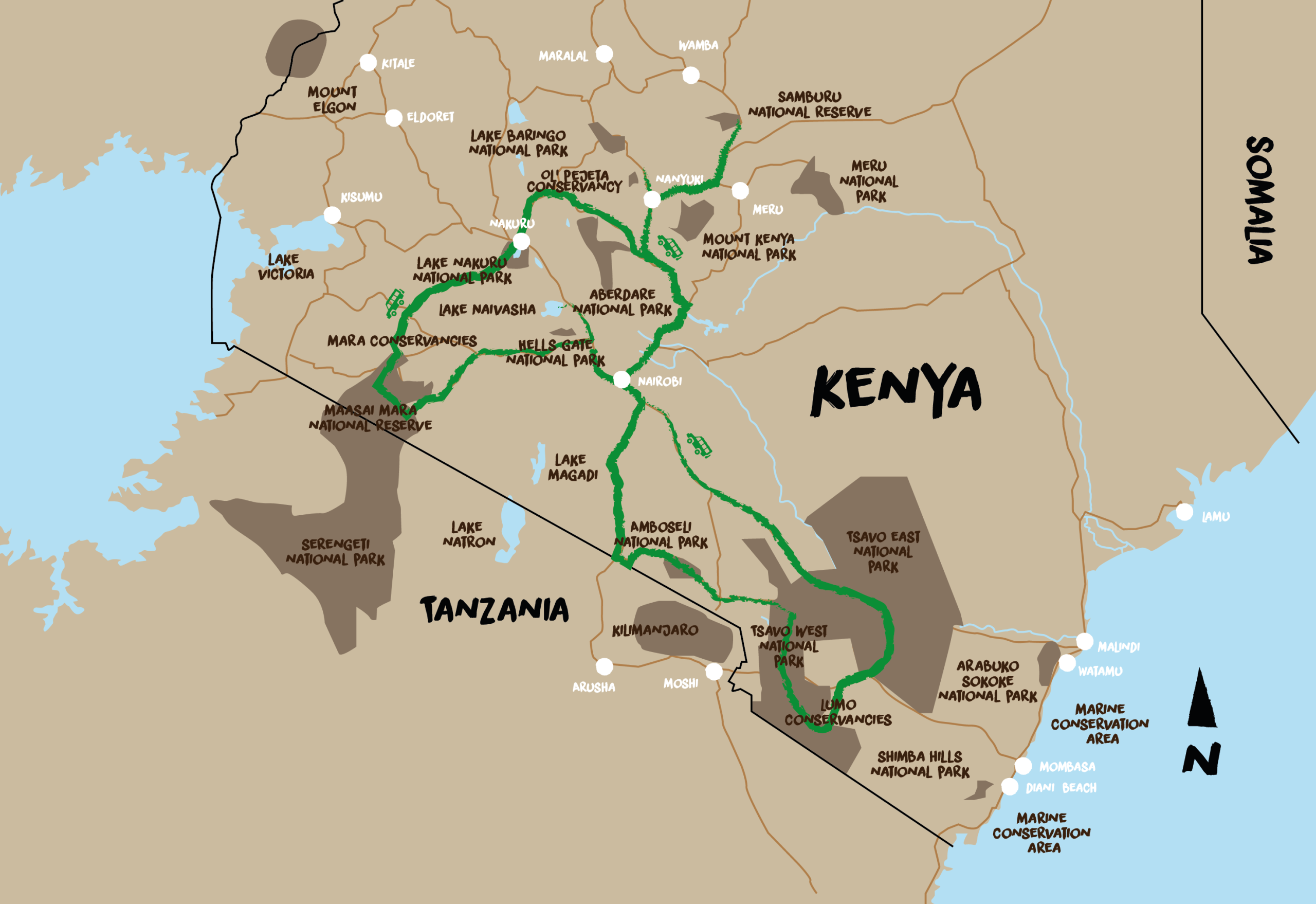
Kenya Safari Route Map
Kenya Safari Route Map
Kenya Safari Route Map: A Complete Guide to Planning Your Kenya Wildlife Safari
Kenya is one of Africa’s most iconic safari destinations, offering an extraordinary combination of wildlife, landscapes, culture, and adventure. From the grasslands of the Maasai Mara to the elephant-rich plains of Amboseli, the wildlife-rich shores of Lake Nakuru, the rugged northern landscapes of Samburu, and the vast wilderness of Tsavo, understanding the Kenya safari route map is essential when planning your trip.
A well-planned route allows travelers to spend more time enjoying wildlife and less time making unnecessary transfers. Kenya’s major safari destinations are spread across different parts of the country, so the best route depends on the length of your safari, your wildlife interests, travel season, budget, and preferred style of travel.
For travelers looking for a professionally organized East African adventure, Turkana Wildlife Safaris Uganda can help design a safari experience that combines Kenya’s famous wildlife destinations with the natural and cultural attractions of Uganda.
Understanding the Kenya Safari Route Map
The Kenya safari map can broadly be divided into several major safari regions:
- Southern Kenya: Amboseli and Tsavo
- Western Kenya: Maasai Mara and Lake Nakuru
- Central Kenya: Nairobi, Lake Naivasha, Mount Kenya and Ol Pejeta
- Northern Kenya: Samburu and surrounding conservancies
- Coastal Kenya: Mombasa, Diani, Malindi and Watamu
These regions can be combined into different safari circuits depending on how many days you have available.
A classic first-time route, for example, can connect Nairobi → Amboseli → Lake Nakuru → Maasai Mara. Another popular circuit can focus on Nairobi → Samburu → Lake Nakuru → Maasai Mara. Longer journeys can include Tsavo or finish with a beach holiday on the Indian Ocean. Current route guides also highlight Amboseli–Mara combinations as a popular choice for first-time visitors.
1. Nairobi – The Main Gateway to Kenya Safaris
Most international Kenya safaris begin in Nairobi, Kenya’s capital city.
Nairobi is an important starting point because travelers can arrive internationally, spend a night in the city if necessary, and then continue by road or domestic flight to the safari destinations.
Before or after your safari, Nairobi can also provide opportunities to visit attractions such as Nairobi National Park and other wildlife and cultural sites.
For travelers with limited time, Nairobi can even be the starting point for a short safari to one major destination.
2. Nairobi to Amboseli National Park
Route: Nairobi → Amboseli
Approximate distance: about 230 km by road
Amboseli National Park lies in southern Kenya near the Tanzanian border and is famous for its spectacular views of Mount Kilimanjaro and large elephant herds.
This is one of the most visually impressive safari routes in Kenya. On clear days, elephants can be photographed with Mount Kilimanjaro rising dramatically in the background.
Amboseli is particularly attractive to:
- Wildlife photographers
- Elephant lovers
- First-time safari travelers
- Families
- Travelers interested in spectacular landscapes
A typical itinerary can spend two or three nights in Amboseli before continuing toward another destination.
3. Amboseli to Lake Naivasha and Lake Nakuru
A longer safari can continue from Amboseli toward Kenya’s central Rift Valley.
Lake Naivasha
Lake Naivasha is known for its freshwater ecosystem, birdlife, hippos, and beautiful scenery. It can be a relaxing stop between major wildlife destinations.
Lake Nakuru National Park
Lake Nakuru offers a different safari experience, with opportunities to see rhinos, lions, leopards, buffaloes, giraffes and numerous bird species.
The park is particularly valuable as part of a route between Amboseli and the Maasai Mara.
Instead of spending the majority of the safari driving between distant destinations, travelers can use Lake Nakuru as a strategic wildlife stop.
4. Lake Nakuru to Maasai Mara
Route: Lake Nakuru → Maasai Mara
For many visitors, this is the highlight of a Kenya safari.
The Maasai Mara National Reserve is famous for its enormous concentrations of wildlife, open grasslands and exceptional opportunities to see predators.
The Mara is home to the famous Big Five:
- Lion
- Leopard
- Elephant
- Buffalo
- Rhinoceros
It is also associated with the annual Great Migration, when huge numbers of wildebeest and other grazing animals move through the greater Mara–Serengeti ecosystem. The migration is generally associated with the Maasai Mara between around July and October, although wildlife movements are naturally variable.
For many safari travelers, spending at least three nights in the Mara is worthwhile because it gives you more time for morning and afternoon game drives.
5. Nairobi to Maasai Mara
Travelers with only a few days can travel directly from Nairobi to the Maasai Mara.
Route: Nairobi → Maasai Mara → Nairobi
This is one of the simplest Kenya safari routes and works particularly well for travelers with limited vacation time.
A three- or four-day Mara safari can provide an excellent introduction to Kenya’s wildlife.
For travelers visiting during the migration season, additional nights can be useful because wildlife activity and sightings can vary from day to day.
6. Nairobi to Samburu National Reserve
Route: Nairobi → Samburu
For a completely different safari experience, travel north from Nairobi toward Samburu.
Samburu National Reserve is located in northern Kenya and is famous for its dry landscapes and distinctive wildlife.
Visitors may encounter species often associated with northern Kenya, including:
- Reticulated giraffe
- Grevy’s zebra
- Beisa oryx
- Gerenuk
- Somali ostrich
Samburu is an excellent choice for repeat safari travelers or anyone wanting to experience a less conventional Kenya safari route.
A northern circuit can combine Samburu with Ol Pejeta, Lake Nakuru and the Maasai Mara. Such a route provides a broad variety of landscapes and wildlife experiences.
7. Samburu to Ol Pejeta Conservancy
Ol Pejeta, in Kenya’s Laikipia region, can be added to a northern safari circuit.
It is particularly well known for conservation and rhinoceros protection.
Combining Samburu and Ol Pejeta creates an interesting contrast: Samburu provides a dry northern ecosystem and distinctive wildlife, while Ol Pejeta adds a strong conservation component.
This route is ideal for travelers interested in:
- Rhinos
- Conservation
- Photography
- Wildlife diversity
- Northern Kenya
8. Maasai Mara to Amboseli
A longer Kenya safari can connect the two famous southern destinations:
Maasai Mara → Amboseli
This route gives travelers two very different safari environments.
The Maasai Mara is famous for open savannah and predators, while Amboseli is particularly renowned for elephants and views toward Mount Kilimanjaro.
However, this is a substantial transfer by road, so travelers with limited time may prefer to use a domestic flight between destinations. Flying can significantly reduce travel time on multi-park itineraries.
9. Amboseli to Tsavo West
Route: Amboseli → Tsavo West
Tsavo West lies southeast of Amboseli and can form part of a southern Kenya safari circuit.
Tsavo West is characterized by rugged landscapes, volcanic features, woodland, savannah and wildlife.
A route combining Amboseli and Tsavo can be especially appealing to travelers who want a longer southern Kenya adventure rather than concentrating only on the Mara.
10. Tsavo West to Tsavo East
Tsavo is one of Kenya’s major wilderness areas and is divided into Tsavo West National Park and Tsavo East National Park.
Tsavo East is known for its enormous landscapes and wilderness character.
A southern route can therefore look like:
Nairobi → Amboseli → Tsavo West → Tsavo East → Mombasa
This is an excellent option for travelers who want to combine a safari with time on the Kenyan coast.
11. Kenya Safari Route Map for Different Safari Durations
3-Day Kenya Safari
Nairobi → Maasai Mara → Nairobi
Best for:
- First-time visitors with limited time
- Big Five viewing
- Short holidays
4-Day Kenya Safari
Nairobi → Maasai Mara → Nairobi
A four-day itinerary allows slightly more time in the Mara and can include additional game drives.
5-Day Kenya Safari
Nairobi → Lake Nakuru → Maasai Mara → Nairobi
This provides a combination of Rift Valley scenery and the wildlife-rich Mara.
6-Day Kenya Safari
Nairobi → Amboseli → Lake Nakuru → Maasai Mara → Nairobi
This is a strong introductory circuit combining elephants, rhinos and the Mara ecosystem.
7-Day Kenya Safari
Nairobi → Amboseli → Lake Nakuru → Maasai Mara → Nairobi
With more nights available, travelers can enjoy fuller game drives rather than rushing between destinations. Variations can also include Samburu or Naivasha depending on priorities.
10-Day Kenya Safari
A 10-day safari provides much more flexibility.
One possible route is:
Nairobi → Samburu → Ol Pejeta → Lake Nakuru → Maasai Mara → Amboseli → Nairobi
Another option is:
Nairobi → Amboseli → Lake Naivasha → Lake Nakuru → Maasai Mara → Tsavo West → Tsavo East
The best choice depends on whether your priority is wildlife diversity, photography, migration, elephants, conservation or combining safari with the coast.
Kenya Safari Route Map: Best Routes by Interest
| Traveler Interest | Recommended Route |
|---|---|
| First Kenya safari | Nairobi → Amboseli → Lake Nakuru → Maasai Mara |
| Great Migration | Nairobi → Maasai Mara |
| Elephants | Nairobi → Amboseli |
| Big Cats | Maasai Mara → Lake Nakuru |
| Northern wildlife | Nairobi → Samburu → Ol Pejeta |
| Rhinos | Lake Nakuru → Ol Pejeta |
| Photography | Amboseli → Lake Nakuru → Maasai Mara |
| Safari + Beach | Maasai Mara → Amboseli/Tsavo → Mombasa/Diani |
| Longer safari | Samburu → Ol Pejeta → Nakuru → Mara → Amboseli/Tsavo |
Road Safari or Fly-In Safari?
The Kenya safari route map also helps travelers decide whether to travel by road or air.
Road Safaris
Road safaris offer the advantage of seeing more of the Kenyan countryside.
You can experience:
- Rural communities
- Changing landscapes
- Small towns
- Rift Valley scenery
- Scenic viewpoints
- Wildlife outside the main parks
The disadvantage is that long transfers can take several hours. For example, published safari itineraries show some multi-park routes involving several hours of driving between destinations.
Fly-In Safaris
Fly-in safaris are ideal for travelers who want to maximize time in the parks.
Domestic flights can connect destinations such as Nairobi, Maasai Mara and Amboseli, reducing long road transfers.
They are especially useful for:
- Luxury travelers
- Honeymooners
- Photographers
- Families
- Travelers with limited time
The trade-off is that flights can increase the overall safari cost.
Best Time to Follow the Kenya Safari Route
Kenya can be visited throughout much of the year, but wildlife experiences change with the seasons.
June to October
This is widely considered one of the strongest periods for general game viewing because vegetation can be less dense and wildlife may be easier to spot.
The Maasai Mara also becomes a major destination during the Great Migration period, typically around July to October.
January to February
These months can offer excellent wildlife viewing in many areas and are often attractive for travelers seeking good game viewing outside the main migration period.
November to December
The short rains can bring greener landscapes and fewer visitors in some areas. Wildlife remains present, but weather can affect road conditions.
March to May
The long rains can make some safari roads challenging, but the green landscapes can be beautiful and visitor numbers may be lower.
Rather than choosing a route solely because of the calendar, it is better to match the season with your main wildlife interests.
How to Choose the Right Kenya Safari Route
Before booking your safari, consider these questions:
1. How many days do you have?
Do not try to squeeze six parks into four days. A safari should allow enough time for game drives and relaxation.
2. What wildlife do you want to see?
If your priority is the Big Five, the Maasai Mara should be high on your list.
If elephants are your passion, consider Amboseli.
For northern species, choose Samburu.
For rhinos and conservation, consider Lake Nakuru and Ol Pejeta.
3. Do you want photography opportunities?
Photographers may benefit from spending several nights in fewer parks rather than constantly changing locations.
4. Are you comfortable with long drives?
If not, consider fly-in connections between major safari destinations.
5. Do you want to finish at the beach?
A safari can be combined with Kenya’s Indian Ocean coast, creating a classic bush-and-beach holiday.
Kenya Safari Route Map with Turkana Wildlife Safaris Uganda
Turkana Wildlife Safaris Uganda can be considered when planning an East African safari that includes Kenya and Uganda.
For travelers arriving in Uganda, combining the two countries can create a much broader East African experience.
A multi-country itinerary might include:
Uganda → Kenya
or:
Uganda → Kenya Safari → Kenyan Coast
An extended East African adventure could combine Uganda’s famous primate and wildlife experiences with Kenya’s classic savannah destinations.
For example, travelers could experience Uganda before continuing to Kenya for:
- Maasai Mara
- Lake Nakuru
- Amboseli
- Samburu
- Tsavo
This can be particularly attractive to international travelers who want more than a single-country safari.
Turkana Wildlife Safaris Uganda can help travelers plan the route according to available days, preferred accommodation, wildlife interests and budget.
Sample 10-Day Kenya Safari Route
A practical 10-day itinerary could look like this:
Day 1: Arrival in Nairobi
Day 2: Nairobi → Amboseli National Park
Day 3: Full-day Amboseli safari
Day 4: Amboseli → Lake Naivasha
Day 5: Lake Naivasha → Lake Nakuru
Day 6: Lake Nakuru → Maasai Mara
Day 7: Full-day Maasai Mara safari
Day 8: Full-day Maasai Mara safari
Day 9: Maasai Mara → Nairobi or fly to Nairobi
Day 10: Departure or onward travel
This itinerary can be modified to add Samburu, Tsavo, Ol Pejeta or the Kenyan coast.
Why the Kenya Safari Route Map Matters
A safari map is more than a picture showing where the parks are located. It helps you understand the relationship between destinations and make realistic decisions about travel time.
A poorly planned itinerary can mean spending too much of your holiday inside a safari vehicle traveling between parks.
A well-planned itinerary balances:
Wildlife + travel time + accommodation + budget + relaxation.
That balance is what turns a simple park-hopping trip into a memorable safari.
Frequently Asked Questions About the Kenya Safari Route Map
1. What is the best Kenya safari route for first-time visitors?
A popular first-time route is Nairobi → Amboseli → Lake Nakuru → Maasai Mara. It combines elephants, Rift Valley scenery, rhinos and the famous Mara ecosystem.
2. How many days do I need for a Kenya safari?
Five to seven days can provide a good introduction to Kenya. Ten days or more gives you greater flexibility to include northern Kenya, Tsavo, additional nights in the Mara or a beach extension.
3. Which Kenya safari route is best for the Great Migration?
The Maasai Mara is the key Kenyan destination for the Great Migration. The main migration period is generally July to October, although exact wildlife movements vary each year.
4. Is Amboseli worth visiting?
Yes. Amboseli is particularly attractive for elephant viewing and its spectacular views toward Mount Kilimanjaro.
5. Should I visit Maasai Mara or Amboseli?
Ideally, visit both if your schedule allows. They offer very different experiences: the Mara is famous for predators and expansive savannah, while Amboseli is renowned for elephants and Kilimanjaro scenery.
6. Is Samburu worth adding to a Kenya safari?
Yes, especially for travelers interested in northern Kenya and distinctive species such as reticulated giraffe, Grevy’s zebra and gerenuk.
7. Can I combine Kenya and Uganda on one safari?
Absolutely. A Kenya-Uganda itinerary can combine Uganda’s forests, primates and wildlife with Kenya’s savannah parks. Turkana Wildlife Safaris Uganda can help organize a customized East African itinerary.
8. Is it better to drive or fly between Kenya’s safari parks?
Both options have advantages. Driving provides a broader view of the countryside, while flying saves time on long transfers. Your budget and available vacation time should guide the choice.
9. Can a Kenya safari end at the beach?
Yes. Many travelers combine a wildlife safari with Kenya’s Indian Ocean coast, including destinations such as Diani, Mombasa, Malindi or Watamu.
10. What is the best Kenya safari route for photography?
A route combining Amboseli, Lake Nakuru and Maasai Mara can provide excellent variety, from elephants and dramatic landscapes to rhinos, big cats and open savannah.
11. Can I customize my Kenya safari route?
Yes. A safari route should be customized around your interests, number of days, travel season, accommodation preferences and budget.
12. Why book a Kenya safari with Turkana Wildlife Safaris Uganda?
Working with an experienced safari operator can simplify itinerary planning, transportation, accommodation and destination coordination. Turkana Wildlife Safaris Uganda can also help travelers who want to combine Kenya with a Uganda safari.
Conclusion
The Kenya Safari Route Map opens the door to some of the most remarkable wildlife experiences in East Africa. From the elephant-filled plains of Amboseli to the predator-rich grasslands of Maasai Mara, the rhino habitats of Lake Nakuru, the distinctive wildlife of Samburu and the immense wilderness of Tsavo, every route offers something different.
The secret is not simply visiting as many parks as possible. The best safari route is one that gives you enough time to enjoy each destination without spending your entire holiday traveling between them.
For first-time visitors, Nairobi → Amboseli → Lake Nakuru → Maasai Mara is an excellent starting point. Travelers with more time can expand north toward Samburu or south toward Tsavo, while those wanting a complete East African holiday can combine Kenya with Uganda.
With careful planning and the support of Turkana Wildlife Safaris Uganda, your Kenya safari can be tailored into a memorable journey built around wildlife, photography, culture, adventure and relaxation.
Your Kenya safari is not just about where you go, it is about creating the right route for the experience you want.