
Mabira Activities
Mabira Activities
Exploring Mabira Forest: Top Activities and Adventures for Nature Enthusiasts
Mabira Forest, located in central Uganda, is a lush tropical rainforest that offers a sanctuary for nature lovers, adventurers, and eco-tourists. Spanning over 300 square kilometers, this forest is not only a biodiversity hotspot but also a haven for outdoor enthusiasts seeking thrilling activities and serene escapes. In this article, we’ll delve into the top activities you can enjoy in Mabira Forest, ensuring your visit is both memorable and impactful.
Why Visit Mabira Forest?
Mabira Forest is one of Uganda’s most significant natural treasures. It is home to over 300 bird species, 200 butterfly species, and a wide variety of mammals, reptiles, and plants. Whether you’re a birdwatcher, hiker, or adrenaline junkie, Mabira Forest offers something for everyone. Its proximity to Kampala and Jinja makes it an accessible destination for both locals and international tourists.
Top Activities in Mabira Forest
1. Nature Walks and Hiking
One of the best ways to explore Mabira Forest is through guided nature walks and hiking trails. The forest boasts several well-maintained trails that cater to different fitness levels and interests.
- Popular Trails:
- The Griffin Falls Trail, which leads to the stunning Griffin Falls.
- The Butterfly Trail, perfect for those interested in spotting colorful butterflies and unique plant species.
- The Birding Trail, ideal for birdwatchers.
Guides are available to provide insights into the forest’s flora and fauna, making the experience educational and enriching.
2. Birdwatching
Mabira Forest is a birdwatcher’s paradise, with over 300 species of birds, including some rare and endemic ones. Bring your binoculars and a bird guidebook to spot species like:
- The Nahan’s Francolin, an endangered bird species.
- The African Grey Parrot, known for its intelligence and vocal mimicry.
- The Great Blue Turaco, a colorful and iconic bird of Uganda.
Birdwatching tours are available, led by experienced guides who can help you identify the birds and their unique calls.
3. Ziplining Adventures
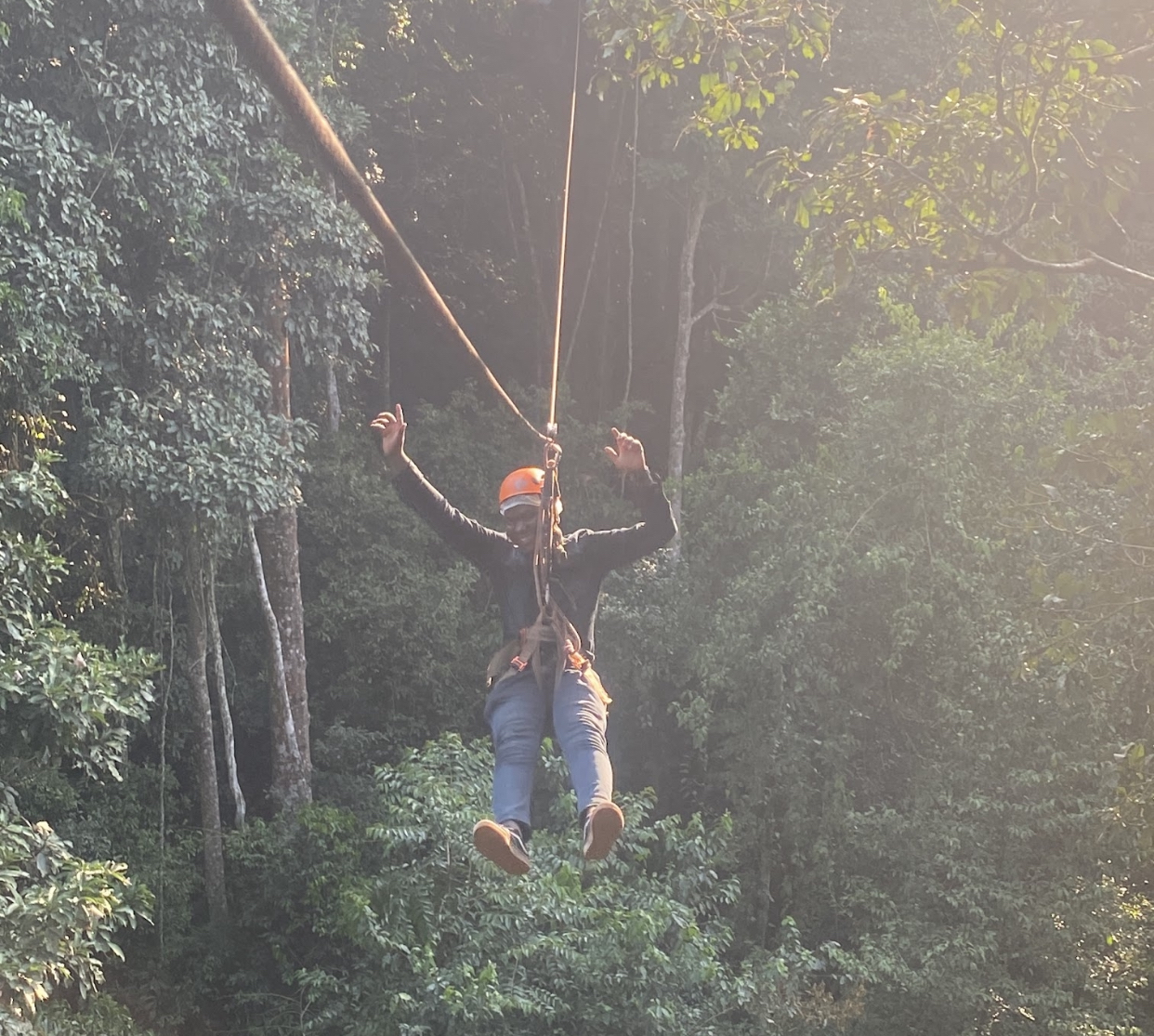
For thrill-seekers, the Mabira Forest Canopy Super Skyway offers an exhilarating ziplining experience. Glide through the treetops and enjoy a bird’s-eye view of the forest canopy. This activity is perfect for adrenaline junkies and families looking for an unforgettable adventure.
- Highlights:
- Six zip lines spanning over 250 meters.
- Panoramic views of the forest and the nearby Griffin Falls.
4. Mountain Biking
Mabira Forest features scenic trails that are perfect for mountain biking. Whether you’re a beginner or an experienced cyclist, the forest offers routes that range from easy to challenging.
- Best Trails for Biking:
- The Eco-Tourism Trail, which combines natural beauty with cultural stops.
- The Griffin Falls Trail, for a mix of adventure and scenic views.
Mountain bikes can be rented at the forest’s eco-tourism center, and guided biking tours are also available.
5. Cultural Encounters
Mabira Forest is surrounded by local communities that offer cultural experiences to visitors. Engage with the locals to learn about their traditions, crafts, and way of life.
- Activities:
- Visit nearby villages to learn about traditional herbal medicine.
- Participate in cooking sessions to prepare local Ugandan dishes.
- Purchase handmade crafts and souvenirs from community markets.
6. Camping and Picnicking
For those who want to immerse themselves in nature, camping in Mabira Forest is a must. The forest has designated camping sites equipped with basic facilities. Alternatively, you can enjoy a day picnic surrounded by the serene sounds of nature.
- Tips for Campers:
- Bring your own camping gear or rent it from the eco-tourism center.
- Follow forest regulations to ensure minimal environmental impact.
7. Butterfly Watching
With over 200 species of butterflies, Mabira Forest is a haven for butterfly enthusiasts. The Butterfly Trail is the best spot to observe these delicate creatures in their natural habitat.
- Notable Species:
- The Green Banded Swallowtail.
- The African Giant Swallowtail.
Guided tours are available to help you identify the different species and learn about their ecological importance.
Conservation and Eco-Tourism in Mabira Forest
Mabira Forest is not just a tourist destination; it’s also a vital ecosystem that plays a crucial role in Uganda’s environmental health. Efforts are being made to conserve the forest and promote sustainable tourism. By visiting Mabira Forest, you contribute to these conservation efforts and support the local communities that depend on eco-tourism for their livelihoods.
Tips for Visiting Mabira Forest
- Best Time to Visit: The dry seasons (December to February and June to August) are ideal for outdoor activities.
- What to Bring:
- Comfortable hiking shoes.
- A camera or smartphone for capturing memories.
- Binoculars for birdwatching.
- Insect repellent and sunscreen.
- Safety Tips:
- Always follow the guidance of your tour guide.
- Stay on designated trails to avoid getting lost.
- Respect the forest’s wildlife and avoid littering.
FAQs About Mabira Forest
1. Where is Mabira Forest located?
Mabira Forest is located in central Uganda, between Kampala and Jinja, along the Kampala-Jinja Highway.
2. What is the best time to visit Mabira Forest?
The best time to visit is during the dry seasons (December to February and June to August), as the trails are easier to navigate.
3. Are there accommodations near Mabira Forest?
Yes, there are several eco-lodges and guesthouses near Mabira Forest, such as the Rainforest Lodge Mabira and Griffin Falls Camp.
4. Is Mabira Forest suitable for families with children?
Absolutely! Activities like nature walks, birdwatching, and ziplining are family-friendly and suitable for children.
5. How can I contribute to Mabira Forest’s conservation?
You can contribute by:
- Participating in eco-tourism activities.
- Supporting local community initiatives.
- Avoiding activities that harm the environment, such as littering or disturbing wildlife.
Conclusion
Mabira Forest is a treasure trove of natural beauty, adventure, and cultural experiences. From hiking and birdwatching to ziplining and cultural encounters, the forest offers a wide range of activities that cater to all interests. By visiting Mabira Forest, you not only create unforgettable memories but also support its conservation and the livelihoods of local communities. So pack your bags, lace up your hiking boots, and get ready to explore one of Uganda’s most enchanting destinations!