
Peregrine Falcon
Peregrine Falcon
The Peregrine Falcon: Nature’s Supersonic Predator. Birding Safari
Introduction
The Peregrine Falcon (Falco peregrinus) is one of the most iconic and awe-inspiring birds of prey in the world. Known for its breathtaking speed, unmatched aerial agility, and global distribution, this raptor has fascinated ornithologists, conservationists, and bird enthusiasts alike. With a dive speed exceeding 240 miles per hour, the peregrine is not only the fastest bird but also the fastest animal on Earth.
This comprehensive guide delves deep into the biology, behavior, habitat, and conservation of the peregrine falcon. Whether you’re a birdwatcher, a wildlife photographer, or simply a nature lover.
Physical Characteristics
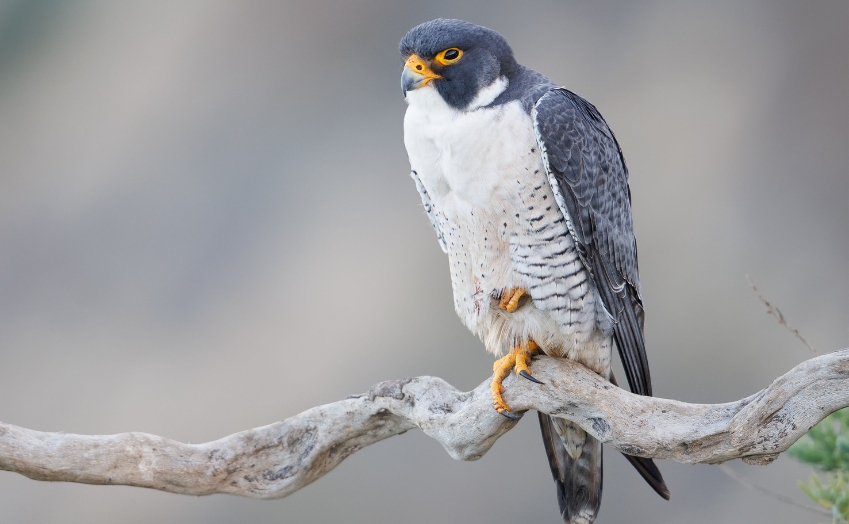
The peregrine falcon is a medium-sized raptor with a distinctive appearance and powerful build. Its features are perfectly adapted for high-speed flight and precision hunting.
Key Features:
- Size: 34–58 cm in length with a wingspan of 74–120 cm.
- Weight: Females are larger, weighing up to 1.5 kg; males average around 700–900 grams.
- Coloration:
- Slate-gray to bluish-black back
- Creamy white underparts with dark barring
- Distinctive black “moustache” mark on the face
- Eyesight: Exceptional vision, estimated to be 8 times better than that of humans.
- Beak: Hooked with a specialized notch for severing spinal cords of prey.
These adaptations make the peregrine falcon a formidable aerial predator, capable of spotting and catching prey mid-flight with surgical precision.
Habitat and Distribution
The peregrine falcon is one of the most widely distributed birds of prey in the world. It is found on every continent except Antarctica.
Preferred Habitats:
- Cliff faces and mountainous regions
- Urban environments (skyscrapers mimic cliffs)
- Coastal areas and river valleys
- Open landscapes such as tundras, deserts, and grasslands
Global Range:
- North America: From the Arctic tundra to the southern United States
- Europe and Asia: Across the entire continent, including mountainous and coastal areas
- Africa: Along coastlines and highlands
- Australia and Oceania: Scattered populations in suitable habitats
Urban peregrines have adapted remarkably well to city life, nesting on tall buildings and bridges, and preying on pigeons and other city birds.
Hunting Techniques and Diet
The peregrine falcon is a master hunter, known for its high-speed stoop—a dive used to strike prey mid-air.
Hunting Strategy:
- Stoop: A controlled dive from high altitudes, reaching speeds over 240 mph.
- Surprise attacks: Using stealth and altitude to ambush prey.
- Aerial pursuit: Agile flight to chase down fast-moving birds.
Diet:
- Primarily medium-sized birds, including:
- Pigeons
- Doves
- Ducks
- Songbirds
- Occasionally small mammals, bats, and insects
The falcon’s sharp talons and notched beak allow it to kill prey instantly, often in mid-air. It then carries the catch to a perch or nest to feed.
Reproduction and Lifecycle
Peregrine falcons are monogamous and often return to the same nesting site year after year.
Breeding Behavior:
- Courtship: Includes aerial displays and vocalizations
- Nesting sites: Known as eyries, usually on cliffs or tall buildings
- Egg-laying: 2 to 5 eggs per clutch, laid in spring
- Incubation: Lasts about 29–33 days, primarily by the female
- Fledging: Chicks leave the nest around 6 weeks old
Lifecycle Stages:
- Egg
- Hatchling
- Fledgling
- Juvenile
- Adult
Juveniles have brown plumage and take up to a year to develop adult coloration. They reach sexual maturity by 2–3 years of age.
Conservation Status
Once on the brink of extinction, the peregrine falcon has made a remarkable recovery, thanks to global conservation efforts.
History of Decline:
- Mid-20th century: Populations plummeted due to DDT pesticide use
- Eggshell thinning: Caused by DDT, leading to reproductive failure
Recovery Efforts:
- DDT ban in many countries
- Captive breeding programs
- Reintroduction projects
- Legal protection under various wildlife acts
Current Status:
- IUCN Red List: Least Concern
- CITES: Appendix I (protection from international trade)
- U.S. Endangered Species Act: Delisted in 1999
Thanks to these efforts, peregrines have rebounded in many regions, particularly in urban environments.
Cultural Significance
The peregrine falcon has held symbolic importance across cultures and eras.
Historical Roles:
- Falconry: Used for hunting since ancient times, especially in the Middle East and Europe
- Royalty: Symbol of nobility and power
- Warfare: Used as messengers and scouts in medieval times
Modern Symbolism:
- Speed and precision: Emblematic of high-performance technology (e.g., aircraft names)
- Conservation success: A flagship species for environmental recovery
- Urban wildlife: A symbol of adaptation and resilience
Its presence in mythology, heraldry, and literature underscores the falcon’s enduring appeal.
Interesting Facts
- The peregrine falcon’s stoop is the fastest movement of any animal on Earth.
- Urban peregrines often nest on skyscrapers, treating them like natural cliffs.
- Peregrines can migrate over 15,000 miles annually.
- They have a special membrane (nictitating membrane) that protects their eyes during high-speed dives.
- Their name “peregrine” means “wanderer,” reflecting their wide-ranging nature.
Frequently Asked Questions
1. How fast can a peregrine falcon fly?
The peregrine falcon can reach speeds of over 240 mph during a stoop, making it the fastest animal on the planet.
2. What do peregrine falcons eat?
They primarily feed on medium-sized birds, including pigeons, doves, and songbirds. Occasionally, they eat small mammals and insects.
3. Are peregrine falcons endangered?
No, they are currently listed as Least Concern by the IUCN, thanks to successful conservation efforts.
4. Where do peregrine falcons live?
They are found on every continent except Antarctica, inhabiting cliffs, mountains, coastlines, and urban areas.
5. How do peregrine falcons hunt?
They use a high-speed dive called a stoop to strike prey mid-air with incredible force and accuracy.
Conclusion
The peregrine falcon stands as a testament to nature’s engineering marvels and the power of conservation. From its unparalleled speed to its global presence, this raptor continues to inspire awe and admiration. Its comeback story from near extinction to thriving populations is a beacon of hope in the world of wildlife preservation.
Whether soaring above city skylines or nesting on remote cliffs, the peregrine falcon remains a symbol of strength, adaptability, and resilience. By protecting its habitats and understanding its role in the ecosystem, we ensure that future generations can continue to marvel at this extraordinary bird.