
What to Expect During Gorilla Trekking in Uganda
What to Expect During Gorilla Trekking in Uganda
What to Expect During Gorilla Trekking in Uganda: A Complete Guide
Gorilla trekking in Uganda is one of the most profound wildlife experiences on the planet. The moment you step into the misty rainforest of Bwindi Impenetrable National Park and lock eyes with a mountain gorilla family is a memory that stays with you forever. Uganda is home to nearly half of the world’s remaining mountain gorillas, and it offers a remarkable range of trekking options, accommodation styles, and budget levels. For travellers seeking a seamless and well organized adventure, Turkana Wildlife Safaris Uganda provides expert guidance and tailored packages that cover every detail of the journey. This guide explains exactly what to expect during gorilla trekking in Uganda, from the early morning briefing to the life changing hour you spend with these gentle giants.
Where Gorilla Trekking Takes Place in Uganda
Trekking takes place in south western Uganda, primarily in two national parks: Bwindi Impenetrable National Park and Mgahinga Gorilla National Park. Bwindi is the flagship destination, a UNESCO World Heritage Site with four trekking sectors: Buhoma, Nkuringo, Rushaga and Ruhija. Mgahinga, Uganda’s smallest park, offers a quieter and more intimate trekking experience, and it is the only place where gorilla trekking can be combined with golden monkey tracking. Uganda offers 152 permits daily across 22 habituated gorilla families in Bwindi, while Mgahinga has two families.
The Day of the Trek: Step by Step
The Early Morning Briefing
Your day begins early, usually around 7:00 am, at the park headquarters. Rangers from the Uganda Wildlife Authority lead a briefing where you learn about gorilla behaviour, safety rules and what to expect on the trek. You are then divided into small groups of up to eight people and matched to a specific gorilla family based on your fitness level and the difficulty of the trek. This small group size keeps visitor numbers low and minimises disturbance to the animals.
The Trek Through the Forest
Trackers head into the forest ahead of you, communicating with guides by radio to pinpoint the gorillas’ location. The hike can take anywhere from 30 minutes to more than four hours, depending on where the gorilla family has moved overnight. The terrain is steep, uneven and often muddy, with dense vegetation, so a reasonable level of fitness is recommended. Porters are available to carry backpacks for an additional fee, which also supports local communities. The trek usually includes several rest stops, where guides share information about the forest’s plants and wildlife.
The Gorilla Encounter
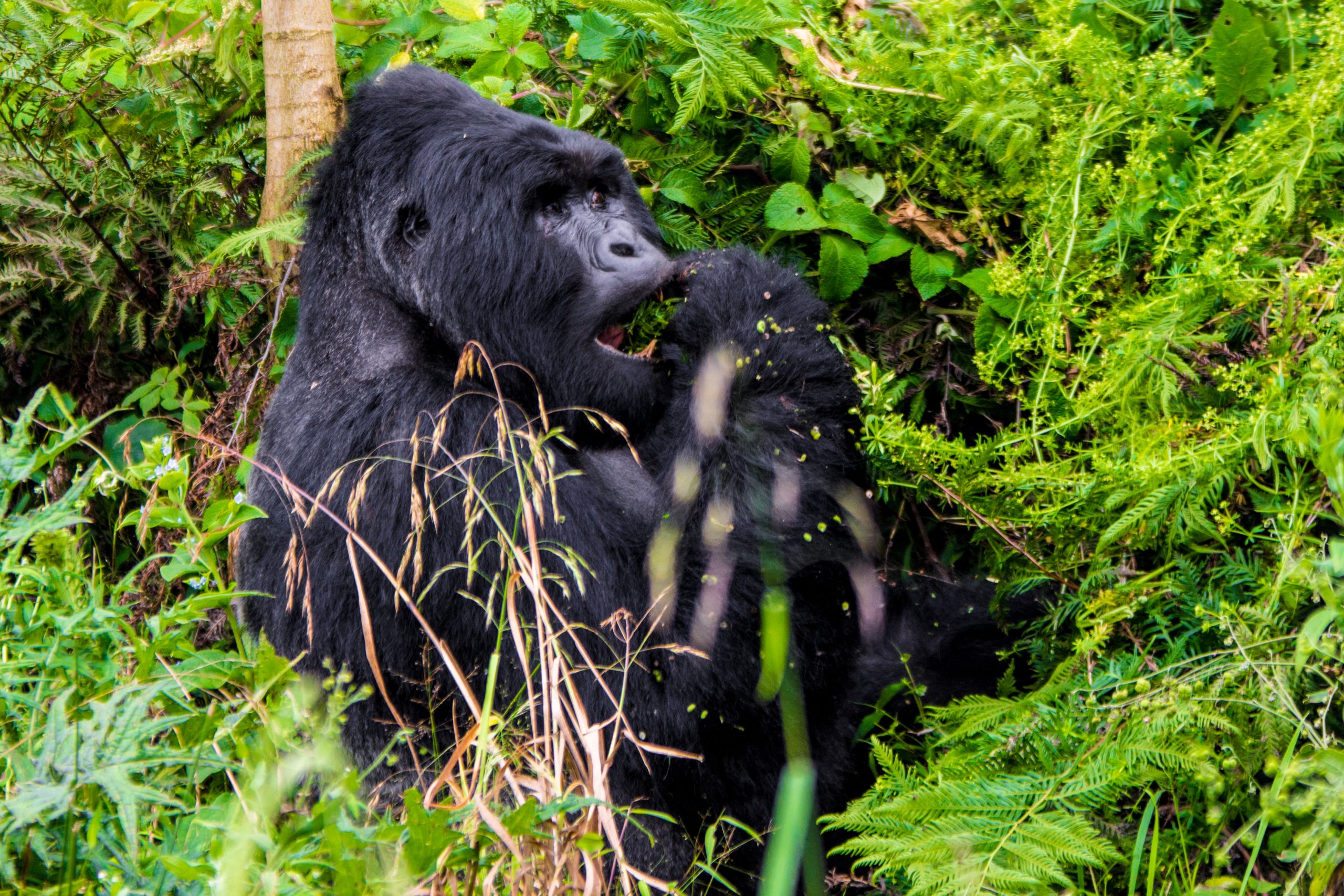
When the gorillas are located, you leave your bags and walking sticks a short distance away and approach quietly. Each group is allowed a maximum of one hour with the gorillas. During this time, you can observe the family’s behaviour, which may include feeding, grooming, playing or resting. You must stay at least seven metres away from the animals, and flash photography is not permitted. Direct eye contact with the gorillas is also discouraged. Seeing a silverback up close, or a young gorilla at play, is often the highlight of the entire trip.
After your hour is up, you hike back to the trailhead, usually tired, muddy and exhilarated.
Gorilla Permits: Cost and Booking
Every visitor must obtain a gorilla trekking permit before entering the park. The permit is issued by the Uganda Wildlife Authority. The standard rates for 2026 and 2027 are as follows:
| Visitor Category | Standard Permit |
|---|---|
| Foreign Non Resident | US$800 |
| Foreign Resident | US$700 |
| Rest of Africa | US$500 |
| East African Community Citizen | UGX 300,000 |
Uganda has also introduced a seasonal discount for eligible trekking dates in April, May and November. During these low season periods, the foreign non resident rate drops to **US$600**, while the foreign resident rate falls to US$500. The permit covers park entry on the day of the trek, professional ranger guide services and one full hour with a habituated gorilla family. It does not include accommodation, transportation, meals, porter fees or tips. Because permits are limited and demand is high, advance booking through a licensed operator such as Turkana Wildlife Safaris Uganda is strongly recommended.
Best Time to Visit for Gorilla Trekking
The best time to visit Uganda for gorilla trekking is during the dry seasons: from June to September and from December to February. During these months, trails are firmer, roads are more reliable and trekking conditions are easier. The shoulder seasons in late May and early October are a good option for travellers looking to avoid the crowds. The wet seasons from March to May and October to November bring lush landscapes and fewer crowds, but trails can be slippery and trekking more challenging. Visitor traffic peaks between May and September, particularly around August, so early booking of lodges and permits is essential.
What to Pack for Gorilla Trekking
Packing correctly makes a significant difference to your comfort on the trail. Essential items include long trousers and long sleeved shirts to protect against nettles, ants and thorn scratches. Sturdy waterproof hiking boots with ankle support and good tread are crucial for the steep, muddy terrain. A waterproof rain jacket is recommended throughout the year, as it can rain at any time. Gardening style gloves are useful for grabbing vegetation as you pull yourself up slopes. Carry at least two litres of water and high energy snacks such as nuts, dried fruit or energy bars. A walking stick is often provided by porters, but you may wish to bring your own. For photography, a zoom lens of 70 to 200mm covers most gorilla encounter distances, and a waterproof dry bag will protect your camera on wet forest treks. Insect repellent and sunscreen are also recommended.
Frequently Asked Questions
What is the minimum age for gorilla trekking in Uganda?
The minimum age for gorilla trekking in Uganda is 15 years. This rule applies in both Bwindi and Mgahinga, and it is enforced by the Uganda Wildlife Authority.
How long does the entire gorilla trekking experience take?
The entire experience, from the morning briefing to returning to the trailhead, can take anywhere from two to six hours, depending on how far the gorilla family has moved and the fitness level of the group. Your time with the gorillas themselves is strictly limited to one hour.
Is gorilla trekking physically demanding?
The terrain is steep and uneven, with dense vegetation and mud, so a reasonable level of fitness is required. However, the guides and trackers do an excellent job of matching trekking difficulty to each traveller’s fitness level. Porters are available to carry backpacks, and walking sticks can be provided. The trek is manageable for most people with a basic level of mobility.
What happens if I cannot complete the trek?
If you find the trek too challenging, you can choose to stop and wait with a ranger while the rest of the group continues. The guides are experienced at accommodating different fitness levels and will ensure your safety and comfort throughout the experience. Alternatively, you can hire a porter to carry your bag and assist you on difficult sections of the trail.
Can I combine gorilla trekking with other wildlife experiences in Uganda?
Yes. Uganda is unique in offering gorilla trekking alongside chimpanzee tracking in Kibale Forest, classic savannah game drives in Queen Elizabeth National Park and boat cruises along the Kazinga Channel. Turkana Wildlife Safaris Uganda offers a range of combined itineraries, including the 6 Days Gorilla and Chimpanzee Trekking with Wildlife Safari and the 8 Day Uganda Wildlife and Gorilla Trekking Safari, which allow you to experience the best of Uganda’s primates and wildlife in a single trip.
Recommended Gorilla Trekking Packages with Turkana Wildlife Safaris Uganda
Choosing the right package depends on your available time and interests. Turkana Wildlife Safaris Uganda offers several well designed options:
The 3 Day Gorilla Trekking from Kampala is ideal for travellers with limited time who still want a full gorilla encounter. The 4 Day Gorilla Trekking and Game Drives Uganda combines gorilla trekking in Bwindi with game drives and a boat cruise in Queen Elizabeth National Park, offering a compact introduction to Uganda’s wildlife. For those who wish to combine gorillas with chimpanzees, the 5-Days Uganda Gorilla and Chimpanzee Trekking and the 6 Days Gorilla and Chimpanzee Trekking with Wildlife Safari add game drives and a Kazinga Channel boat cruise to the primate encounters. The 8 Day Uganda Wildlife and Gorilla Trekking Safari is a comprehensive journey through Murchison Falls, Kibale Forest, Queen Elizabeth National Park and Bwindi, delivering a perfect balance of adventure, wildlife encounters and cultural experiences. For a more extended adventure, the 9-Days Uganda Wildlife Safari with Gorillas and Chimpanzee offers an in depth exploration of Uganda’s premier primate and wildlife destinations.
Conclusion
Gorilla trekking in Uganda is a once in a lifetime adventure that combines physical challenge, profound wildlife connection and meaningful conservation impact. From the early morning briefing at the park headquarters to the unforgettable hour spent in the presence of a mountain gorilla family, every moment is carefully managed to protect both the animals and the experience. With permit prices starting at US$800 for foreign non residents and seasonal discounts available in April, May and November, Uganda remains a more accessible destination than some of its neighbours for this extraordinary encounter. By planning your trip during the dry seasons, packing appropriately and booking through a trusted operator like Turkana Wildlife Safaris Uganda, you can focus entirely on the magic of the forest. The moment you lock eyes with a silverback in the misty rainforest of Bwindi is one that will stay with you long after you return home.