
What to Pack for Gorilla Trekking Safari in Uganda
What to Pack for Gorilla Trekking Safari in Uganda
The Ultimate Gorilla Trekking Safari Packing List for Uganda: What to Bring for a Smooth and Comfortable Trek
Introduction
Gorilla trekking in Uganda is a once in a lifetime wildlife encounter. The moment you step into the misty rainforest of Bwindi Impenetrable National Park and lock eyes with a mountain gorilla family is a memory that stays with you forever. However, the difference between a comfortable, focused trek and a difficult one often comes down to what you pack. The terrain is steep, muddy, and unpredictable, and the weather can shift from warm sunshine to heavy rain in minutes. This guide covers every essential item you need, from clothing and footwear to gear and documents, so you can focus on the gorillas rather than your discomfort. Turkana Wildlife Safaris Uganda can help you pair the right packing list with the perfect safari itinerary.
Why Packing Correctly Matters
Bwindi Impenetrable National Park sits above 2,000 meters, and the air before a gorilla trek can sit in single digits Celsius. The forest is dense, and trails are often non existent once you leave the main paths to follow the gorillas. Packing incorrectly can lead to blisters, soaked clothing, insect bites, or simply being too cold or too hot to enjoy the experience. The golden rule of Uganda safari packing is neutral colors, layers, and waterproof everything.
Clothing Essentials
Your clothing needs to protect you from thick vegetation, stinging nettles, insects, and rain while keeping you comfortable during a physically demanding trek that can last anywhere from two to eight hours.
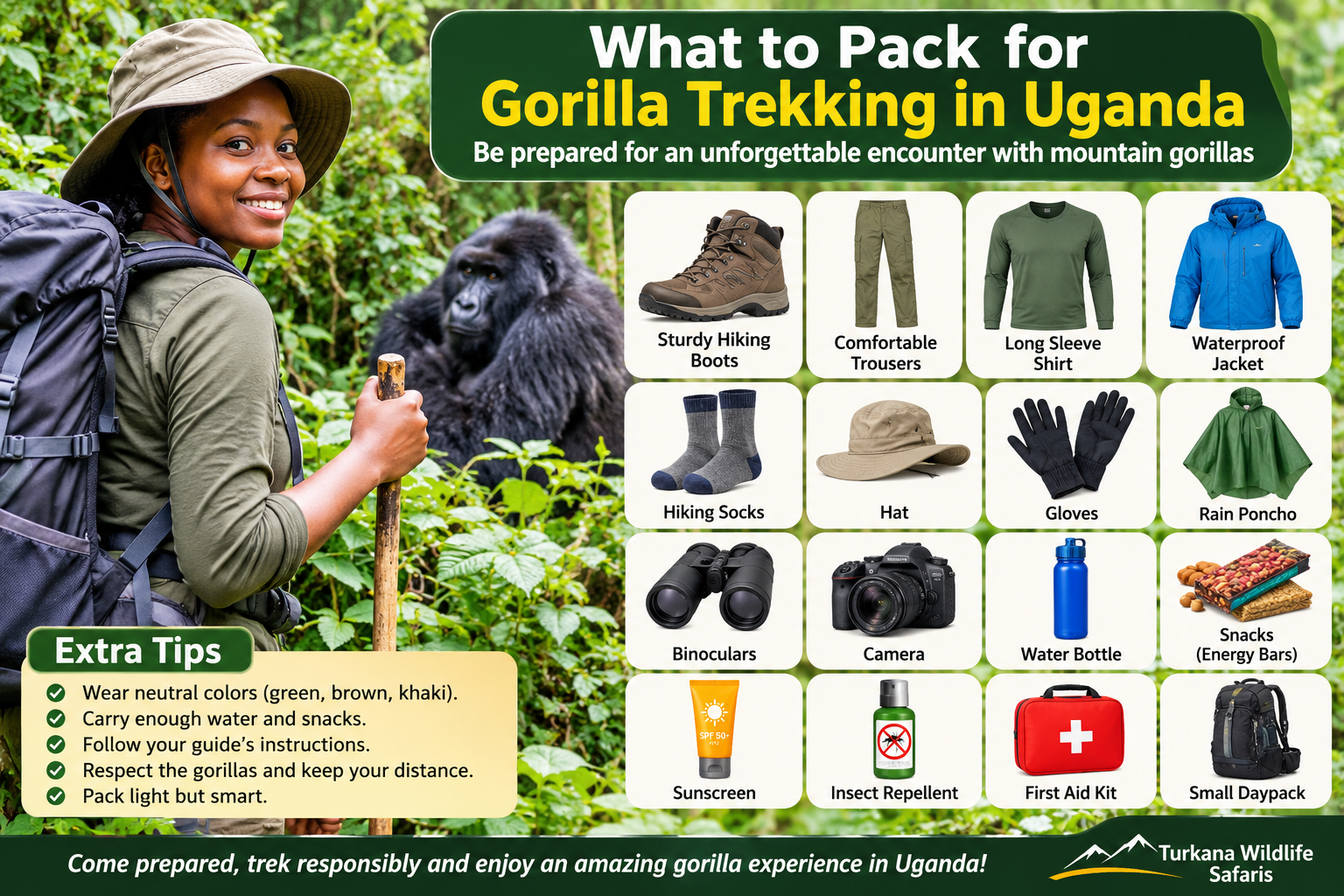
Long sleeved shirts and long trousers in neutral colors. Long sleeves and long trousers are mandatory for gorilla trekking. They protect your arms and legs from scratches, thorns, and stinging nettles. Choose subdued colors such as khaki, olive, dark green, or brown. Avoid bright colors, white, black, and dark blue. Bright colors can startle wildlife, while dark blue and black attract tsetse flies. Lightweight, quick drying fabrics are ideal. Avoid cotton, which stays damp and causes chafing.
A waterproof rain jacket. Rainfall is common in Bwindi even during the dry season. A proper waterproof jacket with a hood is better than a poncho in dense vegetation. Waterproof trousers are also useful during the wet season.
A warm fleece or mid layer. Mornings and evenings at high altitude can be cold, and a fleece or light jacket is essential for game drives and lodge evenings.
A wide brimmed hat or cap. Sun protection is important on exposed ridges and during the morning briefing. A beanie or warm hat is also useful for cold mornings.
Gaiters. Gaiters are highly recommended to keep mud, debris, and insects out of your boots and socks. They are especially useful during the wet season.
Footwear
Your boots are the single most important piece of equipment for gorilla trekking. The terrain in Bwindi is extremely steep and muddy, with no maintained paths once you leave the main trails.
Waterproof hiking boots with ankle support and good tread. Choose sturdy, high top boots with deep tread for grip on steep, muddy slopes. Ankle support protects against twisted ankles on uneven ground. Most importantly, break your boots in for at least two to four weeks before travel to prevent blisters.
Thick hiking socks. Bring at least two to three pairs of wool or synthetic blend socks. These prevent blisters and keep your feet warm even when wet.
Gear and Equipment
Gardening or trekking gloves. A pair of sturdy gardening gloves is essential for grabbing vines, branches, and nettles as you pull yourself up slopes. This is one of the most frequently overlooked items and one of the most useful.
A daypack with a rain cover. A 20 to 40 liter daypack is perfect for carrying your water, lunch, rain layer, and camera. A waterproof cover or dry bag liner protects your gear from sudden showers.
Trekking poles. Trekking poles are essential for steep descents and can usually be rented at the briefing point. They reduce strain on your knees and improve balance on muddy ground.
Water and snacks. Bring at least two liters of drinking water. There is no water available on the trail. Most lodges provide a packed lunch, but bringing extra energy bars or snacks is wise.
A camera with spare batteries and a waterproof bag. The forest canopy reduces light significantly, so a camera with good low light performance is ideal. Bring spare batteries and memory cards, as cold and humidity drain power faster. Flash photography is strictly prohibited near the gorillas.
Health and Personal Items
Insect repellent with DEET or Picaridin. Apply to exposed skin and clothing. Mosquitoes and other insects are present throughout the forest.
Sunscreen and lip balm. You are near the equator, and UV exposure is strong on exposed ridges.
Hand sanitizer and basic first aid. A small bottle of hand sanitizer is useful before and after the trek. Carry personal medications and a few blister plasters.
Face masks. Depending on current health guidelines, face masks may be required during the briefing or near the gorillas, as gorillas share roughly 98 percent of human DNA and are highly susceptible to human illnesses.
Documents and Practical Items
Passport and gorilla permit. Your passport is required for permit verification on trekking day. Carry a printed or digital copy of your gorilla permit and travel insurance documents. For a complete breakdown of costs and the permit system, refer to the Gorilla Trekking in Uganda: Costs, Permits and Booking Guide.
Cash in small denominations. You will need cash for porter tips and guide tips. Hiring a porter is strongly recommended. Porters carry your backpack and support the local community.
A head torch or flashlight. Useful for early morning departures and navigating around the lodge in the dark.
What Not to Bring
Avoid bright or white clothing, strong perfume or cologne, drones (prohibited in the national park), and single use plastic bags (banned in Uganda).
Frequently Asked Questions
What is the most important item to pack for gorilla trekking in Uganda?
Waterproof hiking boots with good ankle support and deep tread are the single most important item. The terrain is steep, muddy, and uneven, and proper boots prevent slips, twisted ankles, and blisters.
What colors should I wear for gorilla trekking?
Wear neutral colors such as khaki, olive, dark green, and brown. Avoid bright colors, white, black, and dark blue. Bright colors can disturb wildlife, and dark blue and black attract tsetse flies.
Do I need gardening gloves for gorilla trekking?
Yes. Gardening or trekking gloves protect your hands from thorny vines, stinging nettles, and branches as you navigate through dense vegetation and pull yourself up slopes.
How much water should I carry on a gorilla trek?
Bring at least two to three liters of drinking water. There is no water available on the trail, and the trek can last several hours.
Can I hire a porter to carry my backpack?
Yes. Porters are available at the trek start point for approximately 15 to 20 USD. Hiring a porter is strongly recommended. It supports the local community and allows you to focus on the experience rather than your bag.
What should I avoid wearing or bringing on a gorilla trek?
Avoid bright or white clothing, strong perfume or cologne, drones, and single use plastic bags. Flash photography is strictly prohibited near the gorillas.
Which Turkana Wildlife Safaris Uganda package is best for gorilla trekking?
Turkana Wildlife Safaris Uganda offers several gorilla trekking packages to match different travel styles and durations. The 5 Days Uganda Gorilla and Chimpanzee Trekking combines gorilla trekking in Bwindi with chimpanzee tracking in Kibale, making it ideal for travelers who want a focused primate experience. For a more comprehensive wildlife safari, the 8 Day Uganda Wildlife and Gorilla Trekking Safari includes game drives in Queen Elizabeth National Park, boat cruises, and gorilla trekking in Bwindi. Travelers seeking luxury can choose the 8 Days Luxury Primates Safari Uganda, which features premium accommodation, private transportation, and gorilla trekking in Bwindi. The 9 Days Uganda Wildlife Safari with Gorillas and Chimpanzee combines chimpanzee trekking, Queen Elizabeth National Park, gorilla trekking in Bwindi, and Lake Bunyonyi for a complete Uganda safari.
Conclusion
Packing the right gear for gorilla trekking in Uganda is not about bringing the most expensive equipment. It is about bringing the right equipment for the forest. Waterproof boots, neutral colored long clothing, gardening gloves, a reliable rain jacket, and a well organized daypack will keep you comfortable and focused throughout the trek. Pair your preparation with a well planned safari from Turkana Wildlife Safaris Uganda, and you will be ready to enjoy one of the most powerful wildlife experiences on the planet. Whether you choose a short gorilla and chimpanzee trek or a longer wildlife safari, the right packing list ensures that your only concern is the moment you lock eyes with a mountain gorilla family in the misty rainforest of Bwindi.