
What traditional food should I try in Uganda
What traditional food should I try in Uganda
What Traditional Food Should I Try in Uganda? A Complete Guide to Must Taste Ugandan Dishes
Uganda is a country where food is far more than fuel. Every dish tells a story about the land, the seasons and the people who prepare it. From steaming banana leaves to sizzling street side grills, the flavours of Uganda are honest, hearty and deeply connected to the communities that create them. If you are planning a visit and wondering what traditional food to try in Uganda, this guide walks you through the essential dishes, the cultural meaning behind them and how to experience them authentically during your journey.
Why Ugandan Food Deserves a Place on Your Travel Itinerary
Ugandan cuisine is built on simplicity and seasonal ingredients. Bananas, groundnuts, millet, cassava, beans and maize form the foundation of most meals, and cooking techniques have been passed down through generations without a single written recipe card. The result is food that is filling, direct and deeply satisfying. Understanding the staple and sauce pairing is the key to understanding most of what arrives on a plate in Uganda. The starch is usually matoke, and the sauce is very often groundnut. Once you grasp that simple formula, the rest of the cuisine opens up like a well worn welcome mat.
The Essential Ugandan Dishes You Must Try
Matoke: The Heart of the Ugandan Plate
Matoke is often the first dish that comes to mind when people think of traditional Ugandan food, and for good reason. It refers to green cooking bananas that are steamed in banana leaves until soft and then mashed. The result is mild, slightly sweet and the default carbohydrate across much of southern and central Uganda. Matoke is rarely eaten alone. It serves as the perfect canvas for rich groundnut sauce, bean stew or a meaty luwombo. If you only try one starch during your visit, make it matoke.
Luwombo: The Royal Stew Steamed in Banana Leaves
Luwombo is widely considered Uganda’s most famous and ceremonial dish. Most popular among the Baganda, it was traditionally served only to kings, chiefs and important guests at weddings, festivals and other significant occasions. At its heart, luwombo is a stew of marinated chicken, beef, goat, mushrooms or smoked fish mixed with onions, tomatoes, peanut paste and a delicate blend of spices, then wrapped in soft smoked banana leaves and steamed for hours. The banana leaves infuse the stew with an earthy aroma that is impossible to replicate any other way. Today luwombo appears on menus in many Ugandan hotels and restaurants, often at a price slightly higher than the average plate of food, and it is worth every shilling. If you see it, order it.
The Rolex: Uganda’s Iconic Street Food
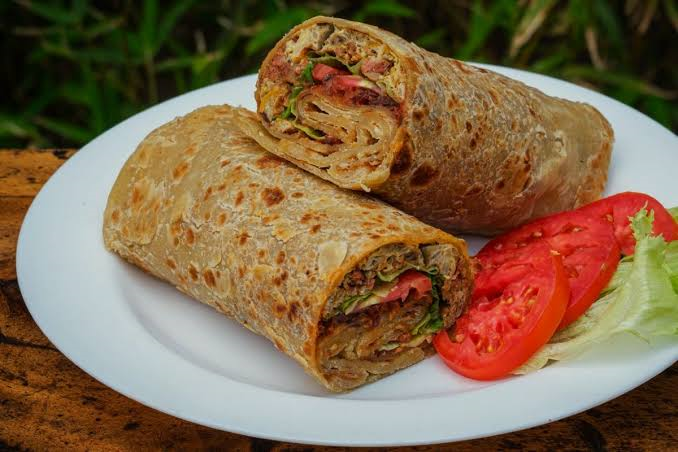
Do not be confused by the name. A Ugandan rolex has nothing to do with watches. It is an omelette rolled inside a chapati, cooked to order at a roadside stand, and it is widely regarded as the single best piece of street food in the country. Onion, tomato and cabbage go into the egg, and the whole creation is made in front of you for a very small cost. The rolex was popularised by university students because of its low cost, fast preparation and ability to keep one satisfied for a long period, but it has since been adopted by everyone as a quick and delicious fix. Many visitors end up eating more rolexes than they planned, and it is easy to see why.
Katogo: The Ultimate Ugandan Breakfast
You have not had breakfast in Uganda until you have tried katogo. The word refers to an assortment of foods cooked together in a one pot meal with a stew. The main ingredient is usually matooke, cassava or Irish potatoes paired with beef, beans, groundnuts or greens. It is served steaming hot and is designed to fuel a long day. Some places add rice or spaghetti to the mix, so it is worth asking for details of what is included before you dig in. Katogo is not attached to any particular tribe, which makes it a truly national dish that you will find in homes, local eateries and markets across the country.
Posho: The Quiet Hero of Every Meal
Posho is maize flour cooked to a firm porridge, and it is plain by design. Its purpose is to carry sauce, and it does that job beautifully. Posho is an everyday staple, especially when served alongside beans, groundnut sauce, greens or stews. It is inexpensive, filling and easy to prepare with ingredients that are widely available. Do not overlook it simply because it looks simple. Posho takes about four minutes to get wrong and a lifetime to get right, as the women of Kabale will tell you.
Nsenene: The Seasonal Delicacy That Divides Opinion
Nsenene are grasshoppers, and they are a seasonal delicacy that appears twice a year, in May and November when the rainy season is at its peak. They are collected using bright lights and reflective tin sheets, then pan fried with onions and salt. To say they are delicious is an understatement, though not everyone in Uganda eats them. Among the Baganda, it is taboo for people of the Nsenene clan. If you visit during grasshopper season, trying nsenene is a true taste of Ugandan seasonality.
Kalo and Millet Bread: The Western Staple
Kalo, whose fancy English name is millet bread, is traditional food in western Uganda eaten by the Banyankole, Bakiga, Batoro, Banyoro and several other communities. It is served in a woven basket known as endiiro and is usually paired with beef, goat stew or bean stew. Traditionally it was served with a white sauce made from ghee called eshabwe for the Banyankole, or with mashed bean soup where the beans are devoid of their seed coats. Kalo is best enjoyed using your hands, and it will surprise you if you can get past its dark brown appearance.
Muchomo and Grilled Fish: The Meaty Side of Uganda
Muchomo refers to roasted meat, often goat or beef, and it is a popular street food and social meal across Uganda. Uganda is a landlocked country with a great deal of fresh water in it, and tilapia and Nile perch come from Lake Victoria and the other lakes, usually grilled or deep fried whole. Eating fish beside the water where it was landed is one of the country’s genuine pleasures. Whether you are enjoying muchomo from a street grill or grilled tilapia by the lake, the smoky, savoury flavours are a highlight of Ugandan eating.
Groundnut Sauce: The Rich, Nutty Glue of the Cuisine
Groundnut sauce, made from roasted peanuts ground to a paste and simmered, is the one sauce to try first if you are new to Ugandan food. It is rich, nutty and faintly sweet, and it turns a plain starch into a proper meal. Groundnut sauce appears alongside matoke, posho, rice and even in luwombo. It is the quiet workhorse of the cuisine and one of the most comforting flavours you will encounter.
How to Experience Ugandan Food Authentically
The best way to understand Ugandan food is not only to taste it but to meet the people who make it. Shopping for ingredients at a local market, cooking alongside a Ugandan family or eating a meal prepared with produce grown nearby turns a simple meal into a meaningful cultural exchange. Choosing local guides, family run experiences, farmers and small food businesses helps keep more of the value of your journey within the communities you visit. Street food is generally safe when it is cooked hot in front of you and there is a queue of locals. The rolex stand with the most customers is the right stand for reasons of both safety and quality.
Pair Your Culinary Journey with a Safari Adventure
Uganda is a country of extraordinary natural beauty, and the best food experiences are often woven into broader journeys through its landscapes and communities. Turkana Wildlife Safaris offers a range of packages that allow you to combine wildlife encounters with cultural and culinary discovery.
The 7 Days Chimpanzee Trekking and Wildlife Safari Experience takes you through Kibale National Park, Murchison Falls National Park and Kidepo Valley National Park, with opportunities to enjoy local meals and community interactions along the way. For a more comprehensive journey, the 8 Days Best of Uganda Wildlife with Gorillas and Chimpanzee includes Murchison Falls, Ziwa Rhino Sanctuary, Kibale, Bwindi Impenetrable National Park and Lake Bunyonyi, giving you ample time to sample traditional dishes in different regions. If you prefer a more affordable option, the Affordable 5 Day Group Safari in Uganda combines wildlife game drives with cultural encounters and meals according to the itinerary. Each of these safaris provides a natural framework for discovering Uganda’s food culture alongside its famous wildlife.
Frequently Asked Questions About Ugandan Food
What is the national dish of Uganda?
Matoke is widely considered the national dish. It consists of steamed and mashed green bananas, traditionally cooked in banana leaves and served with a meat, bean or groundnut sauce.
Is Ugandan street food safe for visitors?
Street food is generally safe when it is cooked hot in front of you and there is a queue of locals. The rolex stand with the most customers is usually the right choice for both safety and quality.
What is a rolex in Uganda?
A rolex is not a watch. It is an omelette rolled inside a chapati, filled with onions, tomatoes and cabbage, and it is the most iconic street food in the country.
Are there vegetarian options in Ugandan cuisine?
Yes. The default Ugandan plate is already plant based, with matoke, beans, groundnut sauce, greens and rice forming the foundation of many meals. It is worth asking whether a sauce has been made with meat stock, but vegetarian eating is straightforward and better than in many places.
When can I try nsenene?
Nsenene, or grasshoppers, are a seasonal delicacy that appears twice a year in May and November when the rainy season is at its peak.
What should I drink with a Ugandan meal?
Ugandan tea and coffee are both worth your attention, and coffee is a major export crop grown at altitude. Waragi is the local spirit, and the bottled commercial version is the one to buy. Avoid informally distilled alcohol entirely.
How can I experience traditional Ugandan cooking during my visit?
Look for community based cooking experiences, market visits and family run food tours. Many safari itineraries include cultural encounters and meals that introduce you to local cuisine. Choosing local guides and small food businesses helps keep value within the communities you visit.
Conclusion: Come Hungry and Leave with Stories
Ugandan food is living, everyday and unselfconscious rather than curated for visitors, which is precisely what makes eating in Uganda so good. From the ceremonial richness of luwombo to the humble joy of a roadside rolex, from the comforting weight of matoke to the seasonal thrill of nsenene, every dish offers a window into the land and its people. Whether you are trekking chimpanzees in Kibale, cruising the Nile in Murchison Falls or simply wandering a local market, make time to eat what Ugandans eat. Come hungry, ask questions, and let the flavours of Uganda become part of your travel story.