
Doherty’s Bushshrike
Doherty’s Bushshrike
Doherty’s Bushshrike: A Rare Jewel of African Forests
Introduction
In the dense, verdant forests of Central and East Africa, a flash of vibrant color and a melodic call might catch the attention of a keen observer. This is the elusive Doherty’s Bushshrike (Telophorus dohertyi), a strikingly beautiful and secretive bird that has fascinated ornithologists and birdwatchers alike. Known for its vivid plumage and elusive nature, this bird is not just a visual marvel but also a key indicator of the health of its forest habitat.
This comprehensive guide delves into the world of the Doherty’s Bushshrike, exploring its habitat, behavior, conservation status, and the ecological importance it holds. Whether you’re a seasoned ornithologist, a passionate birdwatcher, or simply a nature enthusiast, this article will offer a deep dive into one of Africa’s most enchanting avian species.
Taxonomy and Classification
The Doherty’s Bushshrike belongs to the family Malaconotidae, a group of passerine birds commonly referred to as bushshrikes. These birds are closely related to true shrikes but are generally more colorful and forest-dwelling.
- Kingdom: Animalia
- Phylum: Chordata
- Class: Aves
- Order: Passeriformes
- Family: Malaconotidae
- Genus: Telophorus
- Species: T. dohertyi
The species was named in honor of William Doherty, an American entomologist and ornithologist who contributed significantly to the study of East African fauna.
Physical Characteristics
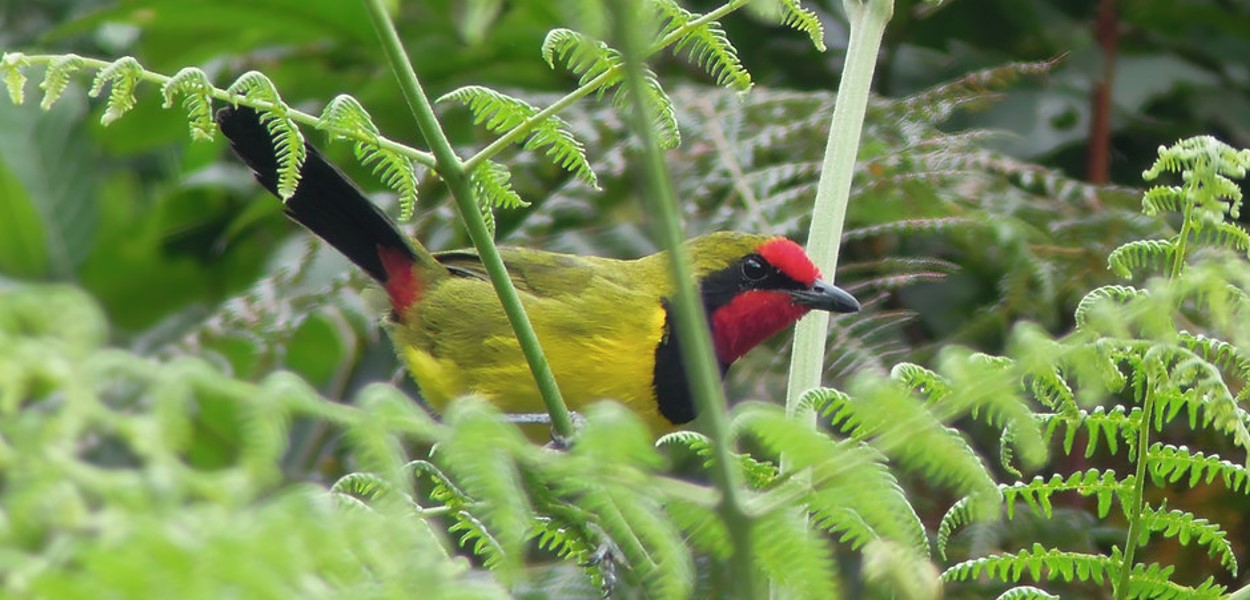
The Doherty’s Bushshrike is a visual spectacle, often described as one of the most beautiful bushshrikes in Africa.
Key Features:
- Head: Bright crimson-red crown and face
- Back and Wings: Deep green with blackish markings
- Underparts: Lemon-yellow chest and belly
- Eyes: Dark, giving a piercing gaze
- Size: Approximately 18–20 cm in length
- Sexual Dimorphism: Minimal; males and females appear similar
This bird’s vivid coloration serves both as camouflage in the dappled light of the forest and as a signal during mating rituals.
Habitat and Distribution
Geographic Range
The Doherty’s Bushshrike is native to the montane forests of Central and East Africa. Its range includes:
- Uganda
- Kenya
- Tanzania
- Rwanda
- Burundi
- Democratic Republic of the Congo
Preferred Habitats
- Montane and submontane forests
- Dense undergrowth and forest edges
- Altitude range: 1,200 to 2,500 meters above sea level
These birds are typically found in moist evergreen forests, where they can remain hidden among thick foliage.
Behavior and Diet
Feeding Habits
Doherty’s Bushshrikes are primarily insectivorous, feeding on a wide variety of invertebrates. Their diet includes:
- Beetles
- Caterpillars
- Grasshoppers
- Spiders
- Occasionally small lizards or amphibians
They forage methodically, often hopping from branch to branch in search of prey, using their strong, hooked beak to snatch insects from leaves and bark.
Behavior Traits
- Solitary or in pairs
- Territorial, especially during breeding season
- Shy and elusive, making them difficult to observe in the wild
Breeding and Nesting Habits
The breeding season of the Doherty’s Bushshrike aligns with the rainy season, ensuring an abundance of food for the chicks.
Nesting Details:
- Nest Type: Cup-shaped, built in dense shrubs or low trees
- Materials: Twigs, grasses, and spider webs
- Clutch Size: 2–3 eggs
- Incubation: Approximately 14–16 days
- Parental Care: Both parents participate in feeding and protecting the young
The chicks fledge within 2–3 weeks but may remain dependent on their parents for several more weeks.
Vocalizations and Communication
The Doherty’s Bushshrike is known for its melodic and varied calls, which are often the first indication of its presence.
Common Vocalizations:
- Whistles
- Chattering notes
- Duets between mated pairs
Their calls serve multiple purposes:
- Territorial defense
- Mate attraction
- Communication between pairs
You can listen to their calls on Xeno-canto, a global community database of bird sounds.
Conservation Status
According to the IUCN Red List, the Doherty’s Bushshrike is currently listed as Least Concern. However, this status does not imply that the species is free from threats.
Population Trends:
- Stable in protected areas
- Declining in fragmented habitats
Ecological Importance
The Doherty’s Bushshrike plays a vital role in maintaining the ecological balance of its forest habitat.
Ecological Roles:
- Insect control: Helps regulate insect populations
- Seed dispersal: Occasionally consumes small fruits
- Indicator species: Presence indicates healthy forest ecosystems
Their sensitivity to habitat changes makes them valuable indicators for conservationists monitoring forest health.
Threats and Challenges
Despite its current conservation status, the Doherty’s Bushshrike faces numerous threats.
Major Threats:
- Deforestation for agriculture and logging
- Habitat fragmentation
- Climate change altering forest ecosystems
- Human encroachment and infrastructure development
Efforts in Conservation
Several conservation initiatives are in place to protect the habitats of the Doherty’s Bushshrike.
Key Conservation Actions:
- Protected areas: National parks and reserves in East Africa
- Community-based conservation: Involving local communities in habitat protection
- Research and monitoring: Ongoing studies to track population trends
- Environmental education: Raising awareness about the species and its habitat
Organizations like BirdLife International and the African Bird Club are actively involved in these efforts.
How to Spot a Doherty’s Bushshrike
Spotting this elusive bird requires patience, skill, and a bit of luck.
Birdwatching Tips:
- Visit montane forests in Uganda, Kenya, or Rwanda
- Go early in the morning, when birds are most active
- Listen for their calls before trying to spot them visually
- Use binoculars and wear muted clothing
- Hire a local guide with knowledge of the area
Recommended Locations:
- Bwindi Impenetrable Forest, Uganda
- Kakamega Forest, Kenya
- Nyungwe Forest, Rwanda
FAQs
1. What makes Doherty’s Bushshrike unique among bushshrikes?
The Doherty’s Bushshrike stands out due to its vivid coloration, particularly the striking red face and green back, and its melodic calls. Unlike many bushshrikes, it is highly secretive and prefers dense forest habitats.
2. Where can I see a Doherty’s Bushshrike in the wild?
You can spot this bird in montane forests of East and Central Africa, especially in Uganda, Kenya, and Rwanda. Protected areas like Bwindi and Nyungwe are prime locations.
3. Is the Doherty’s Bushshrike endangered?
Currently, it is listed as Least Concern by the IUCN, but its populations are vulnerable to habitat loss and fragmentation.
4. What does the Doherty’s Bushshrike eat?
Its diet mainly consists of insects, such as beetles and caterpillars, but it may also consume small reptiles and fruits occasionally.
5. How can I help in the conservation of this species?
You can support organizations like BirdLife International, participate in eco-tourism, and advocate for forest conservation in East Africa.
Conclusion
The Doherty’s Bushshrike is more than just a beautiful bird; it is a symbol of the rich biodiversity found in Africa’s montane forests. As human activity continues to encroach upon natural habitats, the need to protect such species becomes ever more urgent. By understanding, appreciating, and supporting conservation efforts, we can ensure that future generations will also have the chance to witness the vibrant flash of red and green that is the Doherty’s Bushshrike.
Whether you’re an ornithologist, a conservationist, or simply a lover of nature’s wonders, the story of this bird is a compelling reminder of the delicate balance that sustains life in our forests.