
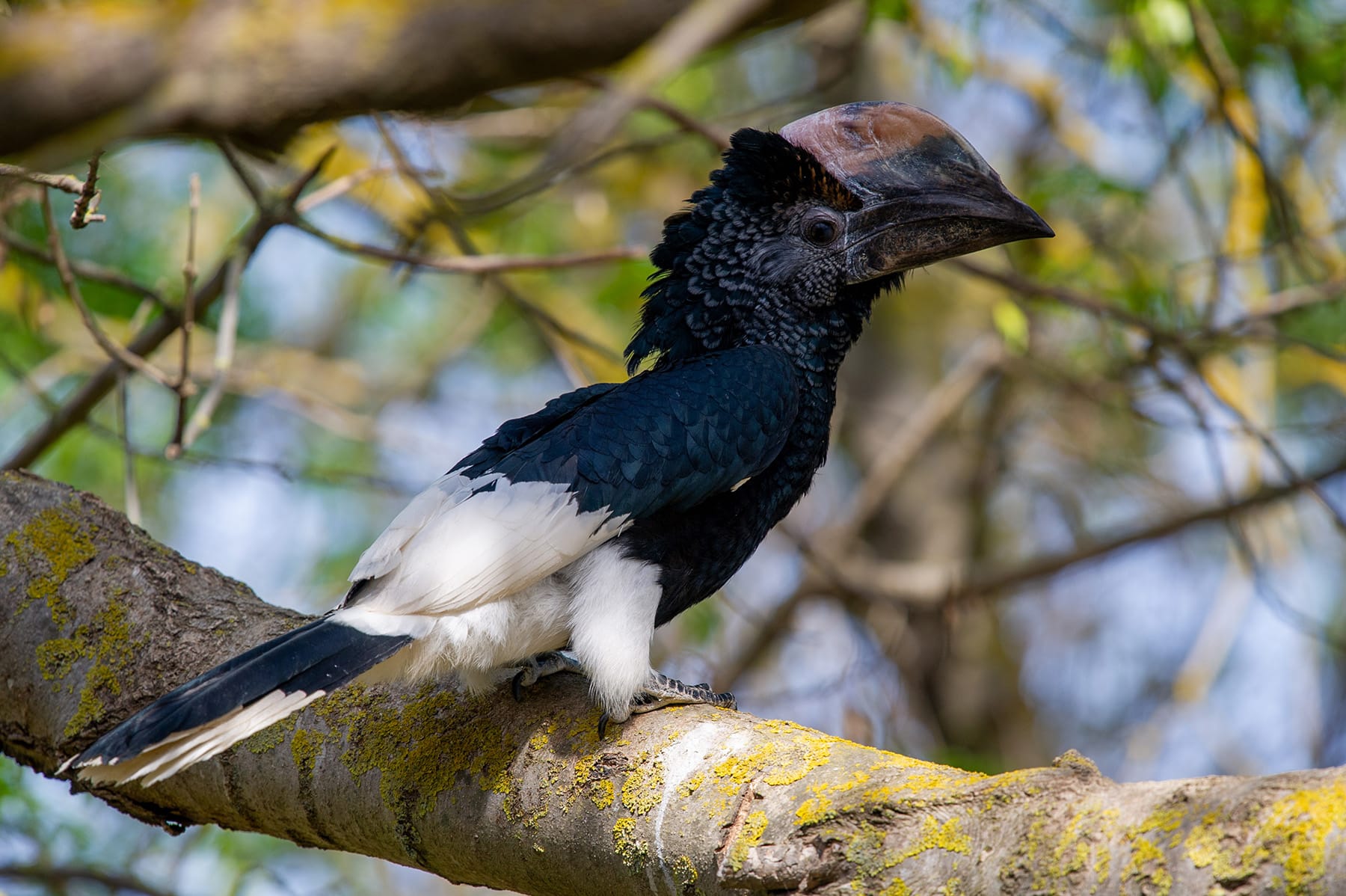
Black-and-White-Casqued Hornbill
Black-and-White-Casqued Hornbill
The Enigmatic Black-and-White-Casqued Hornbill: A Masterpiece of Avian Evolution
Introduction
In the lush, dense rainforests of Central and West Africa, a striking bird with a commanding presence soars through the canopy—the Black-and-white-casqued Hornbill (Bycanistes subcylindricus). With its dramatic plumage, oversized casque, and deep, echoing calls, this bird is not only a marvel of nature but also a crucial player in the ecological balance of its habitat.
This article delves deep into the world of the Black-and-white-casqued Hornbill, exploring its biology, behavior, habitat, ecological importance, and conservation status. Designed for ornithologists, bird lovers, and conservationists alike.
What is the Black-and-White-Casqued Hornbill?
The Black-and-white-casqued Hornbill is a large, forest-dwelling bird belonging to the family Bucerotidae. It is easily recognized by its black and white plumage and the prominent casque—a hollow structure on top of its bill, more pronounced in males.
Key Characteristics
- Scientific Name: Bycanistes subcylindricus
- Family: Bucerotidae
- Lifespan: Up to 20 years in the wild
- Wingspan: Up to 100 cm
- Weight: 1.2–1.5 kg
- IUCN Status: Least Concern
Physical Description
Plumage and Size
The bird features a striking contrast of black feathers on its back and wings with white underparts and tail. Its long tail feathers and broad wings make it an agile flier despite its size.
The Casque
The most distinguishing feature is the casque, a helmet-like structure atop the bill. In males, it is larger and more pronounced, possibly used for sound amplification or as a sexual display during mating rituals.
Habitat and Distribution
Geographic Range
The Black-and-white-casqued Hornbill is native to the tropical rainforests of:
- Central African Republic
- Uganda
- Democratic Republic of the Congo
- Gabon
- Cameroon
- Nigeria
It thrives in lowland tropical forests, gallery forests, and sometimes in secondary growth forests.
Preferred Environment
- Dense canopy cover
- Proximity to fruiting trees
- Minimal human disturbance
Diet and Feeding Behavior
Frugivorous Diet
Primarily frugivorous, the hornbill plays a critical role in seed dispersal. It feeds on a variety of fruits, especially figs, but also consumes:
- Insects
- Small reptiles
- Rodents
- Eggs of other birds
Foraging Techniques
- Solitary or in pairs: Often seen alone or with a mate
- Canopy dwellers: Rarely descend to the forest floor
- Aerial acrobatics: Skilled at plucking fruit mid-flight
Social Structure and Behavior
Monogamous Pairing
These hornbills form monogamous pairs and are known for their strong pair bonds. During the breeding season, the male provides food while the female incubates the eggs.
Vocal Communication
Their calls are deep, resonant, and can carry over long distances. These vocalizations are used for:
- Territory defense
- Mate attraction
- Group cohesion
Reproductive Cycle
Nesting Habits
Hornbills nest in tree cavities, often high above the ground. The female seals herself inside with a wall made of mud, feces, and fruit pulp, leaving only a narrow slit for the male to pass food.
Breeding Season
- Timing: Varies by region but often coincides with the rainy season
- Clutch Size: Typically 1–3 eggs
- Incubation: 25–30 days
- Fledging: Chicks remain in the nest for up to 3 months
Ecological Importance
Seed Dispersal Agents
As frugivores, these hornbills are vital for forest regeneration. By consuming and excreting seeds far from the parent tree, they promote genetic diversity and forest expansion.
Predator-Prey Dynamics
They also help control insect and small vertebrate populations, maintaining ecological balance.
Threats and Conservation
Habitat Loss
The primary threat is deforestation due to:
- Logging
- Agriculture
- Urban expansion
Hunting and Trade
Although not heavily hunted, they are sometimes captured for the pet trade or hunted for their casques, which are used in traditional medicine and ornaments.
Conservation Efforts
- Protected Areas: Many reside in national parks and reserves
- Research and Monitoring: Ongoing studies help track population trends
- Community Education: Raising awareness in local communities
Cultural Significance
In some African cultures, hornbills are seen as symbols of fertility and protection. Their unique appearance and behaviors have inspired folklore and traditional stories.
How to Spot a Black-and-White-Casqued Hornbill
Birdwatching Tips
- Visit rainforest reserves in Central Africa
- Look for fruiting fig trees
- Listen for deep, booming calls
- Use binoculars with good light transmission
Similar Species
Other Hornbills in the Region
These species share similar habitats and behaviors but differ in size, coloration, and casque structure.
Fascinating Facts
- The casque may help resonate sound, allowing calls to travel farther.
- Females seal themselves in the nest cavity for up to 3 months.
- Their diet includes over 50 species of fruiting trees.
- They can fly up to 20 km a day in search of food.
- Their strong pair bonds often last for life.
Summary
The Black-and-white-casqued Hornbill is a vital component of African tropical ecosystems. With its distinctive appearance and ecological role, it represents both the beauty and fragility of rainforest biodiversity. Protecting this species means preserving the intricate web of life that depends on it.
Frequently Asked Questions (FAQ)
1. Where can I see the Black-and-white-casqued Hornbill in the wild?
You can spot them in Central African rainforests, especially in countries like Uganda, Cameroon, and the Democratic Republic of the Congo.
2. What does the casque on a hornbill do?
The casque may serve multiple purposes, including sound amplification, sexual selection, and species recognition. In the Black-and-white-casqued Hornbill, it is particularly prominent in males.
3. Are Black-and-white-casqued Hornbills endangered?
No, they are currently listed as Least Concern, but their populations are threatened by habitat loss and deforestation.
4. What role do hornbills play in the ecosystem?
They are essential seed dispersers, helping maintain forest health and biodiversity. They also control populations of small animals and insects.
5. How can I help conserve hornbills?
Support organizations like the Hornbill Research Foundation, avoid products linked to deforestation, and promote eco-tourism in protected areas.
Conclusion
The Black-and-white-casqued Hornbill is more than just a bird—it is a symbol of the intricate balance of tropical ecosystems. Its survival is intertwined with the health of the forests it inhabits. By understanding, appreciating, and protecting this majestic species, we take a step toward preserving the biodiversity of our planet.